

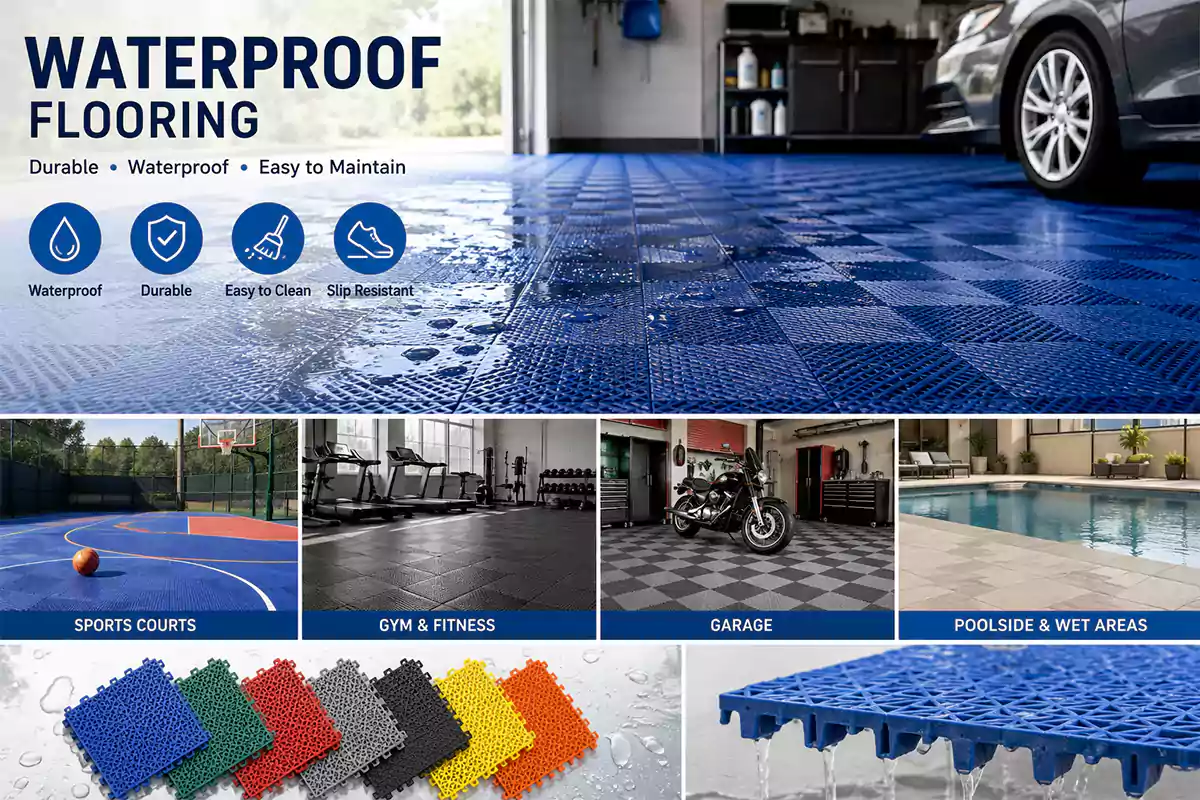

Waterproof Flooring: Benefits, Types, Applications, and How to Choose
Waterproof flooring is becoming an increasingly popular choice for residential, commercial, industrial, and sports applications. It is designed to handle water, spills, humidity, and frequent cleaning while maintaining its performance and appearance.
Unlike ordinary water-resistant flooring, true waterproof floor uses materials and construction methods that help prevent moisture from penetrating the flooring structure. This makes it especially useful in areas where water exposure is common.
What Is Waterproof Flooring?
Common waterproof flooring materials include vinyl, SPC, PVC, porcelain tile, sealed concrete, and certain plastic-based modular flooring systems.
For flooring buyers, it is important to distinguish waterproof from water-resistant. Water-resistant floor can tolerate moisture for a limited period, while waterproof floor is specifically engineered to provide much stronger protection against water exposure.
Main Benefits of Waterproof Flooring
1. Excellent Moisture Protection
The biggest advantage of waterproof flooring is its ability to handle spills, splashes, humidity, and regular cleaning. This makes it suitable for kitchens, bathrooms, basements, garages, sports facilities, and other moisture-prone areas.
2. Easy to Clean
Waterproof interlocking flooring is generally easy to maintain. Dirt, dust, and liquid spills can usually be removed with routine sweeping and mopping.
For commercial and sports facilities, easy cleaning can also help reduce daily maintenance time.
3. Durable for High-Traffic Areas
Many waterproof flooring products are manufactured with durable materials that can withstand frequent foot traffic. Depending on the product construction, they can also provide good resistance to scratches, stains, impact, and everyday wear.
4. Low Maintenance
Waterproof floor does not require the same level of moisture protection as many traditional wood-based floor products. A simple cleaning routine is often enough to maintain its appearance and performance.
5. Flexible Applications
Users can install waterproof flooring in many different environments, including residential rooms, commercial spaces, garages, workshops, gyms, and recreational areas.
Popular Types of Waterproof Flooring
Vinyl Flooring
Vinyl flooring is one of the most common waterproof flooring choices. High-quality vinyl products provide a waterproof surface and come in plank, tile, and sheet formats.
SPC Flooring
SPC flooring uses a rigid stone-plastic composite core. It combines waterproof performance with durability and dimensional stability, making it suitable for kitchens, bathrooms, basements, and commercial applications.
Porcelain and Ceramic Tile
Porcelain tile offers excellent moisture resistance, making it a popular choice for bathrooms, kitchens, laundry rooms, and other wet areas.However, the overall waterproof performance also depends on grout, joints, and proper installation.
Sealed Concrete Flooring
Sealed concrete can provide a durable moisture-resistant surface for garages, workshops, warehouses, and industrial environments. The sealing system needs appropriate maintenance to maintain performance.
PP Interlocking Flooring
in addition, specialized suspended PP tiles can provide an open structure beneath the surface for applications that require drainage or ventilation underneath the flooring.
Waterproof Flooring for Sports Facilities
Waterproof flooring can be especially useful in sports and recreational environments. In particular, sports facilities may experience frequent cleaning, sweat, spilled drinks, outdoor moisture, and heavy daily traffic. Therefore, a suitable waterproof modular floor can help simplify maintenance while providing a durable playing surface. For example, sports facilities can use PP interlocking sports flooring for applications such as:
- Basketball courts
- Tennis courts
- Pickleball courts
- Volleyball courts
- Badminton areas
- Indoor football areas
- Fitness centers
- Recreation areas
- Community activity centers
Choose the product according to the sport, impact requirements, surface texture, drainage needs, and installation environment.
Waterproof Flooring for Garages and Workshops
Garages and workshops are exposed to more than ordinary household spills. Water, dirt, vehicle tires, oil, chemicals, and heavy equipment can all affect flooring performance.
Interlocking PP floor tiles can provide a practical solution because they can be installed over an existing hard floor and can be removed or replaced when necessary. Some modular systems also create space beneath the surface for improved drainage and ventilation.
How to Choose Waterproof Flooring
When selecting waterproof flooring, consider the following factors.
Material
Choose a material according to the environment. SPC and vinyl are common choices for indoor wet areas, while PP modular flooring can be particularly useful for garages, sports facilities, and other applications requiring a durable interlocking system.
Installation Method
Consider whether you need permanent or removable flooring.
Click-lock and interlocking systems can simplify installation because they generally require fewer specialized tools. A properly prepared, clean, dry, and level subfloor is still important for good long-term performance.
Drainage
For outdoor and sports applications, drainage can be an important consideration. A raised or suspended modular floor can allow water to move underneath the surface when the system is designed for drainage.
Surface Safety
For sports and wet environments, look for a flooring surface with appropriate traction and slip resistance. In addition, choose a surface that balances grip, comfort, and ease of movement.
Maintenance
Choose flooring that matches your cleaning requirements. If the floor will be cleaned frequently, a non-absorbent and easy-to-clean surface can reduce maintenance work.
Waterproof Flooring vs. Water-Resistant Flooring
The difference is important when choosing a flooring system.
| Feature | Waterproof Flooring | Water-Resistant Flooring |
|---|---|---|
| Water protection | High | Limited |
| Standing water | Depends on product and installation | Usually limited |
| Moisture-prone areas | Suitable when properly specified | Application dependent |
| Maintenance | Generally easy | Usually easy |
| Core protection | Designed to resist water penetration | May absorb moisture |
| Best use | Wet or high-moisture environments | Normal areas with occasional spills |
The term “waterproof” should always be checked against the manufacturer’s specifications because performance can vary between products and installation systems.
Installation Tips for Waterproof Flooring
In addition, remove standing water and excessive moisture before starting the installation. Then, follow the manufacturer’s instructions carefully and pay close attention to joints, edges, walls, and transitions.
Where necessary, use appropriate sealing materials to protect vulnerable areas. For products that require expansion space, leave sufficient room according to the manufacturer’s recommendations.
For modular interlocking flooring, ensure that all tiles are properly connected and that the installation surface is suitable for the product.
How to Maintain Waterproof Flooring
Easy to maintain. A basic maintenance routine can include:
- Sweep or vacuum loose dirt regularly.
- Clean spills as soon as practical.
- Mop with a suitable cleaning solution.
- Avoid abrasive cleaning tools that can damage the surface.
- Inspect joints and edges periodically.
- Replace damaged modular tiles when necessary.
Regular maintenance helps preserve the appearance, safety, and service life of the flooring.
Is Waterproof Flooring Worth It?
For areas exposed to water, humidity, frequent cleaning, or accidental spills, waterproof flooring can be a practical investment. It can reduce concerns about moisture damage while providing a durable and easy-to-maintain surface.
For sports facilities, garages, workshops, and recreational spaces, PP interlocking waterproof flooring can be particularly attractive because it combines moisture resistance, modular installation, easy maintenance, and flexible replacement.
Conclusion
Waterproof flooring offers a practical solution for environments where moisture is a daily concern. In addition, different materials provide different advantages, from vinyl and SPC to porcelain tile and PP interlocking flooring.
PP interlocking flooring is worth considering when you need a durable, waterproof, modular, and easy-to-maintain flooring solution.