

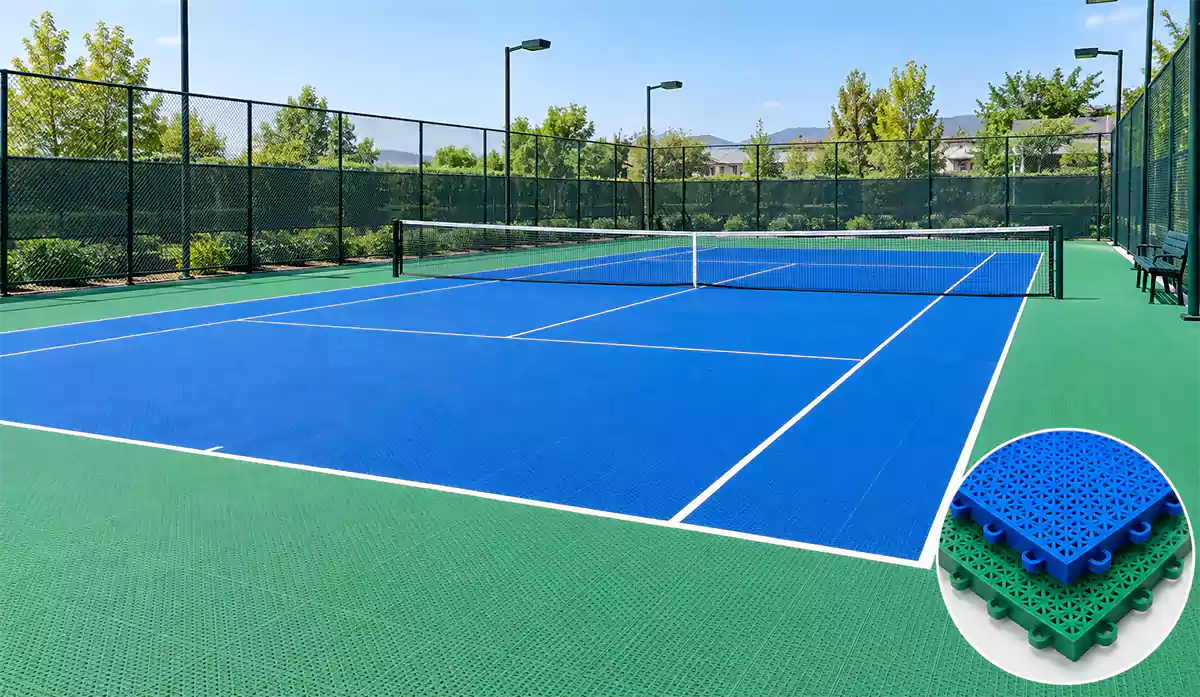

Tennis Court Flooring: A Complete Guide to Choosing the Right Surface
Choosing the right tennis court flooring is essential for player safety, performance, and long-term court durability. Therefore, a good tennis surface should provide reliable traction, comfortable movement, and excellent resistance to outdoor conditions. In addition, the flooring should be durable enough to withstand frequent use, changing weather, and regular maintenance.
Today, tennis courts can use several flooring systems, including acrylic surfaces, concrete, synthetic materials, and modular interlocking flooring. Among these options, PP interlocking sports flooring has become an attractive solution for outdoor and multi-purpose tennis courts.
In this guide, we will explain the main types of tennis court flooring, their advantages, and how to choose the right surface for your project.
What Is Tennis Court Flooring?
Tennis court flooring refers to the surface system installed on a tennis court. It directly affects how players move, stop, turn, and hit the ball.
Therefore, the ideal flooring should balance several factors:
- Slip resistance
- Shock absorption
- Durability
- Ball response
- Weather resistance
- Easy maintenance
- Fast installation
For outdoor courts, weather resistance is especially important. The flooring must withstand sunlight, rain, temperature changes, and regular sports activity.
Why Is Tennis Court Flooring Important?
Tennis involves frequent running, sudden stops, and quick changes of direction. Consequently, the court surface has a major impact on player comfort and safety.
High-quality tennis court flooring can help provide:
Better Traction
Players need stable footing when moving across the court. A suitable surface provides consistent traction without being excessively slippery.
Improved Player Comfort
A properly designed sports floor can reduce the stress caused by repeated movement. This is particularly useful for recreational players who spend long periods on the court.
Consistent Ball Performance
The surface also affects ball bounce and playing characteristics. A uniform court helps provide a more predictable playing experience.
Long-Term Durability
Tennis courts receive frequent foot traffic and sports impact. Durable flooring can reduce maintenance requirements and extend the service life of the court.
Common Types of Tennis Court Flooring
There are several popular tennis court surface systems available today. Each option has different characteristics.
1. Acrylic Tennis Court Surface
Acrylic is widely used for tennis courts. It is normally applied over a prepared concrete or asphalt base.
Its advantages include:
- Smooth playing surface
- Good weather resistance
- Customizable colors
- Relatively easy maintenance
However, installation usually requires professional surface preparation and multiple coating processes.
2. Concrete Tennis Court
Concrete provides a strong and stable base for tennis courts. It offers excellent structural durability and can support heavy use.
However, concrete itself is relatively hard. Therefore, additional surface treatments may be required to improve player comfort and traction.
3. Synthetic Tennis Flooring
Synthetic materials can provide additional flexibility and cushioning. They are often selected when player comfort is an important consideration.
Different synthetic systems can have different installation and maintenance requirements.
4. PP Interlocking Tennis Court Flooring
PP interlocking flooring uses modular tiles that connect together through an interlocking system.
Instead of applying a permanent coating directly to the ground, installers assemble individual flooring tiles to create the court surface.
This design offers several practical advantages, especially for outdoor recreational and multi-purpose courts.
Advantages of PP Interlocking Tennis Court Flooring
PP, or polypropylene, is a durable thermoplastic material commonly used in modular sports flooring.
Easy Installation
One of the biggest advantages is the interlocking installation system.
The tiles can be connected without complicated adhesive installation. This can significantly simplify the installation process.
Moreover, individual tiles can be removed and replaced when necessary.
Excellent Outdoor Durability
Outdoor tennis courts are exposed to sunlight, rain, and changing temperatures.
PP flooring can provide good resistance to common outdoor conditions. UV-resistant formulations can further improve performance in outdoor environments.
Good Drainage
Many modular sports flooring systems use an elevated or suspended structure.
This design allows water to move underneath the surface instead of remaining on top of the court.
As a result, the court can drain more efficiently after rain.
Low Maintenance
PP interlocking flooring does not require the same type of coating maintenance as some traditional court surfaces.
Routine maintenance can include:
- Sweeping the court
- Removing leaves and debris
- Cleaning dirt and stains
- Checking damaged tiles
- Keeping drainage areas clear
Individual Tile Replacement
Traditional court surfaces can require more extensive repairs when a damaged area appears.
With modular flooring, installers can remove individual tiles and replace them with new ones.
This makes localized repairs much more convenient.
Suitable for Multi-Sport Courts
A modular tennis court does not have to be used exclusively for tennis.
The same flooring system can be designed for multiple recreational activities, including:
- Tennis
- Pickleball
- Basketball
- Volleyball
- Badminton
- Multi-purpose sports
Therefore, PP interlocking flooring can be a practical option for schools, communities, sports clubs, and recreational facilities.
How to Choose the Best Tennis Court Flooring
When selecting tennis court flooring, consider the following factors.
1. Court Location
First, determine whether the court is indoors or outdoors.
Outdoor courts require stronger resistance to UV exposure, rain, temperature changes, and moisture.
2. Playing Frequency
A court used every day needs a durable flooring system.
For commercial facilities and sports clubs, choose flooring designed to withstand frequent use and repeated player movement.
3. Player Comfort
Consider the level of cushioning and surface flexibility.
For recreational facilities, comfortable flooring can help create a better overall playing experience.
4. Drainage
For outdoor courts, drainage should be a major consideration.
A well-designed modular system can allow water to drain beneath the flooring, helping the court recover after rainfall.
5. Installation Requirements
Traditional tennis surfaces may require several installation stages.
In comparison, interlocking flooring uses modular tiles that can be assembled directly on a suitable base.
Therefore, it can be a convenient choice for projects that require faster installation.
6. Maintenance
Consider the long-term maintenance requirements before selecting a flooring system.
A modular floor can simplify repairs because damaged tiles can be removed individually.
PP Tennis Court Flooring vs. Traditional Flooring
| Feature | PP Interlocking Flooring | Traditional Court Surface |
|---|---|---|
| Installation | Modular and relatively simple | Usually requires professional installation |
| Repair | Individual tiles can be replaced | Repairs may require resurfacing |
| Drainage | Can allow drainage beneath tiles | Depends on court construction |
| Outdoor Use | Suitable for outdoor applications | Depends on surface material |
| Maintenance | Relatively simple | May require periodic resurfacing |
| Multi-Sport Use | Excellent | Depends on court design |
| Customization | Various colors and layouts | Various colors and coatings |
The best choice ultimately depends on the court location, budget, expected usage, and performance requirements.
Where Can Tennis Court Flooring Be Used?
Tennis flooring can be used in many different environments.
Residential Tennis Courts
Homeowners can use modular flooring for backyard tennis and recreational courts.
The interlocking design can also be useful when the court may need to be modified or renovated in the future.
Schools and Universities
Schools often need sports facilities that can support multiple activities.
PP modular flooring can be configured for tennis, basketball, volleyball, and other sports.
Sports Clubs
Sports clubs require durable surfaces that can handle frequent use.
Easy maintenance and individual tile replacement can help simplify long-term facility management.
Community Sports Facilities
Community courts often need flexible flooring solutions that support different sports and recreational activities.
Modular flooring can provide this flexibility while maintaining a clean and professional appearance.
How to Maintain Tennis Court Flooring
Proper maintenance can help extend the life of your tennis court floor.
First, remove leaves, dirt, and other debris regularly. Next, clean the surface with suitable water and mild cleaning products when necessary.
In addition, inspect the flooring periodically for damaged or loose tiles.
For modular PP flooring, replace damaged tiles as soon as possible. Also, make sure drainage channels remain free from debris.
Finally, avoid using aggressive chemicals or cleaning equipment that could damage the flooring surface.
Conclusion
Choosing the right tennis court flooring requires careful consideration of durability, player comfort, drainage, installation, and maintenance.
Traditional acrylic, concrete, and synthetic surfaces remain popular choices. However, PP interlocking sports flooring offers several practical advantages for outdoor and multi-purpose tennis courts.
Its modular installation, outdoor durability, drainage design, low maintenance requirements, and easy tile replacement make it a flexible flooring solution for tennis facilities.
Therefore, for schools, sports clubs, community facilities, and residential courts, PP interlocking tennis court flooring can provide a practical balance between performance, durability, and installation convenience. In addition, its modular design makes installation and maintenance more convenient.