

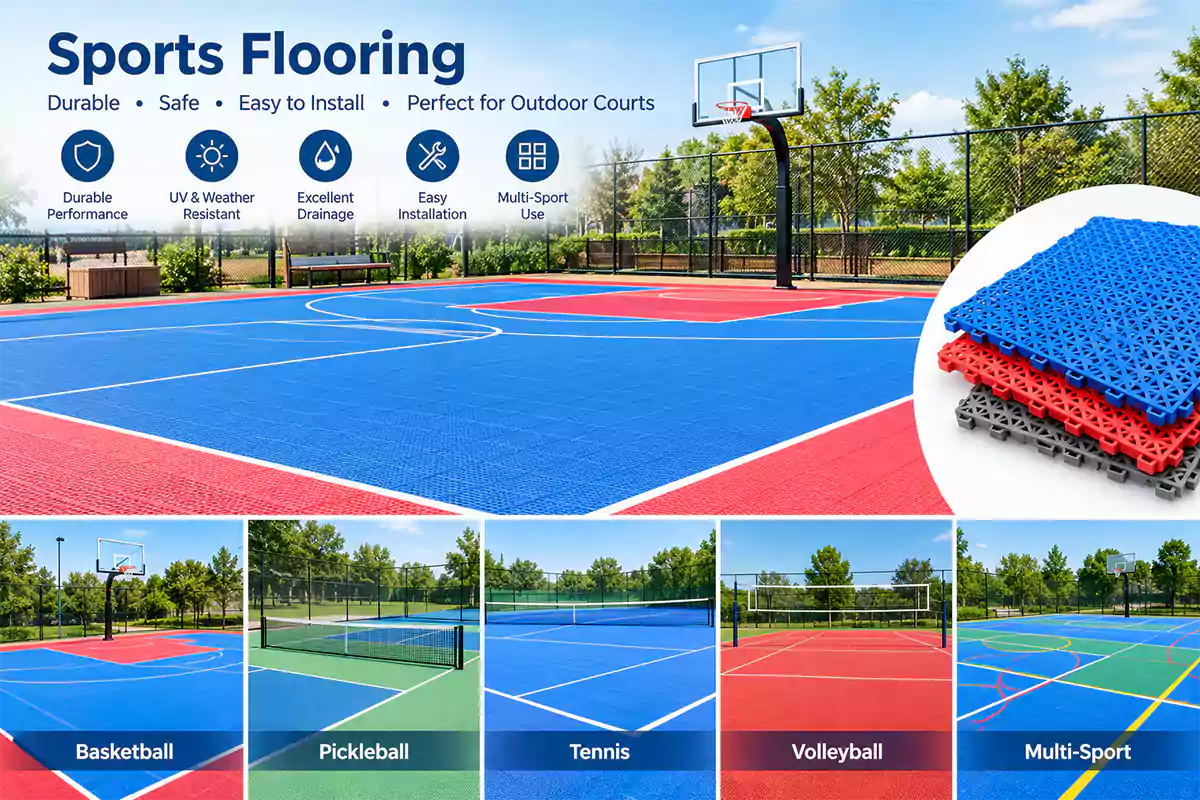

Sports Flooring: A Complete Guide to Choosing the Right Sports Floor
Sports flooring is an important part of any sports facility. The right surface can improve player comfort, support athletic performance, and make daily maintenance easier.
Today, sports facilities use many different flooring materials. These include hardwood, vinyl, rubber, polyurethane, artificial turf, and modular sports tiles. Each option has different strengths.
For outdoor courts, however, PP interlocking sports flooring has become a practical choice. Its modular design, durability, drainage performance, and easy installation make it suitable for many sports applications.
In this guide, we explain the main types of sports flooring and why PP interlocking flooring is worth considering.
What Is Sports Flooring?
Sports flooring is a specially designed floor system for sports, fitness, recreation, and athletic activities.
Unlike ordinary flooring, sports flooring must handle repeated movement and impact. It also needs to provide suitable traction and stability.
Therefore, choosing a sports floor is not simply about appearance. Instead, you should consider performance, safety, durability, installation, and maintenance.
The best flooring depends on the sport and the environment. For example, basketball courts may require a different surface from a gym or outdoor pickleball court.
Why Is Sports Flooring Important?
The surface directly affects how players move and interact with the court.
First, a suitable floor can provide better traction. This helps players move, stop, and change direction with greater confidence.
Second, the right flooring can improve comfort. Some sports floors provide cushioning or controlled flexibility to reduce the harsh feel of hard surfaces.
In addition, durable flooring can withstand frequent use. This is especially important for schools, sports clubs, gyms, community centers, and commercial facilities.
Finally, easy maintenance can reduce long-term operating costs.
Therefore, a good sports floor system should balance performance, safety, durability, comfort, and maintenance.
Common Types of Sports Flooring
There are several popular sports flooring options on the market. However, each material works best in different environments.
1. Hardwood Sports Flooring
Hardwood is a traditional choice for indoor basketball and volleyball courts.
It provides a firm and consistent playing surface. Moreover, it offers a classic appearance that is widely associated with professional indoor courts.
However, hardwood requires more careful maintenance. It is also mainly suitable for controlled indoor environments.
2. Vinyl Sports Flooring
Vinyl flooring is commonly used in indoor gyms and multi-purpose sports halls.
It provides a smooth surface and can support different sports. In addition, vinyl is relatively easy to clean and maintain.
However, its suitability depends on the specific product and installation system.
3. Rubber Sports Flooring
Rubber flooring is widely used in gyms, fitness areas, weight rooms, and training spaces.
Its main advantages include impact resistance, durability, and slip resistance. As a result, it works well in areas with heavy equipment and frequent foot traffic.
However, rubber flooring is not always the first choice for outdoor court sports.
4. Polyurethane Sports Flooring
Polyurethane systems are often used in indoor sports facilities.
They can provide a smooth and resilient surface. Furthermore, different system designs can offer varying levels of comfort and shock absorption.
However, installation usually requires more preparation than modular flooring.
5. Artificial Turf
Artificial turf is mainly used for sports that require a grass-like surface.
For example, it can be used for football, soccer training, and other field activities.
It provides a different playing experience from hard court flooring. Therefore, it is better suited to field sports rather than basketball or pickleball courts.
6. PP Interlocking Sports Flooring
PP interlocking flooring uses modular polypropylene tiles that connect together.
The tiles can be installed over a suitable hard base, such as concrete or asphalt. The modular design also makes installation and replacement convenient.
For outdoor sports courts, PP flooring can provide several practical advantages.
Why Choose PP Interlocking Sports Flooring?
PP interlocking sports floor is especially useful for outdoor courts and multi-purpose sports areas.
Here are some of its main benefits.
1. Easy Installation
PP sports tiles use an interlocking system.
As a result, installers can connect the tiles without using traditional adhesives across the entire court.
This can simplify the installation process and reduce installation time.
In addition, modular tiles can be removed when necessary.
2. Durable Construction
Polypropylene is a strong thermoplastic material.
When properly designed for sports applications, PP tiles can withstand repeated foot traffic and regular athletic activity.
Therefore, PP interlocking flooring is suitable for schools, clubs, recreational facilities, and backyard courts.
3. Good Drainage
Outdoor sports courts often face rain and surface water.
For this reason, drainage is an important consideration when selecting outdoor sports floor.
Many PP sports tiles use a perforated or suspended structure. Water can pass through the tile system and drain away from the playing surface.
This feature can help outdoor courts dry more quickly after rain.
4. UV and Weather Resistance
Outdoor flooring must deal with sunlight, rain, temperature changes, and regular use.
Therefore, outdoor PP sports floor should use materials and formulations designed for outdoor conditions.
A UV-resistant PP flooring system can provide better long-term performance in outdoor environments.
5. Easy Maintenance
Another advantage is simple maintenance.
For routine cleaning, operators can remove dirt and debris from the surface. Depending on the product design, water can also drain through the floor structure.
More importantly, modular construction allows damaged tiles to be replaced individually instead of replacing the entire court.
6. Multi-Sport Applications
PP interlocking flooring can support different sports and recreational activities.
For example, it can be used for:
- Basketball courts
- Pickleball courts
- Tennis courts
- Volleyball courts
- Badminton courts
- Multi-sport courts
- School playgrounds
- Community recreation areas
- Backyard sports courts
Therefore, one flooring system can support multiple activities when properly designed and marked.
PP Sports Flooring vs Traditional Concrete
Concrete provides a strong and stable base for many sports courts. However, a bare concrete surface can feel hard during long periods of activity.
PP modular flooring can create an additional playing surface above the base.
Furthermore, suspended or cushioned tile designs can provide a more forgiving surface than bare concrete.
PP flooring also offers easier tile replacement. If one section becomes damaged, you may only need to replace the affected tiles.
Therefore, PP interlocking flooring can be a practical alternative for facilities that want a modular and maintainable court surface.
How to Choose the Best Sports Flooring
Before choosing sports flooring, consider several important factors.
1. Indoor or Outdoor Use
First, determine where the flooring will be installed.
Indoor floors do not normally face direct sunlight and rain. Outdoor floors, however, must handle UV exposure, rain, temperature changes, and drainage requirements.
2. Type of Sport
Next, consider the sport.
Basketball, pickleball, tennis, volleyball, badminton, and fitness activities can have different surface requirements.
Therefore, select a flooring system designed for the intended activity.
3. Player Comfort
Comfort is also important.
Players may spend several hours training or competing on the same surface. Consequently, the floor should provide an appropriate balance between stability, traction, and impact response.
4. Durability
Sports facilities often experience heavy traffic.
Schools, clubs, gyms, and public courts may be used every day. Therefore, the flooring should withstand repeated use without requiring frequent replacement.
5. Maintenance
Finally, consider long-term maintenance.
A flooring system that is easy to clean and repair can reduce downtime and maintenance costs.
Modular PP flooring has an advantage here because individual tiles can be removed and replaced when necessary.
Where Can PP Interlocking Sports Flooring Be Used?
PP sports flooring is suitable for many applications.
Basketball Courts
PP interlocking tiles can create outdoor basketball courts with a stable and durable playing surface.
Pickleball Courts
Pickleball continues to grow in popularity. PP modular flooring can be used for backyard, community, and recreational pickleball courts.
Tennis Courts
PP flooring can also be used for selected tennis court applications, especially where modular installation and outdoor durability are important.
Volleyball Courts
With suitable product specifications and court design, PP flooring can support recreational and multi-purpose volleyball areas.
Multi-Sport Courts
One of the biggest advantages of modular flooring is flexibility.
A single court can be marked for basketball, pickleball, volleyball, tennis, or other activities. This makes PP sports flooring useful for schools, parks, residential communities, and recreation centers.
How to Install PP Interlocking Sports Flooring
The installation process is relatively straightforward.
First, prepare a suitable base. The surface should be stable, reasonably level, and free from major debris.
Next, plan the court layout.
Then, begin connecting the PP tiles according to the installation direction. Continue assembling the tiles until the required area is covered.
After installation, check the edges and connections.
Finally, add the required court markings, logos, and accessories.
Because installation requirements can vary between products, always follow the manufacturer’s installation instructions.
How to Maintain Sports Flooring
Regular maintenance can help extend the service life of sports flooring.
First, remove leaves, dust, and other debris regularly.
Next, clean the surface with suitable cleaning equipment and products.
Also, inspect the floor periodically. Look for damaged tiles, loose connections, or other problems.
For PP interlocking flooring, replace damaged tiles when necessary.
In addition, keep drainage areas clear. Good drainage is especially important for outdoor courts.
Why Choose PP Interlocking Flooring for Outdoor Sports Courts?
For outdoor sports facilities, PP interlocking flooring offers a useful combination of durability and flexibility.
It is modular. Therefore, installation and replacement are convenient.
It is also designed for outdoor use. With suitable UV and weather resistance, PP flooring can handle demanding outdoor conditions.
Moreover, its drainage structure can help manage surface water.
Most importantly, the flooring can support multiple sports. This makes it a practical option for facilities that need one court for different activities.
Final Thoughts
Choosing the right sports flooring requires more than comparing prices.
You should consider the sport, installation environment, player comfort, durability, drainage, maintenance, and long-term use.
For indoor facilities, hardwood, vinyl, rubber, and polyurethane can all be suitable depending on the application.
For outdoor sports courts, however, PP interlocking sports flooring offers a practical modular solution. Its interlocking installation, durability, drainage capability, and easy tile replacement make it suitable for basketball, pickleball, tennis, volleyball, and multi-sport courts.
If you are planning a new sports court or upgrading an existing outdoor surface, PP interlocking flooring is worth considering as a durable and flexible option.