


PP Interlocking Flooring: Benefits, Applications, and Installation Guide
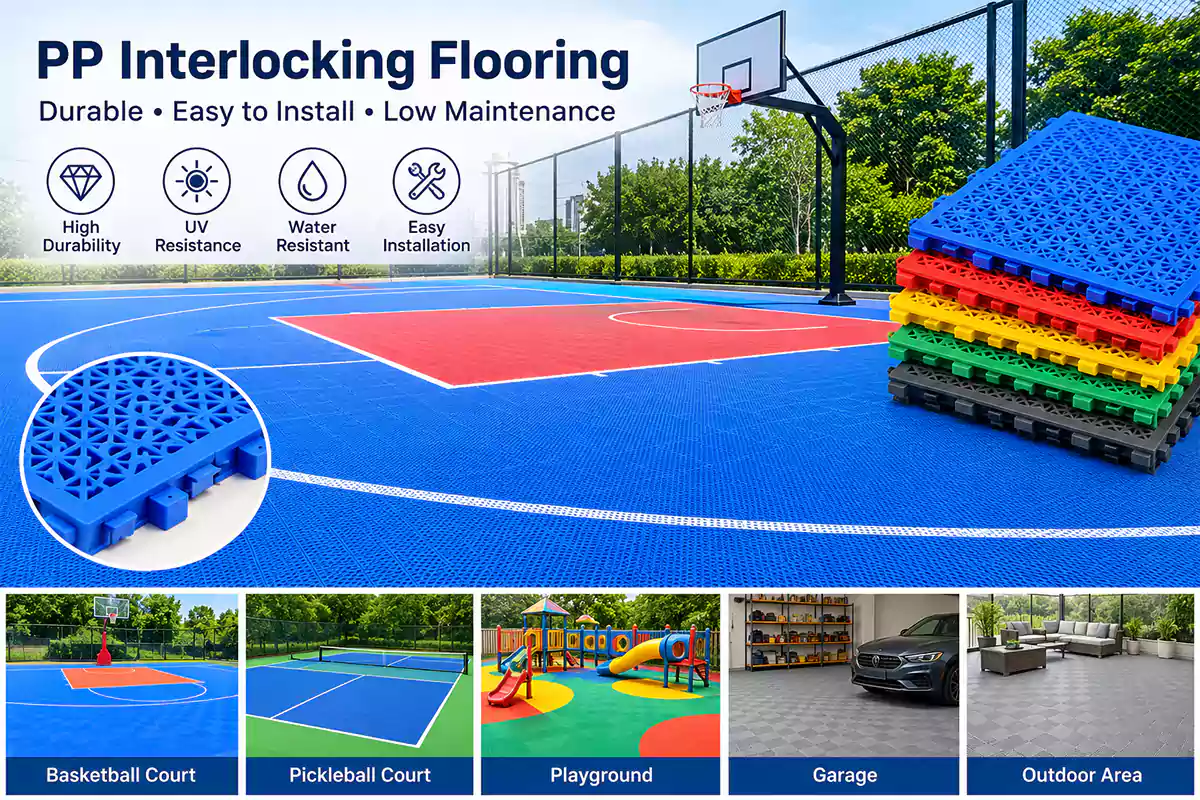
PP interlocking flooring is a practical flooring solution for sports courts, outdoor areas, garages, playgrounds, and commercial spaces. Made from durable polypropylene (PP), these modular floor tiles combine strength, easy installation, and low maintenance.
Unlike traditional flooring systems, PP interlock flooring uses a modular design. As a result, users can install, remove, replace, or expand individual tiles without rebuilding the entire floor.
What Is PP Interlocking Flooring?
PP interlocking flooring is a modular flooring system made primarily from polypropylene. Each tile features an interlocking structure that connects with adjacent tiles.
The installation process usually does not require adhesives, nails, or complicated tools. Instead, the tiles snap together to create a stable surface.
Moreover, PP flooring can be designed with different surface textures and colors. This makes it suitable for both functional and decorative applications.
Key Benefits of PP Interlocking Flooring
1. Easy Installation
One of the main advantages of PP interlocking flooring is its simple installation.
The tiles connect directly through their interlocking edges. Therefore, most projects can be installed quickly without specialized construction equipment.
This feature also makes PP flooring suitable for temporary and permanent applications.
2. High Durability
PP is a strong plastic material that can handle frequent use and mechanical impact. High-quality PP interlocking tiles can provide reliable performance in busy sports and recreational areas.
In addition, the modular structure helps simplify repairs. If one tile becomes damaged, you can replace the affected section instead of removing the entire floor.
3. Good Weather Resistance
Outdoor flooring needs to withstand changing weather conditions. PP interlocking floor can provide good resistance to moisture, sunlight, and temperature changes when properly formulated for outdoor use.
For this reason, PP flooring is commonly considered for outdoor sports courts, playgrounds, patios, and recreational areas.
4. Water and Moisture Resistance
PP does not absorb water in the same way as many wood-based flooring materials. This makes PP interlock flooring a useful option for areas exposed to moisture.
Some suspended PP flooring systems also create space underneath the tiles. Consequently, they can improve drainage and ventilation on suitable surfaces.
5. Easy Maintenance
PP interlocking flooring requires relatively simple maintenance.
Regular sweeping can remove dust and debris. For deeper cleaning, users can generally wash the surface with water and an appropriate mild cleaning solution.
Because the tiles are modular, damaged or heavily worn sections can also be removed and replaced individually.
PP Interlocking Flooring for Sports Courts
PP interlocking flooring is widely used for recreational and sports applications.
It can be suitable for:
- Basketball courts
- Pickleball courts
- Tennis courts
- Volleyball courts
- Badminton courts
- Table tennis areas
- Multi-sport courts
- Backyard sports courts
- Community recreation areas
For sports applications, surface texture and traction are particularly important. Therefore, buyers should choose a flooring system designed specifically for the intended sport.
For example, a basketball court may require different performance characteristics from a recreational outdoor floor.
PP Interlocking Flooring for Outdoor Areas
Outdoor flooring must handle moisture, sunlight, temperature changes, and regular foot traffic. PP interlocking floor offers a practical solution for many of these environments.
It can be used in:
- Outdoor recreational spaces
- Patios
- Walkways
- Playgrounds
- Parks
- Event areas
- Poolside areas
- Backyard activity spaces
Furthermore, the modular structure allows the floor to be expanded or rearranged when the layout changes.
PP Interlocking Flooring for Garages
PP interlocking flooring is also suitable for garages and workshops.
Garage flooring needs to handle vehicle traffic, dirt, oil, and mechanical equipment. Heavy-duty PP tiles can provide a durable surface while also improving the appearance of the garage.
Another advantage is easy replacement. If a section becomes damaged or stained, you can replace individual tiles instead of resurfacing the entire garage.
How to Install PP Interlocking Flooring
Installing PP interlock flooring is generally straightforward.
Step 1: Prepare the Base
First, clean the installation area. Remove dust, loose materials, and large debris.
The base should be reasonably flat and stable. Repair major cracks or uneven areas before installation.
Step 2: Plan the Layout
Next, determine the starting point and overall tile layout.
For sports courts, carefully measure the area before installation. This helps reduce cutting and material waste.
Step 3: Connect the Tiles
Place the first tile in the selected position. Then connect the next tile through the interlocking system.
Continue connecting the tiles row by row until the desired area is covered.
Step 4: Cut the Edge Tiles
If necessary, cut the tiles around walls, corners, posts, or other obstacles.
Use appropriate cutting tools and follow the manufacturer’s installation instructions.
Step 5: Check the Finished Floor
Finally, inspect the entire surface. Make sure the tiles are properly connected and the floor is stable.
For sports courts, also check the surface for gaps, raised edges, or other areas that could affect player safety.
PP Interlocking Flooring vs. Traditional Flooring
PP interlocking flooring offers several differences compared with traditional flooring.
| Feature | PP Interlocking Flooring | Traditional Flooring |
|---|---|---|
| Installation | Fast modular installation | Often requires more construction work |
| Replacement | Individual tiles can be replaced | Repairs may affect larger areas |
| Maintenance | Generally simple | Depends on material |
| Moisture resistance | Good | Varies by material |
| Flexibility | Easy to expand or rearrange | Usually less flexible |
| Outdoor use | Suitable for many applications | Depends on flooring type |
| Reusability | Some systems can be removed and reused | Often difficult |
However, the best flooring depends on the project. Buyers should consider traffic, climate, sports requirements, installation surface, budget, and expected service conditions before choosing a system.
How to Choose the Right PP Interlocking Flooring
Before purchasing PP interlocking floor, consider the following factors.
Material Quality
Choose flooring made from high-quality PP material. Material formulation can affect strength, durability, UV resistance, and long-term performance.
Surface Design
The surface should provide suitable traction for the intended application. Sports flooring, garage flooring, and recreational flooring may require different surface textures.
Load Capacity
Consider the expected loads. A sports court used by people has different requirements from a garage used for vehicles.
Drainage
For outdoor applications, drainage is important. Suspended or drainage-friendly designs can help water move away from the surface.
Installation System
Check the interlocking structure before purchasing. A well-designed connection system should provide secure installation while still allowing individual tiles to be removed when necessary.
Why Choose PP Interlocking Flooring?
PP interlocking flooring combines modular installation with durable plastic construction. It can provide a practical alternative to conventional flooring for many indoor and outdoor applications.
Most importantly, its modular structure simplifies installation, maintenance, and replacement. As a result, PP interlocking floor can reduce the complexity of future repairs and floor modifications.
For sports facilities, garages, playgrounds, and outdoor recreational spaces, PP interlocking floor is worth considering when durability, easy installation, and low maintenance are important priorities.
Conclusion
PP interlocking flooring is a versatile flooring solution for sports courts, garages, playgrounds, outdoor spaces, and other demanding environments.
Its key advantages include easy installation, durable PP construction, moisture resistance, simple maintenance, and modular replacement. In addition, different surface designs and colors allow manufacturers to adapt PP flooring to various applications.
If you are planning a new sports court or outdoor flooring project, choosing the right PP interlocking flooring system can help create a durable, attractive, and easy-to-maintain surface.