

PP Interlocking Flooring vs Traditional Flooring
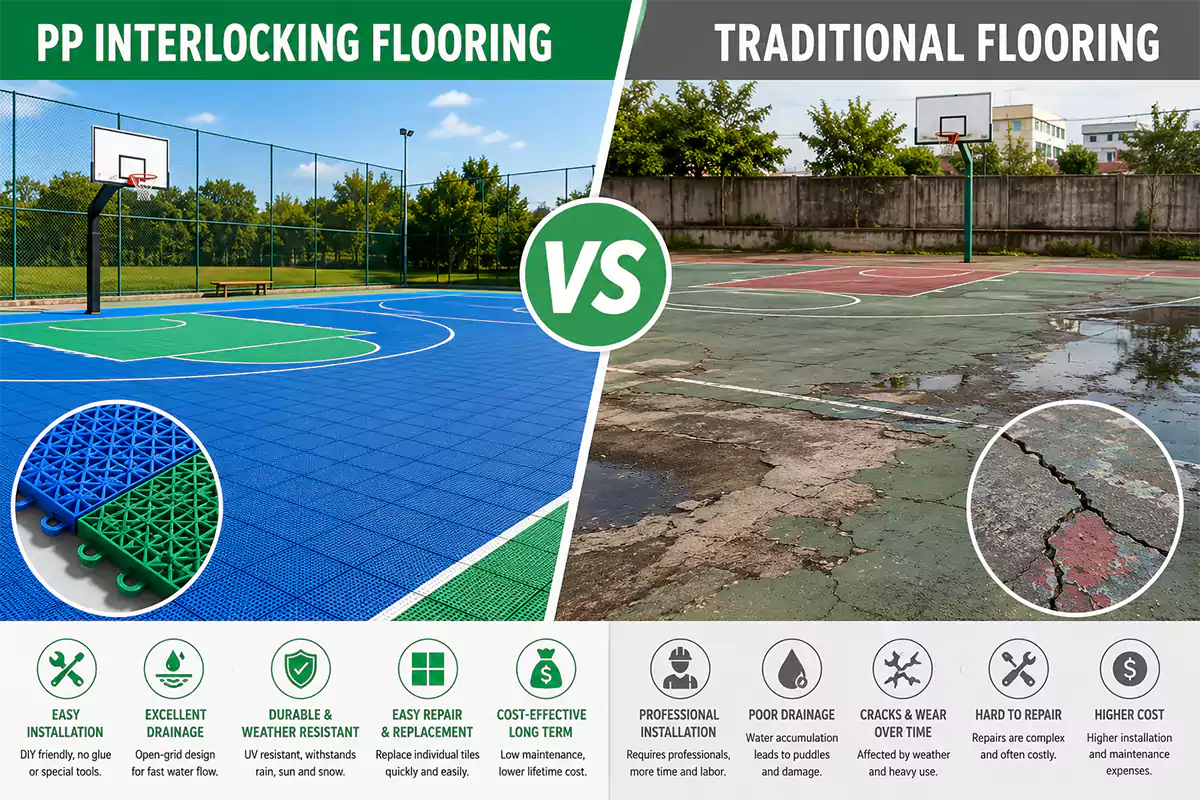
PP Interlocking Flooring vs Traditional Flooring: Which Is Better?Choosing the right flooring is one of the most important decisions for any sports court, playground, gym, or recreational area. While traditional flooring materials such as concrete, wood, epoxy, and rubber have been widely used for decades, PP interlocking flooring has become an increasingly popular alternative thanks to its easy installation, durability, and low maintenance.
But which option is better for your project?
In this guide, we’ll compare PP interlocking flooring with traditional flooring across multiple factors to help you make the best choice.
What Is PP Interlocking Flooring?
PP (Polypropylene) interlocking flooring consists of modular tiles that snap together without glue or nails. Designed for sports and recreational applications, these tiles feature drainage channels, shock absorption, UV resistance, and anti-slip surfaces.
They are commonly used for:
- Basketball courts
- Pickleball courts
- Tennis courts
- Volleyball courts
- Multi-sport courts
- School playgrounds
- Kindergarten activity areas
- Backyard sports courts
- Event flooring
What Is Traditional Flooring?
Traditional flooring includes permanent flooring systems such as:
- Concrete
- Hardwood sports floors
- Epoxy flooring
- PVC sheet flooring
- Rubber flooring
- Asphalt courts
These systems typically require professional installation and permanent foundations.
PP Interlocking Flooring vs Traditional Flooring
| Feature | PP Interlocking Flooring | Traditional Flooring |
|---|---|---|
| Installation | Quick DIY installation | Professional installation required |
| Installation Time | 1–3 days | Several days to weeks |
| Maintenance | Very low | Regular maintenance needed |
| Drainage | Excellent | Limited or none |
| Weather Resistance | Excellent | Varies by material |
| Shock Absorption | Good | Depends on flooring type |
| Portability | Removable and reusable | Permanent installation |
| Repair | Replace individual tiles | Often requires replacing large sections |
| Cost | Lower long-term cost | Higher installation and repair costs |
| Lifespan | 8–15+ years | Varies by material |
1. Installation
One of the biggest advantages of PP flooring is its installation speed.
PP Interlocking Flooring
- No adhesive required
- Snap-lock design
- Can be installed over concrete or asphalt
- Suitable for DIY installation
- Minimal tools required
Even a full-size basketball court can often be completed within a couple of days.
Traditional Flooring
Traditional flooring generally requires:
- Surface preparation
- Adhesives
- Professional installers
- Drying or curing time
- Specialized equipment
Installation is more labor-intensive and expensive.
Winner: PP Interlocking Flooring
2. Durability
Outdoor sports flooring must withstand heavy traffic and changing weather conditions.
PP Flooring
High-quality PP tiles are designed to resist:
- UV exposure
- Rain
- Snow
- Temperature fluctuations
- Heavy foot traffic
- Sports equipment
They also resist cracking better than concrete surfaces.
Traditional Flooring
Durability depends on the material:
- Concrete may crack over time.
- Hardwood can warp in humid conditions.
- Epoxy coatings may peel.
- Rubber surfaces gradually wear.
Winner: PP Interlocking Flooring (especially for outdoor use)
3. Maintenance
Maintenance costs often exceed the initial purchase price over time.
PP Flooring
Maintenance is simple:
- Sweep regularly
- Wash with water
- Remove leaves or debris
- Replace damaged tiles individually
No polishing, sealing, or repainting is normally required.
Traditional Flooring
Maintenance may include:
- Surface sealing
- Repainting court lines
- Crack repairs
- Sanding hardwood
- Recoating finishes
These tasks increase long-term costs.
Winner: PP Interlocking Flooring
4. Comfort and Safety
Athlete comfort directly affects performance and injury prevention.
PP Flooring
Many PP tiles feature:
- Shock absorption
- Slip-resistant textures
- Elastic support
- Improved ball bounce
- Reduced joint impact
Traditional Flooring
Performance varies:
- Concrete is hard and unforgiving.
- Hardwood performs well indoors.
- Rubber provides cushioning but is less suitable for ball sports.
Winner: PP Flooring for outdoor sports
5. Weather Resistance
Outdoor flooring faces constant exposure to the elements.
PP Flooring
Designed specifically for outdoor environments:
- UV resistant
- Waterproof
- Fast drainage
- Freeze-resistant
- Heat-resistant
The open-grid structure allows rainwater to drain quickly, reducing puddles.
Traditional Flooring
Concrete and asphalt can:
- Crack in freezing temperatures
- Develop standing water
- Become slippery when wet
Wood is generally unsuitable for outdoor use.
Winner: PP Interlocking Flooring
6. Repair and Replacement
Damage is inevitable over years of use.
PP Flooring
Simply unlock and replace the damaged tile without affecting the surrounding floor.
Traditional Flooring
Repairs often involve:
- Removing large sections
- Patching surfaces
- Repainting
- Extended downtime
Winner: PP Interlocking Flooring
7. Cost Comparison
Although initial costs vary depending on the project size, the total cost of ownership is equally important.
PP Flooring
Lower long-term expenses because of:
- Faster installation
- Minimal maintenance
- Easy repairs
- Long service life
Traditional Flooring
Costs increase due to:
- Professional labor
- Maintenance
- Repairs
- Surface refinishing
For schools, sports clubs, and homeowners, PP flooring often delivers better long-term value.
Best Applications for PP Interlocking Flooring
PP interlocking flooring is ideal for:
- Outdoor basketball courts
- Pickleball courts
- Tennis courts
- Volleyball courts
- Multi-sport facilities
- School playgrounds
- Kindergarten play areas
- Community sports parks
- Rooftop sports areas
- Residential backyards
When Traditional Flooring May Be the Better Choice
Traditional flooring is still suitable in certain situations:
- Professional indoor basketball arenas (hardwood)
- Luxury indoor gymnasiums
- Industrial facilities
- Warehouses
- Commercial buildings
- Permanent indoor installations requiring specialized flooring systems
Which Flooring Should You Choose?
Choose PP interlocking flooring if you want:
- Fast installation
- Low maintenance
- Excellent outdoor durability
- Easy tile replacement
- Good sports performance
- Cost-effective long-term ownership
Choose traditional flooring if your project requires:
- Professional indoor hardwood courts
- Heavy industrial flooring
- Permanent indoor architectural finishes
For most outdoor sports courts and recreational spaces, PP interlocking flooring provides the best combination of performance, durability, affordability, and convenience.
Frequently Asked Questions
Is PP interlocking flooring better than concrete?
Yes. PP flooring offers superior shock absorption, drainage, slip resistance, and comfort while being easier to repair and maintain.
Can PP flooring be installed over existing concrete?
Yes. It can be installed directly over clean, level concrete or asphalt surfaces without adhesives.
How long does PP interlocking flooring last?
High-quality PP sports flooring typically lasts 8–15 years or longer, depending on usage, climate, and maintenance.
Is PP flooring suitable for all weather conditions?
Yes. Premium PP interlocking tiles are designed to withstand rain, sunlight, freezing temperatures, and heat while maintaining stable performance.
Conclusion
Both PP interlocking flooring and traditional flooring have their strengths, but for outdoor sports facilities, playgrounds, schools, and residential courts, PP interlocking flooring stands out as the more practical and economical solution.
Its quick installation, low maintenance, weather resistance, modular repair, and long lifespan make it an excellent investment for modern sports flooring projects. Whether you’re building a basketball court, pickleball court, or multi-purpose play area, PP interlocking flooring delivers reliable