

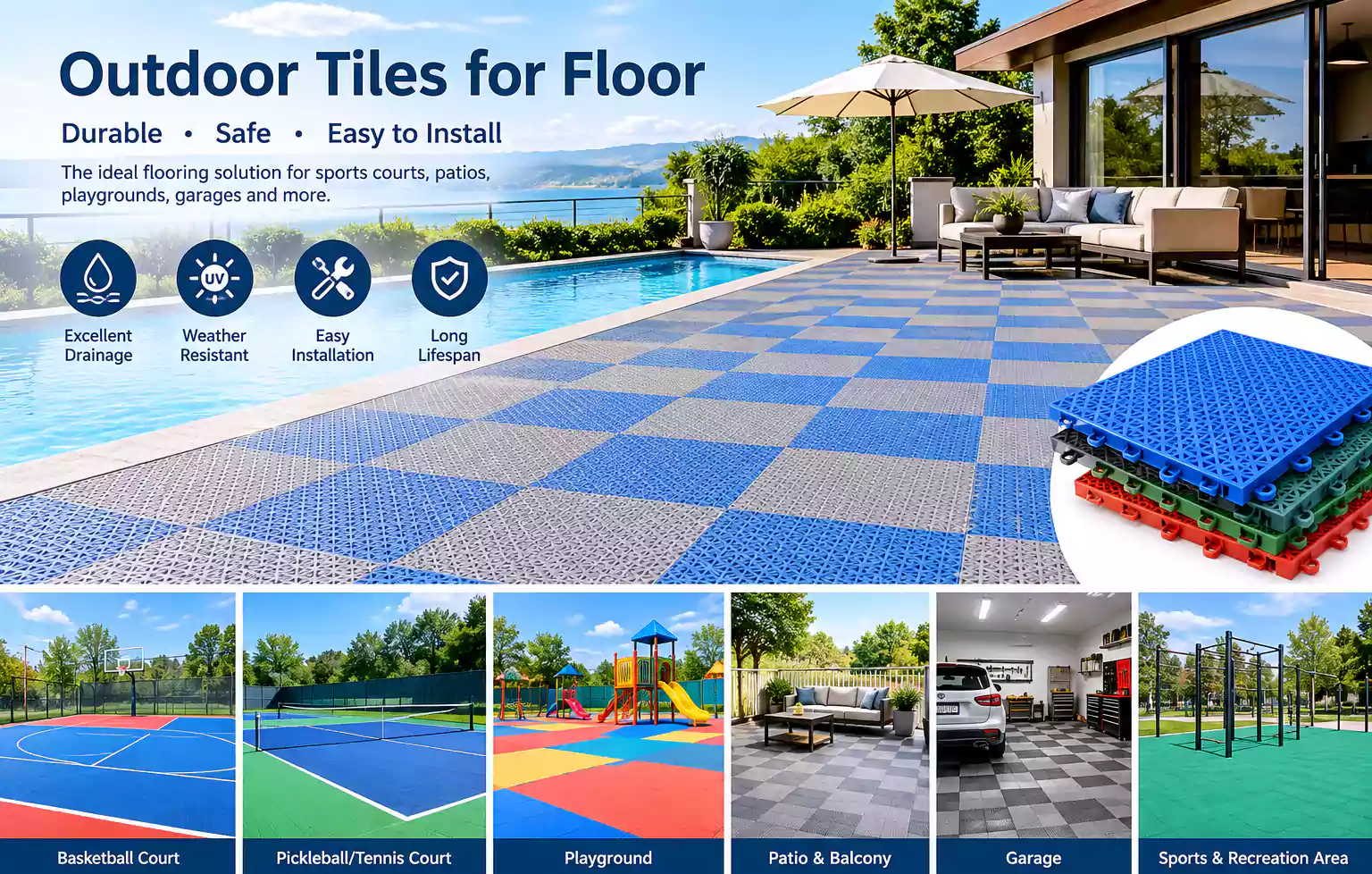

Outdoor Tiles for Floor: A Practical Guide to Choosing the Right Outdoor Flooring
Outdoor flooring needs to handle weather, moisture, heavy use, and daily wear. For patios, balconies, sports courts, playgrounds, garages, and recreational areas, choosing the right outdoor tiles for floor can improve safety, durability, and overall appearance.
Among the available options, interlocking plastic flooring has become a practical solution for many outdoor applications. PP and TPE flooring systems offer easy installation, good drainage, and flexible design options without the complexity of permanent floor construction.
What Are Outdoor Tiles for Floor?
Outdoor floor tiles are modular flooring products designed for exterior environments. Unlike traditional flooring materials, many modern outdoor tiles can be installed directly over a suitable hard and relatively level surface.
Interlocking tiles are especially convenient because individual pieces connect together without complicated adhesives. As a result, installation can be faster, and damaged sections can be replaced without removing the entire floor.
Depending on the application, outdoor tiles can be made from materials such as polypropylene (PP), TPE, rubber, wood-plastic composites, or other weather-resistant materials.
Why Choose Interlocking Outdoor Floor Tiles?
1. Easy Installation
One of the main advantages of interlocking outdoor flooring is its simple installation method. The tiles connect through integrated locking systems, reducing the need for complicated tools or permanent adhesives.
For temporary sports courts, patios, event spaces, and recreational areas, this modular design can significantly simplify installation.
2. Excellent Drainage
Outdoor flooring is frequently exposed to rain and water. Therefore, drainage is an important consideration.
Many PP sports flooring systems use a raised or perforated structure that allows water to pass beneath the surface. This design helps reduce standing water and allows the floor to dry more quickly after rainfall.
Proper drainage can also improve surface safety in outdoor sports areas.
3. Weather Resistance
Outdoor flooring must withstand changing environmental conditions. Quality PP interlocking tiles can provide good resistance to moisture, sunlight, temperature changes, and everyday outdoor use.
However, actual performance depends on the material formulation, UV stabilization, product structure, installation conditions, and local climate.
4. Modular and Replaceable
Another benefit of modular flooring is easy maintenance.
If one tile becomes damaged, you can usually remove the affected section and install a replacement tile. There is no need to replace the entire floor system.
This feature is particularly useful for sports courts, playgrounds, garages, and commercial outdoor areas that receive frequent use.
PP vs. TPE Outdoor Flooring
TPE flooring generally provides greater elasticity and a softer underfoot feel.
The best material depends on the intended application, performance requirements, budget, and installation environment.
Where Can Outdoor Floor Tiles Be Used?
Interlocking outdoor tiles can be used in many different environments.
Outdoor Sports Courts
Modular flooring is suitable for basketball, pickleball, tennis, volleyball, badminton, and multi-purpose courts.
A well-designed sports flooring system can provide traction, ball response, drainage, and a consistent playing surface.
Patios and Balconies
Outdoor tiles can transform concrete patios, balconies, terraces, and recreational areas into more comfortable usable spaces.
The modular structure also makes it easier to change or repair sections of the floor in the future.
Playgrounds and Recreation Areas
Outdoor interlocking tiles can be used around playgrounds, community recreation areas, and activity spaces. Bright colors and modular patterns also allow designers to create customized layouts.
Garages and Workshops
Heavy-duty interlocking tiles can provide a practical surface for garages and workshops. Depending on the product design, they can help create a durable, easy-to-maintain floor over a suitable existing surface.
Commercial and Public Spaces
Outdoor flooring can also be used in exhibition areas, temporary event spaces, entertainment areas, parks, and other high-traffic environments.
How to Install Outdoor Interlocking Floor Tiles
Installation is generally straightforward, but the base surface should be prepared correctly.
Step 1: Prepare the Surface
Clean the installation area and remove dirt, oil, debris, and loose materials. The base should be sufficiently stable and reasonably level.
Step 2: Plan the Layout
Measure the area and determine the tile arrangement before installation. For sports courts, mark the court dimensions and plan the color pattern in advance.
Step 3: Connect the Tiles
Place the first tile in the selected starting position. Connect additional tiles through the interlocking system and continue row by row.
Step 4: Cut Edge Pieces When Necessary
If the installation area has irregular edges, tiles can usually be cut to fit using appropriate cutting tools and safety procedures.
Step 5: Inspect the Finished Floor
After installation, check the connections and edges. Make sure the tiles are properly locked and that there are no significant gaps or unstable sections.
What Should You Consider When Buying Outdoor Floor Tiles?
Before purchasing outdoor tiles for floor applications, consider the following factors:
- Material: PP, TPE, rubber, and other materials offer different performance characteristics.
- Drainage: Outdoor sports areas should have an effective drainage structure.
- UV resistance: Outdoor products should be designed for exposure to sunlight.
- Load capacity: Choose a flooring system suitable for the expected traffic and equipment.
- Surface texture: The surface should provide appropriate traction for the intended application.
- Installation: Interlocking systems can reduce installation complexity.
- Maintenance: Modular products should allow convenient cleaning and replacement.
- Customization: Different colors and patterns can help create branded or professional-looking courts.
Outdoor Tiles for Floor vs. Traditional Flooring
Traditional outdoor flooring can require extensive preparation, adhesives, professional installation, or permanent construction.
By comparison, interlocking outdoor tiles provide a modular approach. They can often be installed more quickly and maintained by replacing individual sections.
For temporary facilities or projects where future modification is important, modular flooring can provide additional flexibility.
However, traditional systems may still be appropriate when a permanent, fully bonded flooring surface is required. The right solution depends on the project conditions and performance requirements.
How to Maintain Outdoor Interlocking Flooring
Regular maintenance helps keep outdoor flooring attractive and functional.
First, remove leaves, dirt, and other debris from the surface. Next, clean the tiles with water and a suitable mild cleaning solution when necessary.
For sports courts, inspect the surface regularly for damaged tiles, loose connections, excessive wear, or drainage problems. Replace damaged sections as needed.
Avoid using aggressive chemicals unless the flooring manufacturer confirms that they are compatible with the material.
Final Thoughts
Choosing the right outdoor tiles for floor applications requires more than simply comparing appearance and price. Material performance, drainage, weather resistance, installation method, maintenance, and intended use should all be considered.
For outdoor sports courts and recreational areas, PP and TPE interlocking flooring can provide a flexible alternative to traditional flooring systems. Their modular construction makes installation, maintenance, customization, and partial replacement more convenient.
Whether you are building a basketball court, pickleball court, patio, playground, garage, or multi-purpose outdoor area, selecting a flooring system designed for the specific environment can help create a safer, more durable, and functional surface.