


Outdoor Interlocking Flooring: A Durable and Flexible Solution for Outdoor Spaces
Outdoor flooring needs to handle sunlight, rain, temperature changes, heavy foot traffic, and daily wear. Therefore, choosing the right surface is important for both performance and long-term maintenance.
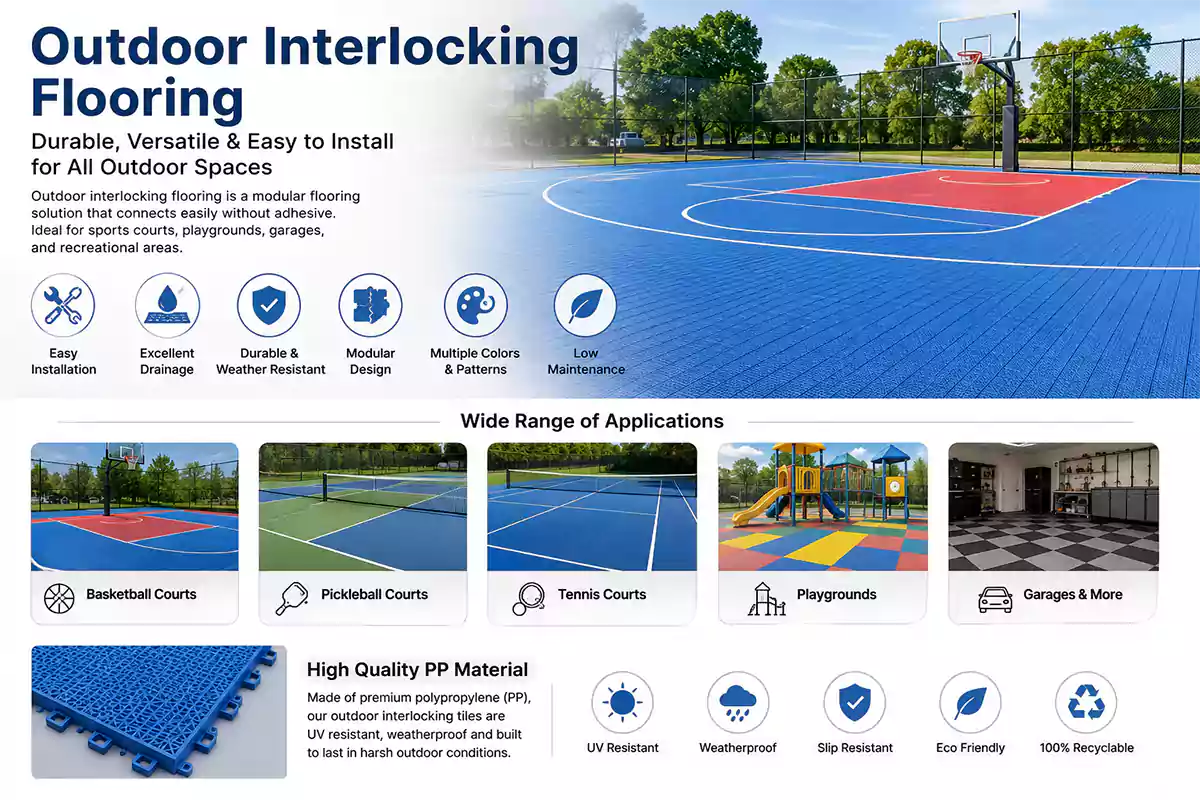
Outdoor interlocking flooring provides a practical solution for sports courts, recreational areas, playgrounds, garages, and other outdoor spaces. Unlike traditional flooring systems, interlocking tiles use a modular design. The tiles connect directly without adhesive, making installation faster and allowing individual tiles to be replaced when necessary.
For outdoor sports applications, PP interlocking flooring is especially popular because it combines durability, drainage, easy installation, and flexible design.
What Is Outdoor Interlocking Flooring?
Outdoor interlocking flooring consists of individual tiles that connect through a locking system. Each tile forms part of a continuous floor after installation.
Many outdoor sports tiles use polypropylene (PP) because the material provides good wear resistance and weather resistance. Suspended or perforated structures can also help water drain away from the playing surface.
The modular structure offers several practical benefits:
- Fast and simple installation
- No adhesive required
- Easy tile replacement
- Flexible court layouts
- Good drainage performance
- Low routine maintenance
- Multiple colors and patterns
- Suitable for temporary or permanent applications
As a result, outdoor interlocking flooring can work well for both new projects and renovation projects.
Why Choose PP for Outdoor Interlocking Flooring?
When selecting outdoor flooring, material performance matters. PP is widely used for modular sports flooring because it offers a useful balance between durability, weight, and cost.
1. Durable Construction
Outdoor courts experience repeated impact from running, jumping, and sports equipment. Therefore, the flooring needs to withstand frequent use.
PP interlocking tiles provide a hard-wearing surface designed for high-traffic areas. With the right tile structure, they can support basketball, tennis, pickleball, volleyball, badminton, and other recreational activities.
2. Weather Resistance
Outdoor flooring is exposed to sunlight, rain, humidity, and temperature changes.
Quality PP outdoor flooring can be designed with UV-resistant additives and weather-resistant materials. This helps the tiles maintain their appearance and structural performance during outdoor use.
However, performance depends on the specific PP formulation, UV stabilization, tile design, and local climate. Therefore, buyers should check the manufacturer’s technical specifications before selecting a product.
3. Efficient Water Drainage
Water accumulation can make outdoor courts difficult to use after rain. It can also increase maintenance requirements.
Many suspended PP sports tiles feature openings or a raised structure underneath. This design allows water to move through the flooring and drain away from the playing surface.
This feature is particularly useful for outdoor basketball courts, pickleball courts, tennis courts, and multi-sport facilities.
4. Quick Installation
Traditional outdoor flooring can require more complicated construction and installation processes. In comparison, interlocking flooring uses a simple connection system.
Installers can connect the tiles section by section. No adhesive is normally required for the basic installation. This can reduce installation time and make the flooring easier to remove or modify later.
For example, a typical installation process includes:
- Prepare a stable and level base.
- Clean the installation area.
- Plan the court layout.
- Connect the interlocking tiles.
- Install edge pieces where required.
- Add court lines and markings.
- Inspect the completed surface.
A flat and stable foundation remains important. Interlocking tiles cannot correct major problems with an uneven or damaged base.
Outdoor Interlocking Flooring for Sports Courts
One of the most important applications for outdoor interlocking flooring is sports court construction.
Basketball Courts
Basketball courts require good traction, durability, and consistent playing performance. PP interlocking sports tiles provide a modular surface that can be designed for frequent running, jumping, and lateral movement.
They are suitable for:
- Backyard basketball courts
- Community basketball courts
- School sports facilities
- Training courts
- Multi-purpose outdoor courts
Pickleball Courts
Pickleball has become increasingly popular in outdoor recreational facilities. A suitable surface should provide good grip, durability, and drainage.
Outdoor interlocking flooring can create a clean and organized playing surface while also allowing damaged tiles to be replaced individually.
Tennis Courts
Outdoor interlocking tiles can also be used for tennis applications. Their modular structure makes them useful for new courts, recreational facilities, and multi-purpose sports areas.
Multi-Sport Courts
If one facility needs to support several sports, modular flooring offers greater flexibility.
A single outdoor court can be designed for:
- Basketball
- Pickleball
- Tennis
- Volleyball
- Badminton
- Futsal
- Recreational activities
This flexibility makes outdoor interlocking flooring a practical choice for schools, parks, community centers, and residential sports areas.
Outdoor Interlocking Flooring Beyond Sports
The applications are not limited to sports courts.
Depending on the tile design and load requirements, interlocking flooring can also be used in:
Playgrounds
Colorful modular tiles can help create attractive activity areas for children. Softer or cushioned systems may be preferred when impact protection is a higher priority.
Parks and Recreation Areas
Outdoor interlocking tiles can be used in community recreation spaces and activity zones where easy maintenance and modular replacement are important.
Garages
Heavy-duty interlocking tiles can create a durable surface for residential or commercial garage areas. They can also be removed and replaced without rebuilding the entire floor.
Temporary Event Areas
Because the tiles can be assembled and disassembled, modular flooring can be useful for temporary venues and event spaces.
Outdoor Interlocking Flooring vs. Traditional Outdoor Flooring
Traditional concrete and asphalt remain common choices for outdoor areas. However, modular flooring offers several different advantages.
| Feature | Outdoor Interlocking Flooring | Traditional Concrete/Asphalt |
|---|---|---|
| Installation | Fast modular installation | More construction work |
| Adhesive | Usually not required | Not applicable |
| Replacement | Individual tiles | Repairs can be more complex |
| Drainage | Designed drainage structures available | Depends on slope and drainage system |
| Design | Multiple colors and patterns | Usually limited |
| Modification | Easy to reconfigure | Difficult |
| Maintenance | Relatively simple | Surface repairs may require more work |
The best choice depends on the project. For permanent heavy-duty infrastructure, concrete or asphalt may still be appropriate. For modular sports courts and recreational areas, interlocking flooring can provide greater flexibility.
How to Choose the Right Outdoor Interlocking Flooring
Not every interlocking tile is suitable for every outdoor application. Before purchasing, consider the following factors.
Material
PP is a common choice for outdoor modular flooring because of its durability and weather resistance. However, different formulations and grades can provide different performance.
Tile Structure
The structure affects drainage, cushioning, stability, and overall playing feel.
For sports applications, look for a design that provides sufficient support while maintaining appropriate traction and ball response.
Surface Texture
A suitable surface texture can improve grip during running and lateral movement. It should also be easy to clean.
UV Resistance
Outdoor flooring receives prolonged exposure to sunlight. Therefore, UV stabilization is an important factor when selecting tiles for long-term outdoor use.
Drainage
For rainy climates, drainage should be one of the main considerations. Suspended and perforated tile structures can help prevent water from remaining on the playing surface.
Color and Design
Modern interlocking flooring can be produced in different colors. This allows manufacturers and project owners to create customized court layouts, logos, borders, and sports markings.
Load Requirements
Consider how the floor will be used. A backyard court, commercial sports facility, playground, and garage may require different tile structures and load capacities.
How to Maintain Outdoor Interlocking Flooring
One advantage of modular flooring is relatively simple maintenance.
Regular maintenance can include:
- Remove leaves and loose debris.
- Sweep or wash the surface regularly.
- Clean spills as soon as possible.
- Check connections periodically.
- Inspect damaged tiles.
- Replace broken tiles when necessary.
- Keep drainage areas clear.
Because the flooring uses individual tiles, localized damage does not necessarily require replacing the entire court. This modular design can help reduce long-term maintenance costs.
Is Outdoor Interlocking Flooring a Good Choice?
For many outdoor applications, the answer is yes.
Outdoor interlocking flooring combines modular installation, durability, weather resistance, drainage, and easy maintenance. These features make it particularly suitable for outdoor sports courts, backyard courts, schools, parks, playgrounds, and recreational areas.
For sports projects, PP interlocking flooring can be an especially practical option. It provides a flexible alternative to traditional outdoor surfaces while allowing project owners to customize colors, layouts, and court designs.
However, the right product depends on the sport, climate, base condition, expected traffic, and performance requirements.
Why Work With an Outdoor Interlocking Flooring Manufacturer?
For distributors, contractors, sports facility developers, and importers, working directly with a manufacturer can provide additional benefits.
A professional factory can offer:
- Factory-direct pricing
- OEM and ODM services
- Custom colors
- Custom court patterns
- Logo customization
- Different tile structures
- Technical installation support
- Bulk production
- Export packaging
- Project-specific flooring solutions
For large sports projects, manufacturers can also help select the appropriate tile structure according to the court type and application.
Conclusion
Outdoor interlocking flooring is a flexible solution for modern outdoor spaces. Its modular design makes installation, replacement, and future modification easier than many traditional flooring systems.
For sports courts, PP interlocking flooring offers a combination of durability, weather resistance, drainage, easy installation, and design flexibility. It can be used for basketball, pickleball, tennis, volleyball, badminton, multi-sport courts, and recreational areas.
If you are planning an outdoor sports flooring project, choosing the right material, tile structure, surface texture, drainage system, and base is essential. With the right product and proper installation, outdoor interlocking flooring can provide a durable and practical surface for years of regular use.