

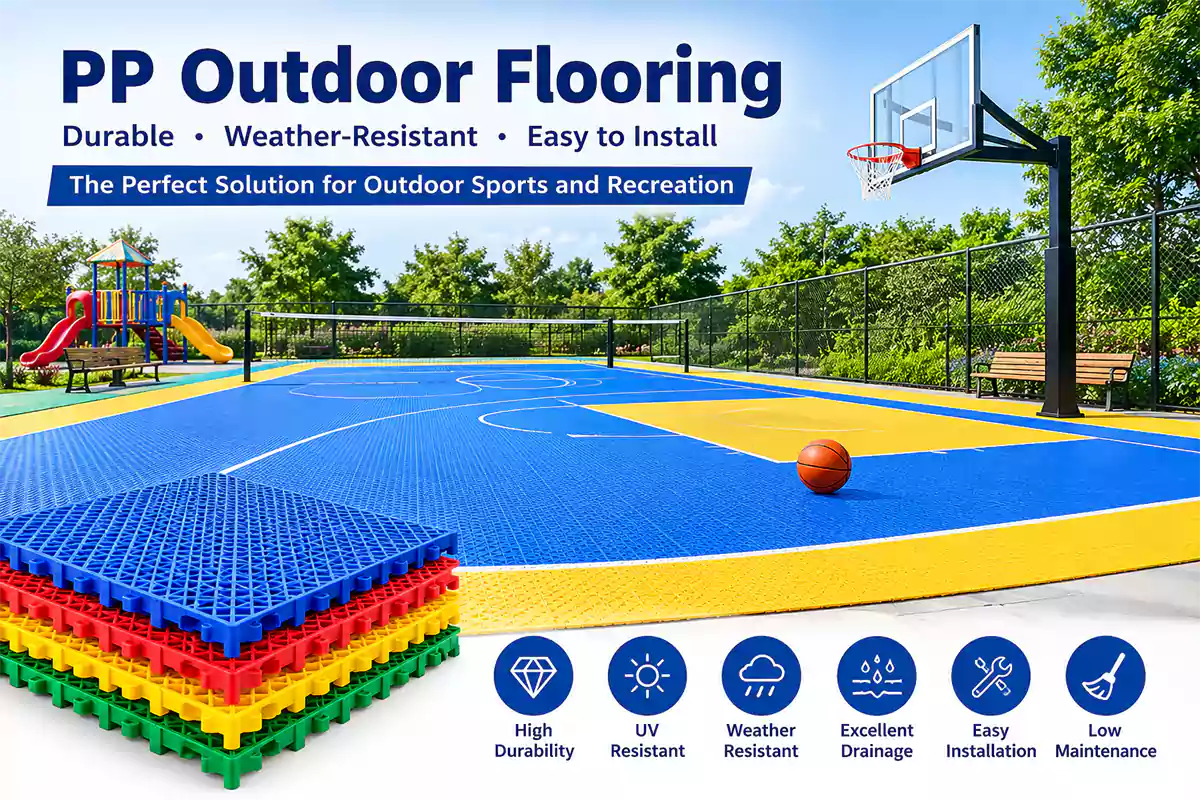

Outdoor flooring plays an important role in creating safe, comfortable, and durable outdoor spaces. Whether you are building a sports court, backyard recreation area, playground, patio, or commercial outdoor space, choosing the right flooring can improve both performance and appearance.
Among the available options, PP interlocking outdoor flooring has become a popular choice because it combines durability, easy installation, drainage, and low maintenance. In this guide, we will explain the main types of outdoor flooring, their benefits, applications, and how to choose the right solution for your project.
What Is Outdoor Flooring?
Outdoor flooring refers to flooring systems designed to withstand outdoor conditions such as sunlight, rain, temperature changes, moisture, and frequent use.
Unlike indoor flooring, outdoor surfaces need to provide better weather resistance and long-term durability. They should also offer good traction and stability for users.
Depending on the application, outdoor flooring can include:
- PP interlocking flooring
- Rubber outdoor flooring
- PVC flooring
- Concrete surfaces
- Outdoor tiles
- Artificial turf
- Wood decking
Each option has different advantages. Therefore, the best choice depends on the intended application, climate, installation method, and maintenance requirements.
Why Choose PP Interlocking Outdoor Flooring?
PP interlocking flooring is made from polypropylene, a durable plastic material designed for demanding applications. The modular tile structure allows the flooring to connect together without complicated installation.
Moreover, PP flooring provides several advantages for outdoor environments.
1. Excellent Durability
Outdoor flooring must withstand regular foot traffic, sports activities, and changing weather conditions. PP interlocking tiles offer good impact resistance and structural strength.
As a result, they can be used in sports courts, recreational areas, garages, and other high-use outdoor spaces.
2. Weather and UV Resistance
Outdoor surfaces are exposed to sunlight, rain, and temperature changes throughout the year. High-quality PP flooring can provide good resistance to UV exposure and outdoor weather conditions.
Therefore, it can maintain reliable performance during long-term outdoor use when properly designed and manufactured.
3. Easy Installation
One of the biggest advantages of interlocking outdoor flooring is its simple installation system.
The tiles connect through an interlocking mechanism, so they usually do not require complicated adhesives or specialized installation equipment.
In addition, individual tiles can be removed and replaced when necessary. This makes maintenance more convenient than repairing an entire traditional floor.
4. Effective Drainage
Water accumulation can create problems on outdoor surfaces. Fortunately, many PP suspended flooring systems feature an open structure underneath the tiles.
This design allows water to drain away from the surface more efficiently. Consequently, the floor can dry faster after rain or cleaning.
5. Low Maintenance
Outdoor floor should be easy to clean and maintain. PP flooring has a relatively non-porous surface, making routine cleaning simple.
For most applications, regular sweeping, washing, and occasional deep cleaning can help maintain the appearance and performance of the floor.
Outdoor Flooring for Sports Courts
Sports courts require flooring that provides stability, traction, and comfortable movement. For this reason, modular PP flooring is widely considered for outdoor sports applications.
It can be used for:
- Basketball courts
- Pickleball courts
- Tennis courts
- Volleyball courts
- Badminton courts
- Table tennis areas
- Multi-sport courts
- Recreational sports areas
The interlocking design also makes it possible to create different court layouts and color combinations.
For example, different tile colors can define playing areas, boundaries, and functional zones. This approach can improve the visual appearance of the court while supporting practical use.
Outdoor Flooring for Backyards
Backyards can be transformed into flexible recreation areas with the right outdoor floor.
PP interlocking tiles can be installed over suitable hard surfaces to create areas for basketball, fitness, children’s activities, or general recreation.
Furthermore, the modular design allows homeowners to change or expand the flooring when their needs change.
This flexibility makes interlocking flooring especially useful for backyard sports courts and temporary outdoor activity areas.
Outdoor Flooring for Playgrounds
Safety is an important consideration when selecting flooring for playgrounds.
Outdoor playground flooring should provide good traction and help create a comfortable surface for children. Depending on the playground design, manufacturers may use rubber, plastic, or other specialized materials.
For areas where modular plastic flooring is appropriate, PP interlocking tiles can provide a durable and easy-to-maintain surface.
However, playground projects should always consider applicable local safety standards and impact-protection requirements.
Outdoor Flooring for Patios and Recreational Areas
Outdoor floor is also suitable for patios, terraces, balconies, poolside areas, and recreational spaces.
Compared with permanently installed surfaces, modular flooring offers greater flexibility. Tiles can be installed, removed, or replaced without rebuilding the entire surface.
Additionally, different colors and patterns can help create a customized appearance.
PP Outdoor Flooring vs. Traditional Outdoor Surfaces
Traditional outdoor surfaces such as concrete can provide excellent structural strength. However, they may be difficult and expensive to modify after installation.
PP interlocking flooring offers a different approach.
| Feature | PP Interlocking Flooring | Traditional Concrete |
|---|---|---|
| Installation | Fast modular installation | More complex |
| Replacement | Individual tiles can be replaced | Repairs can be more difficult |
| Drainage | Available with drainage designs | Depends on surface design |
| Portability | Can be removed and reused | Permanent |
| Customization | Multiple colors and layouts | Limited |
| Maintenance | Relatively simple | May require repairs |
Therefore, PP flooring can be a practical alternative when flexibility, installation speed, and maintenance are important.
How to Choose the Best Outdoor Flooring
Choosing the right outdoor floor depends on several factors.
Consider the Application
First, determine how the floor will be used. Sports courts require different performance characteristics from patios, playgrounds, or garages.
Consider Weather Conditions
Next, consider local weather conditions. If the flooring will receive strong sunlight or heavy rainfall, UV resistance, water management, and temperature resistance become particularly important.
Check Surface Compatibility
The existing ground should also be evaluated before installation. PP interlocking flooring generally works best on a stable and relatively level base.
Uneven or damaged surfaces may require preparation before installation.
Evaluate Maintenance Requirements
Finally, consider how much maintenance the flooring will require. A low-maintenance surface can reduce long-term labor and operating costs.
How to Install PP Interlocking Outdoor Flooring
Installing PP interlocking flooring is relatively straightforward.
Step 1: Prepare the Surface
Clean the installation area and remove dirt, debris, and loose materials. Make sure the base is stable and reasonably level.
Step 2: Plan the Layout
Before installation, determine the direction and pattern of the tiles. Planning the layout can reduce cutting and material waste.
Step 3: Connect the Tiles
Place the tiles on the prepared surface and connect them using the interlocking system.
Apply steady pressure to ensure that the connections are properly engaged.
Step 4: Install Edge Pieces
After completing the main floor area, install suitable edge or ramp accessories where required.
Step 5: Inspect the Finished Floor
Finally, check the connections and surface to make sure the flooring is stable and properly installed.
How to Maintain Outdoor Flooring
Proper maintenance can extend the service life of outdoor floor.
First, remove dirt and leaves regularly. Next, wash the surface with water when necessary.
For more difficult stains, use a suitable mild cleaning solution and a soft brush. Avoid harsh chemicals that may damage the flooring material.
In addition, inspect the floor periodically for damaged or loose tiles. Since PP interlocking flooring uses a modular design, damaged tiles can usually be replaced individually.
Is PP Interlocking Flooring a Good Choice for Outdoor Use?
Yes, PP interlocking flooring can be an excellent choice for many outdoor applications.
It combines durability, modular installation, drainage, low maintenance, and design flexibility. These characteristics make it suitable for sports courts, backyards, recreational areas, and other outdoor projects.
However, product selection should always consider the specific application. Sports courts, playgrounds, garages, and commercial spaces may require different surface structures and performance specifications.
Conclusion
Choosing the right outdoor flooring can improve the safety, appearance, and usability of an outdoor space. While traditional materials remain suitable for many projects, modular PP interlocking flooring provides a flexible alternative.
With its durable structure, easy installation, drainage capabilities, and simple maintenance, PP outdoor flooring is suitable for a wide range of applications.
Whether you are developing a basketball court, pickleball court, tennis court, backyard sports area, playground, or recreational space, PP interlocking flooring can provide a practical and customizable flooring solution.
If you are looking for reliable outdoor flooring solutions, working with an experienced manufacturer can help you select the right tile structure, surface design, colors, and accessories for your project.
A Complete Guide to Durable and Versatile Outdoor Surfaces
Outdoor flooring plays an important role in creating safe, comfortable, and durable outdoor spaces. Whether you are building a sports court, backyard recreation area, playground, patio, or commercial outdoor space, choosing the right flooring can improve both performance and appearance.
Among the available options, PP interlocking outdoor flooring has become a popular choice because it combines durability, easy installation, drainage, and low maintenance. In this guide, we will explain the main types of outdoor floor, their benefits, applications, and how to choose the right solution for your project.
What Is Outdoor Flooring?
Outdoor flooring refers to flooring systems designed to withstand outdoor conditions such as sunlight, rain, temperature changes, moisture, and frequent use.
Unlike indoor flooring, outdoor surfaces need to provide better weather resistance and long-term durability. They should also offer good traction and stability for users.
Depending on the application, outdoor floor can include:
- PP interlocking flooring
- Rubber outdoor flooring
- PVC flooring
- Concrete surfaces
- Outdoor tiles
- Artificial turf
- Wood decking
Each option has different advantages. Therefore, the best choice depends on the intended application, climate, installation method, and maintenance requirements.
Why Choose PP Interlocking Outdoor Flooring?
PP interlocking flooring is made from polypropylene, a durable plastic material designed for demanding applications. The modular tile structure allows the flooring to connect together without complicated installation.
Moreover, PP flooring provides several advantages for outdoor environments.
1. Excellent Durability
Outdoor flooring must withstand regular foot traffic, sports activities, and changing weather conditions. PP interlocking tiles offer good impact resistance and structural strength.
As a result, they can be used in sports courts, recreational areas, garages, and other high-use outdoor spaces.
2. Weather and UV Resistance
Outdoor surfaces are exposed to sunlight, rain, and temperature changes throughout the year. High-quality PP flooring can provide good resistance to UV exposure and outdoor weather conditions.
Therefore, it can maintain reliable performance during long-term outdoor use when properly designed and manufactured.
3. Easy Installation
One of the biggest advantages of interlocking outdoor flooring is its simple installation system.
The tiles connect through an interlocking mechanism, so they usually do not require complicated adhesives or specialized installation equipment.
In addition, individual tiles can be removed and replaced when necessary. This makes maintenance more convenient than repairing an entire traditional floor.
4. Effective Drainage
Water accumulation can create problems on outdoor surfaces. Fortunately, many PP suspended flooring systems feature an open structure underneath the tiles.
This design allows water to drain away from the surface more efficiently. Consequently, the floor can dry faster after rain or cleaning.
5. Low Maintenance
Outdoor flooring should be easy to clean and maintain. PP flooring has a relatively non-porous surface, making routine cleaning simple.
For most applications, regular sweeping, washing, and occasional deep cleaning can help maintain the appearance and performance of the floor.
Outdoor Flooring for Sports Courts
Sports courts require flooring that provides stability, traction, and comfortable movement. For this reason, modular PP flooring is widely considered for outdoor sports applications.
It can be used for:
- Basketball courts
- Pickleball courts
- Tennis courts
- Volleyball courts
- Badminton courts
- Table tennis areas
- Multi-sport courts
- Recreational sports areas
The interlocking design also makes it possible to create different court layouts and color combinations.
For example, different tile colors can define playing areas, boundaries, and functional zones. This approach can improve the visual appearance of the court while supporting practical use.
Outdoor Flooring for Backyards
Backyards can be transformed into flexible recreation areas with the right outdoor floor.
PP interlocking tiles can be installed over suitable hard surfaces to create areas for basketball, fitness, children’s activities, or general recreation.
Furthermore, the modular design allows homeowners to change or expand the flooring when their needs change.
This flexibility makes interlocking flooring especially useful for backyard sports courts and temporary outdoor activity areas.
Outdoor Flooring for Playgrounds
Safety is an important consideration when selecting flooring for playgrounds.
Outdoor playground flooring should provide good traction and help create a comfortable surface for children. Depending on the playground design, manufacturers may use rubber, plastic, or other specialized materials.
For areas where modular plastic flooring is appropriate, PP interlocking tiles can provide a durable and easy-to-maintain surface.
However, playground projects should always consider applicable local safety standards and impact-protection requirements.
Outdoor Flooring for Patios and Recreational Areas
Outdoor flooring is also suitable for patios, terraces, balconies, poolside areas, and recreational spaces.
Compared with permanently installed surfaces, modular flooring offers greater flexibility. Tiles can be installed, removed, or replaced without rebuilding the entire surface.
Additionally, different colors and patterns can help create a customized appearance.
PP Outdoor Flooring vs. Traditional Outdoor Surfaces
Traditional outdoor surfaces such as concrete can provide excellent structural strength. However, they may be difficult and expensive to modify after installation.
PP interlocking flooring offers a different approach.
| Feature | PP Interlocking Flooring | Traditional Concrete |
|---|---|---|
| Installation | Fast modular installation | More complex |
| Replacement | Individual tiles can be replaced | Repairs can be more difficult |
| Drainage | Available with drainage designs | Depends on surface design |
| Portability | Can be removed and reused | Permanent |
| Customization | Multiple colors and layouts | Limited |
| Maintenance | Relatively simple | May require repairs |
Therefore, PP flooring can be a practical alternative when flexibility, installation speed, and maintenance are important.
How to Choose the Best Outdoor Flooring
Choosing the right outdoor floor depends on several factors.
Consider the Application
First, determine how the floor will be used. Sports courts require different performance characteristics from patios, playgrounds, or garages.
Consider Weather Conditions
Next, consider local weather conditions. If the flooring will receive strong sunlight or heavy rainfall, UV resistance, water management, and temperature resistance become particularly important.
Check Surface Compatibility
The existing ground should also be evaluated before installation. PP interlocking flooring generally works best on a stable and relatively level base.
Uneven or damaged surfaces may require preparation before installation.
Evaluate Maintenance Requirements
Finally, consider how much maintenance the flooring will require. A low-maintenance surface can reduce long-term labor and operating costs.
How to Install PP Interlocking Outdoor Flooring
Installing PP interlocking flooring is relatively straightforward.
Step 1: Prepare the Surface
Clean the installation area and remove dirt, debris, and loose materials. Make sure the base is stable and reasonably level.
Step 2: Plan the Layout
Before installation, determine the direction and pattern of the tiles. Planning the layout can reduce cutting and material waste.
Step 3: Connect the Tiles
Place the tiles on the prepared surface and connect them using the interlocking system.
Apply steady pressure to ensure that the connections are properly engaged.
Step 4: Install Edge Pieces
After completing the main floor area, install suitable edge or ramp accessories where required.
Step 5: Inspect the Finished Floor
Finally, check the connections and surface to make sure the flooring is stable and properly installed.
How to Maintain Outdoor Flooring
Proper maintenance can extend the service life of outdoor floor.
First, remove dirt and leaves regularly. Next, wash the surface with water when necessary.
For more difficult stains, use a suitable mild cleaning solution and a soft brush. Avoid harsh chemicals that may damage the flooring material.
In addition, inspect the floor periodically for damaged or loose tiles. Since PP interlocking flooring uses a modular design, damaged tiles can usually be replaced individually.
Is PP Interlocking Flooring a Good Choice for Outdoor Use?
Yes, PP interlocking flooring can be an excellent choice for many outdoor applications.
It combines durability, modular installation, drainage, low maintenance, and design flexibility. These characteristics make it suitable for sports courts, backyards, recreational areas, and other outdoor projects.
However, product selection should always consider the specific application. Sports courts, playgrounds, garages, and commercial spaces may require different surface structures and performance specifications.
Conclusion
Choosing the right outdoor floor can improve the safety, appearance, and usability of an outdoor space. While traditional materials remain suitable for many projects, modular PP interlocking flooring provides a flexible alternative.
With its durable structure, easy installation, drainage capabilities, and simple maintenance, PP outdoor floor is suitable for a wide range of applications.
Whether you are developing a basketball court, pickleball court, tennis court, backyard sports area, playground, or recreational space, PP interlocking flooring can provide a practical and customizable flooring solution.
If you are looking for reliable outdoor flooring solutions, working with an experienced manufacturer can help you select the right tile structure, surface design, colors, and accessories for your project.