

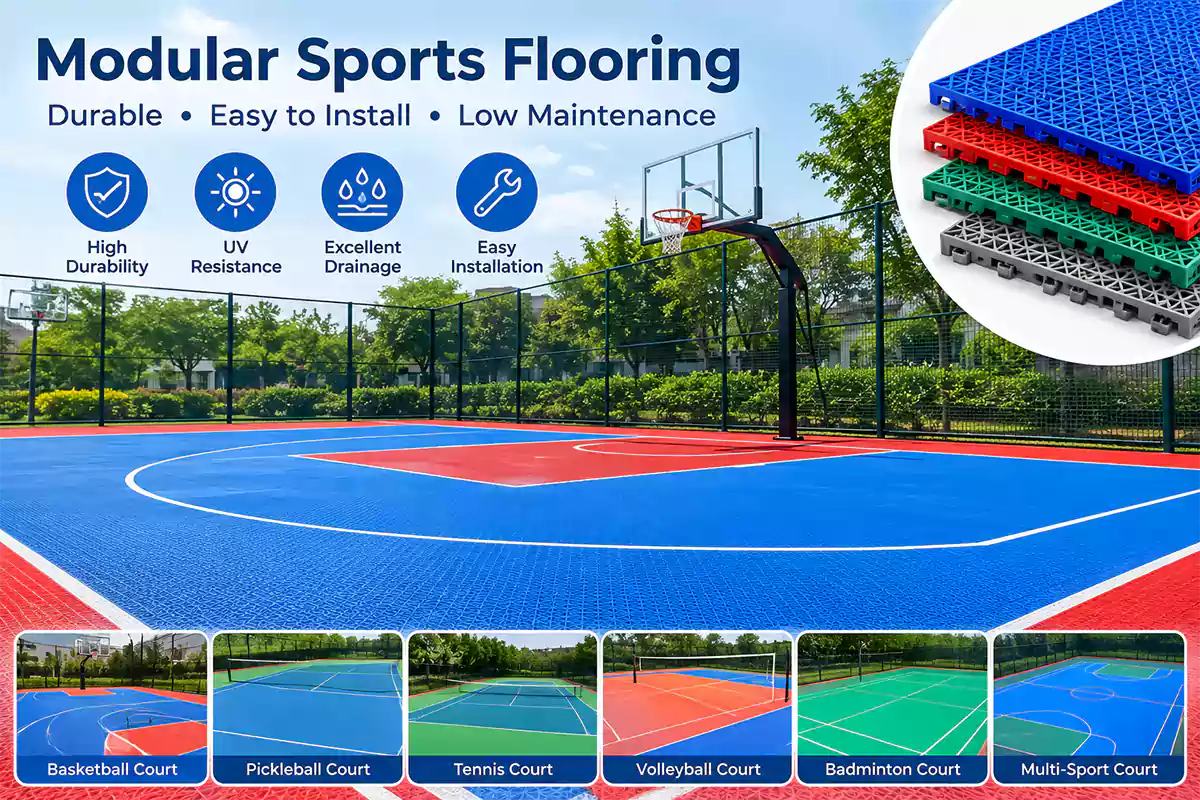

Modular Sports Flooring: A Practical Guide for Sports Courts
Choosing the right sports flooring is important for safety, performance, and long-term maintenance. Today, many sports facilities are moving away from traditional fixed flooring. Instead, they are choosing modular sports flooring for its flexibility and easy installation.
Modular sports flooring uses individual tiles or panels that connect together. This design makes installation faster and allows damaged sections to be replaced without removing the entire floor.
For outdoor sports courts, PP interlocking flooring is one of the most popular modular flooring options. It provides a durable surface for basketball, pickleball, tennis, volleyball, and other recreational activities.
What Is Modular Sports Flooring?
Modular sports flooring is a flooring system made from separate tiles or panels. The individual pieces connect through an interlocking system. As a result, the floor can be installed without complex construction work.
Unlike traditional flooring, modular systems do not always require permanent adhesives. Many products can be installed directly over a suitable hard and level surface.
Furthermore, modular flooring can be removed and reinstalled when necessary. This feature makes it suitable for temporary courts, multi-purpose facilities, and outdoor recreational areas.
Why Choose Modular Sports Flooring?
There are several reasons why modular sports flooring has become popular.
1. Easy Installation
One of the biggest advantages is simple installation. Interlocking tiles connect together without complicated tools or specialized equipment.
In many cases, installers can complete a court faster than with traditional flooring systems. This helps reduce labor time and installation costs.
Moreover, individual tiles can be removed if maintenance is required.
2. Durable Construction
Sports courts experience constant foot traffic, ball impact, and repeated movement. Therefore, the flooring needs to withstand daily use.
High-quality PP modular flooring offers good impact resistance and structural strength. It can handle frequent sports activities while maintaining its overall performance.
For outdoor applications, UV-resistant materials can also help the floor withstand long-term exposure to sunlight.
3. Good Drainage
Outdoor courts often face rain and moisture. Standing water can make a court difficult to use and may damage unsuitable flooring materials.
Many modular sports flooring systems feature an open or raised base structure. This design allows water to move beneath the surface.
As a result, rainwater can drain away more effectively. The court can also dry faster after rainfall.
4. Easy Maintenance
Maintaining a sports court should not be complicated. Modular flooring makes maintenance easier because individual tiles can be removed.
For example, if one section becomes damaged, you may only need to replace the affected tiles. You do not necessarily need to replace the entire court.
In addition, the surface can usually be cleaned with water and mild cleaning products. Regular cleaning helps maintain appearance and playing conditions.
5. Flexible Court Design
Modular flooring provides flexibility in court design. Tiles are available in different colors and patterns. Therefore, facility owners can create custom court layouts.
Different colors can also help define playing zones, boundaries, and recreational areas.
This flexibility makes modular flooring suitable for both professional and recreational facilities.
PP Interlocking Flooring for Outdoor Sports Courts
PP interlocking flooring is widely used for outdoor sports applications. Polypropylene, commonly known as PP, offers a combination of durability, impact resistance, and weather performance.
The interlocking structure also makes installation convenient.
For example, PP flooring can be used for:
- Basketball courts
- Pickleball courts
- Tennis courts
- Volleyball courts
- Badminton courts
- Multi-sport courts
- Community recreation areas
- School sports facilities
- Backyard sports courts
Because of its modular design, PP flooring can also work well for projects that may require future expansion or modification.
Modular Sports Flooring vs. Traditional Flooring
Traditional sports flooring can provide excellent performance. However, it may require more complicated installation and maintenance.
Modular flooring offers a different approach.
| Feature | Modular Sports Flooring | Traditional Flooring |
|---|---|---|
| Installation | Fast and simple | Often more complex |
| Maintenance | Individual tiles can be replaced | Repairs may affect larger areas |
| Replacement | Replace damaged tiles | May require larger repairs |
| Design | Multiple colors and patterns | Depends on flooring system |
| Outdoor use | Many products are designed for outdoor use | Depends on material |
| Flexibility | Easy to modify or relocate | Usually more permanent |
Therefore, modular flooring can be a practical choice when flexibility and maintenance are important.
How to Install Modular Sports Flooring
The installation process depends on the specific product. However, most interlocking systems follow a simple process.
Step 1: Prepare the Surface
Start with a clean, stable, and level surface. Remove dirt, debris, and loose materials.
A suitable concrete or asphalt base can provide a strong foundation for the flooring.
Step 2: Plan the Layout
Before installation, determine the court dimensions and tile layout.
Mark important areas such as sidelines, center lines, and playing zones. Planning ahead helps reduce unnecessary cutting or adjustments.
Step 3: Connect the Tiles
Place the first tile in the selected starting position. Then connect the next tile through the interlocking system.
Continue across the court until the main area is covered.
Step 4: Check the Edges
After installing the main surface, inspect the edges and corners. Make sure the tiles are properly connected.
Depending on the product, edge or corner pieces may be available to create a finished appearance.
Step 5: Add Court Markings
Finally, add the required court lines and markings. The specific marking method depends on the flooring material and product design.
Where Can Modular Sports Flooring Be Used?
Modular sports flooring is not limited to professional sports facilities.
It can also be used in schools, communities, residential properties, and commercial recreation areas.
Outdoor Basketball Courts
Modular flooring provides a practical surface for backyard and community basketball courts. Its interlocking structure also makes repairs easier.
Pickleball Courts
Pickleball is growing rapidly in many markets. Modular flooring can provide a durable surface for both dedicated and multi-purpose pickleball courts.
Multi-Sport Facilities
Some facilities need one court for several sports. Modular flooring can support flexible layouts for basketball, volleyball, badminton, and other activities.
School and Community Courts
Schools and community centers often need flooring that is durable and easy to maintain. Modular systems can reduce maintenance complexity and simplify future repairs.
How to Choose the Right Modular Sports Flooring
Before purchasing modular sports flooring, consider several important factors.
Material
Material affects durability, flexibility, weather resistance, and playing comfort. PP is a common choice for outdoor modular flooring because of its strength and durability.
Surface Texture
The surface should provide suitable traction without being excessively rough. Good surface design can help support player movement and stability.
Drainage
For outdoor courts, drainage is especially important. Look for a flooring structure that allows water to move away from the playing surface.
UV Resistance
Outdoor flooring is exposed to sunlight for long periods. UV-resistant materials can help reduce fading and material degradation.
Installation System
A reliable interlocking system makes installation faster. It also makes future replacement easier.
Maintenance Requirements
Consider how easy the flooring is to clean and repair. A modular design can provide an advantage because damaged tiles can usually be replaced individually.
Is Modular Sports Flooring Good for Outdoor Use?
Yes, modular sports flooring can be an excellent option for outdoor sports courts when the product is specifically designed for outdoor applications.
A suitable system should offer good weather resistance, durability, drainage, and UV protection.
PP interlocking flooring is particularly suitable for outdoor projects because it combines a durable plastic structure with a modular installation system.
However, the final performance also depends on product quality, installation, surface preparation, and local weather conditions.
Final Thoughts
Modular sports flooring offers a practical alternative to many traditional sports flooring systems. Its interlocking design allows fast installation, simple maintenance, and convenient tile replacement.
For outdoor sports courts, PP interlocking flooring is a reliable modular solution. It can be used for basketball, pickleball, tennis, volleyball, and multi-sport applications.
Most importantly, the right flooring should match the court type, climate, expected traffic, and maintenance requirements.
If you are planning a new sports court, modular flooring is worth considering. It can provide a flexible, durable, and cost-effective surface for both commercial and recreational applications.