

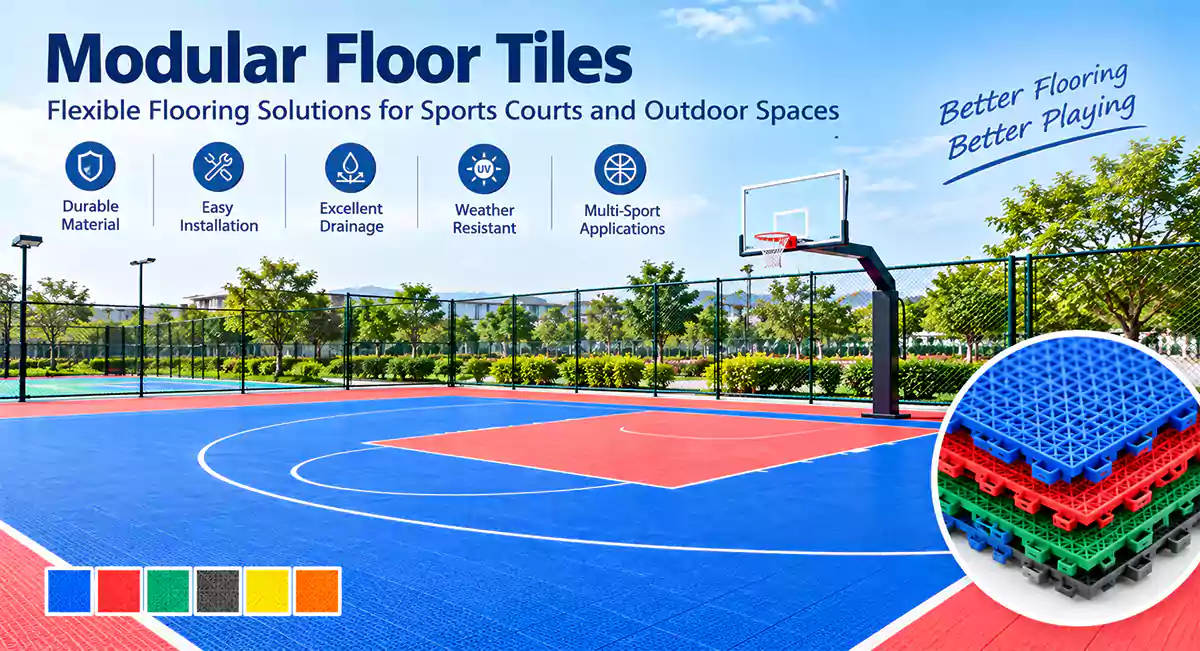

Modular Floor Tiles: Benefits, Applications and Installation Guide
When you need a flooring system that installs quickly, performs reliably, and adapts to different spaces, modular floor tiles offer a practical solution. Unlike traditional flooring systems that require adhesives, complicated construction, or long installation periods, modular tiles connect together to create a stable and flexible floor.
For sports courts, playgrounds, recreational areas, garages, and outdoor spaces, PP modular floor tiles provide a combination of durability, easy installation, drainage, and design flexibility. Their interlocking structure also makes individual tile replacement much easier when compared with many permanent flooring systems.
What Are Modular Floor Tiles?
Modular floor tiles are individual flooring units designed to connect together and form a larger continuous surface. Most systems use mechanical connectors, allowing the tiles to lock together without traditional adhesives.
PP, or polypropylene, is commonly used for modular sports flooring because it provides a balance of strength, impact resistance, weather resistance, and relatively low maintenance requirements. Interlocking PP tiles are widely used for outdoor courts and multi-purpose sports areas.
The modular design also allows manufacturers to produce different colors, surface textures, drainage structures, and connection systems for different applications.
Key Benefits of Modular Floor Tiles
1. Fast and Simple Installation
One of the biggest advantages of modular floor tiles is their simple installation process.
The tiles connect through built-in interlocking systems instead of requiring glue or mortar. Therefore, installers can assemble the flooring directly on a suitable prepared base.
This design can significantly reduce installation time and labor compared with flooring systems that require curing, coating, or complicated construction.
For sports facilities, faster installation also means less downtime. Schools, clubs, community facilities, and commercial venues can renovate an existing area without closing the space for an extended period.
2. Easy Maintenance
Modular flooring does not require complicated daily maintenance.
For most applications, regular sweeping and washing can remove dust, dirt, leaves, and other debris. Outdoor sports flooring with drainage structures can also allow water and small particles to pass through the surface.
If a tile becomes damaged, installers can remove the affected section and replace individual tiles instead of rebuilding the entire floor. This modular repair method can simplify long-term maintenance.
3. Excellent Drainage for Outdoor Applications
Outdoor flooring must deal with rain, humidity, and changing weather conditions.
Many PP modular floor tiles use perforated or open-grid structures that allow water to move through the playing surface. This feature helps reduce surface water accumulation after rainfall.
However, proper drainage depends on the complete flooring system. The concrete or asphalt base underneath should have suitable drainage and slope so that water can leave the area effectively.
4. Durable PP Construction
Polypropylene provides a strong foundation for modular sports flooring.
A properly designed PP tile can withstand regular foot traffic, sports activity, and outdoor environmental conditions. Manufacturers can also formulate PP materials with UV stabilization and other additives for outdoor applications.
For this reason, PP modular flooring can be used for basketball courts, pickleball courts, volleyball courts, badminton areas, playgrounds, and other recreational spaces.
5. Flexible Court Design
Another advantage of modular flooring is design flexibility.
Manufacturers can combine different tile colors to create:
- Basketball court designs
- Pickleball courts
- Volleyball courts
- Tennis courts
- Badminton areas
- Multi-sport courts
- School playgrounds
- Backyard sports courts
- Recreational areas
Different colors can also help define playing zones, borders, and activity areas.
Custom colors, court lines, and logos can further personalize the finished surface for schools, sports clubs, commercial facilities, and branded projects.
Where Can Modular Floor Tiles Be Used?
Modular floor tiles are suitable for many residential, commercial, and sports applications.
Sports Courts
Sports courts are one of the most common applications for PP modular flooring.
The interlocking structure creates a continuous playing surface, while the tile design can provide drainage, surface texture, and impact management.
Depending on the product design, modular sports flooring can be used for:
- Basketball
- Pickleball
- Volleyball
- Tennis
- Badminton
- Futsal
- Multi-sport courts
A suitable product should always match the sport, expected usage, climate, and base conditions.
School Playgrounds
Schools need flooring that can handle frequent activity while remaining easy to maintain.
Modular PP tiles can create colorful activity areas, play zones, and multi-purpose courts. Their modular construction also makes future repairs easier because individual sections can be replaced when necessary.
Backyard Sports Areas
Homeowners can use modular floor tiles to transform concrete, asphalt, or other suitable hard surfaces into recreational areas.
A backyard can include a small basketball court, pickleball area, multi-sport space, or children’s activity zone.
The modular format also gives homeowners more flexibility when compared with permanently bonded flooring systems.
Gyms and Recreational Facilities
Modular flooring can also work in selected indoor recreational environments.
Depending on the tile structure and performance requirements, it can provide a durable surface for training areas, activity rooms, temporary sports venues, and multi-purpose facilities.
However, heavy equipment areas such as free-weight zones may require a flooring system specifically designed for concentrated loads.
Garages and Utility Areas
Some modular PP tiles are designed for garages, workshops, display areas, and other utility spaces.
These systems can provide a clean, organized surface while allowing individual tiles to be removed or replaced when necessary.
How to Install Modular Floor Tiles
Although installation methods vary between products, the general process is straightforward.
Step 1: Prepare the Base
Start with a firm, stable, and reasonably level surface.
Concrete and asphalt are commonly used as bases for outdoor modular sports flooring. Repair major cracks, holes, uneven areas, and drainage problems before installation.
Step 2: Clean the Surface
Remove dust, dirt, stones, oil, leaves, and other debris.
A clean base helps the flooring sit properly and makes installation easier.
Step 3: Plan the Layout
Before connecting the tiles, determine the court dimensions, border colors, playing zones, and starting point.
For sports projects, plan the court lines and color pattern before installation. This approach can reduce unnecessary cutting and repositioning.
Step 4: Connect the Tiles
Place the first tile in the selected starting position.
Then connect the next tile using the built-in locking system. Continue connecting tiles row by row until the required area is covered.
Most modular systems do not require traditional adhesive during assembly.
Step 5: Install Edges and Accessories
Depending on the product, edge ramps, corner pieces, or other finishing components may be installed around the perimeter.
These components create a cleaner transition between the modular floor and surrounding areas.
Step 6: Add Court Lines and Markings
For sports applications, add the required court markings after the floor installation.
The exact marking method depends on the tile surface and manufacturer’s recommendations.
What Should You Consider When Choosing Modular Floor Tiles?
Not every modular floor tile is designed for the same application. Before purchasing, consider several important factors.
Material
PP is widely used for modular sports flooring because of its combination of durability, weather resistance, and lightweight construction.
For other applications, rubber, PVC, or other materials may provide different performance characteristics.
Surface Texture
The surface should provide appropriate traction for the intended activity.
Sports flooring needs a balance between grip, movement, ball response, and player comfort.
Drainage
For outdoor applications, drainage is particularly important.
A drainage-friendly tile design can allow rainwater to pass through the playing surface. However, the underlying base must also provide an effective route for water to escape.
Connection System
A strong and properly engineered interlocking system helps maintain the stability of the completed floor.
The connection should also allow installers to remove individual sections when maintenance or replacement becomes necessary.
UV and Weather Resistance
Outdoor flooring experiences sunlight, rain, temperature changes, and repeated use.
For outdoor projects, select a product specifically designed for these conditions and verify the manufacturer’s test data and warranty requirements.
Application
Most importantly, choose flooring according to the intended application.
A basketball court, playground, garage, gym, and temporary event floor can have very different performance requirements.
Modular Floor Tiles vs. Traditional Flooring
Traditional flooring systems can provide excellent performance, but they often require more installation work and may become difficult to repair or modify after installation.
Modular floor tiles offer several practical differences:
| Feature | Modular Floor Tiles | Traditional Flooring |
|---|---|---|
| Installation | Interlocking assembly | Often requires adhesive or construction |
| Installation Time | Generally faster | Can take longer |
| Maintenance | Individual tile replacement | Repairs may affect larger areas |
| Design | Flexible color combinations | Depends on flooring system |
| Relocation | Some systems can be disassembled | Usually difficult |
| Outdoor Drainage | Available in drainage designs | Depends on system |
| Customization | High | Depends on material |
The best choice depends on the project requirements, budget, substrate, climate, and expected usage.
Why Choose PP Modular Floor Tiles for Sports Courts?
For outdoor sports applications, PP modular floor tiles combine several useful characteristics in one flooring system.
The interlocking structure simplifies installation, while the modular design makes repairs more manageable. Drainage structures can help manage rainwater, and UV-stabilized PP formulations can improve suitability for outdoor environments.
The flooring can also support different court layouts through multiple colors and modular configurations.
For projects that need a practical, flexible, and easy-to-maintain sports surface, PP modular flooring is worth considering.
Conclusion
Modular floor tiles provide a flexible alternative to many conventional flooring systems. Their interlocking construction allows fast installation, while the modular format simplifies maintenance, replacement, and design customization.
For outdoor sports courts, PP modular floor tiles can offer additional advantages such as drainage, weather resistance, surface texture, and flexible court design.
Whether you are developing a basketball court, pickleball court, school playground, backyard sports area, or multi-purpose recreational space, selecting the right modular flooring system starts with understanding the site’s surface, drainage, climate, sport, and expected usage.
Choose a modular floor tile system that matches your actual project requirements, and always follow the manufacturer’s installation and maintenance recommendations for the best long-term performance.