


Interlocking Flooring,Choosing the right flooring system is important for sports courts, garages, playgrounds, commercial spaces, and outdoor areas. However, traditional flooring often requires complicated installation, high maintenance costs, and permanent construction. Therefore, interlocking flooring has become a practical alternative for many applications. In addition, its modular design makes installation, maintenance, and replacement easier. As a result, it can provide a flexible and cost-effective flooring solution for both indoor and outdoor spaces.
Interlocking flooring Moreover, interlocking flooring provides a flexible alternative with easy installation, durable performance, and versatile applications. In addition, thanks to its modular design, interlocking floor tiles can be installed quickly, removed easily, and reused in different locations. Therefore, they are a practical choice for both temporary and permanent flooring projects.
Today, interlocking flooring is widely used for sports facilities, residential projects, industrial areas, and outdoor recreational spaces. In addition, its easy installation and durable design make it a practical choice for many different applications.
What Is Interlocking Floor?
In general, interlocking flooring is a modular flooring system made from individual tiles that connect together through a locking mechanism. As a result, the tiles can form a stable and durable surface without requiring permanent adhesives.
Unlike traditional flooring that requires glue, nails, or professional installation, interlocking tiles are designed to snap together directly on a prepared surface.
Common materials include:
- PP (Polypropylene)
- TPE (Thermoplastic Elastomer)
- PVC
Because of their modular structure, interlocking floors provide excellent flexibility and are suitable for both temporary and permanent installations.
Common applications include:
- Basketball courts
- Pickleball courts
- Tennis courts
- Volleyball courts
- Badminton courts
- Garages
- Workshops
- Playgrounds
- Outdoor patios
- Commercial areas
Benefits of Interlocking Floor
1. Easy and Fast Installation
One of the biggest advantages of interlocking floor is its simple installation process.
In addition, the tiles are designed with connecting edges that allow them to lock together without additional materials. As a result, installation can be completed quickly and efficiently.
Additionally, installation benefits include:
- No glue required
- No professional equipment needed
- Reduced labor costs
- Suitable for DIY projects
Therefore, interlocking floor can save both time and installation expenses compared with traditional flooring systems.
2. Durable and Long-Lasting Performance
High-quality interlocking floor is designed to withstand heavy use and changing environments.
The durable materials provide:
- Impact resistance
- Wear resistance
- Weather protection
- Long service life
Moreover, outdoor interlocking floor can handle sunlight, rain, and temperature changes, making it suitable for demanding applications.
3. Excellent Drainage Capability
Outdoor surfaces often face problems caused by water accumulation.
However, many interlocking floor tiles feature a raised or perforated structure that allows water to pass through easily.
As a result, users can benefit from:
- Faster drainage
- Quicker drying
- Reduced slipping risks
- Better surface cleanliness
This makes interlocking floor a reliable choice for outdoor sports courts and wet environments.
4. Low Maintenance Requirements
Compared with traditional flooring, interlocking floor requires less maintenance.
Regular care usually includes:
- Sweeping dust and debris
- Washing with water
- Removing stains when necessary
Furthermore, damaged tiles can be replaced individually without removing the entire floor system.
5. Flexible and Reusable Design
Another important advantage of interlocking floor is flexibility.
The modular design allows users to:
- Expand the flooring area
- Change layouts
- Remove and relocate tiles
- Reuse the flooring in new locations
Therefore, interlocking floor is especially suitable for temporary sports events, rental spaces, and multi-purpose areas.
Types of Interlocking Floor
PP Interlocking Floor
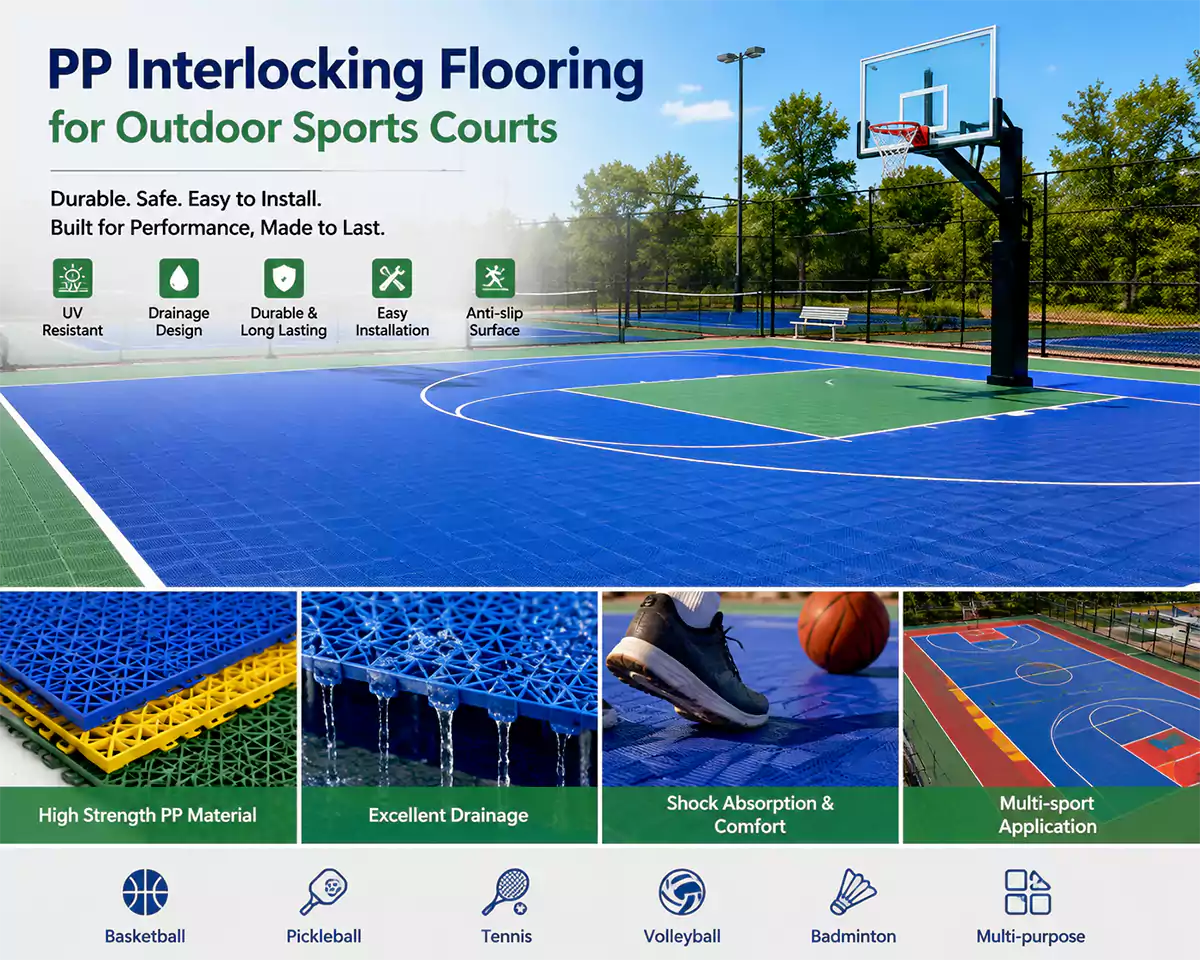
Moreover, PP interlocking flooring is one of the most popular options for outdoor sports applications.
Its key advantages include:
- High durability
- UV resistance
- Good impact strength
- Cost-effective performance
In addition, it is commonly used for basketball courts, pickleball courts, and multi-sport areas. As a result, PP interlocking flooring provides a durable and flexible surface for a wide range of outdoor sports applications.ort surfaces.
TPE Interlocking Floor
In addition, TPE flooring provides better elasticity and comfort.
Compared with PP flooring, TPE offers:
- Improved shock absorption
- Softer surface feel
- Better sports comfort
Therefore, TPE flooring is often selected for premium sports applications. Moreover, its softer and more elastic surface can provide a more comfortable experience during sports activities.
Garage Interlocking Floor
Garage interlocking tiles are designed for heavy-duty applications.
They provide:
- Strong load capacity
- Anti-slip performance
- Easy cleaning
- Protection for concrete floors
Interlocking Flooring Applications
Outdoor Sports Courts
Interlocking flooring is widely used for:
- Basketball courts
- Pickleball courts
- Tennis courts
- Volleyball courts
The modular surface provides durability and comfortable playing performance.
Garages and Workshops
For garages and workshops, interlocking tiles help create a cleaner and safer working environment.
They protect floors from:
- Oil stains
- Heavy equipment
- Vehicle pressure
- Daily wear
Schools and Playgrounds
Schools choose interlocking flooring because it offers:
- Safe surfaces
- Easy maintenance
- Attractive designs
- Long-term durability
Commercial and Event Spaces
Because interlocking flooring is easy to install and remove, it is suitable for:
- Exhibitions
- Temporary venues
- Outdoor activities
How to Install Interlocking Floor
Installing interlocking floor tiles is simple.
Step 1: Prepare the Surface
First, clean the installation area and make sure the surface is flat and stable.
Step 2: Plan the Layout
Next, measure the area and determine the tile arrangement.
Step 3: Connect the Tiles
Then, place the tiles together and press the locking edges into position.
Step 4: Complete the Edges
Finally, add edge pieces or trims if required for a professional finish.
Interlocking Flooring vs Traditional Flooring
| Feature | Interlocking Flooring | Traditional Flooring |
|---|---|---|
| Installation | Fast and simple | More complicated |
| Adhesive Required | No | Usually yes |
| Maintenance | Easy | Higher |
| Replacement | Individual tiles | Full repair |
| Flexibility | High | Limited |
| Outdoor Use | Excellent | Depends on material |
Compared with traditional flooring, interlocking flooring provides greater convenience and adaptability.
How to Choose the Right Interlocking Floor?
When selecting an interlocking flooring system, consider:
Material Quality
Choose reliable PP or TPE materials to ensure durability and stable performance.
Application Needs
Different areas require different features:
- Sports courts need comfort and traction
- Garages need load capacity
- Playgrounds need safety
Environmental Conditions
For outdoor use, choose flooring with:
- UV resistance
- Weather durability
- Drainage design
Conclusion
Overall, interlocking flooring is a versatile, durable, and easy-to-install solution for sports courts, garages, playgrounds, and commercial spaces. In addition, its modular design makes installation and maintenance more convenient.
With benefits such as quick installation, low maintenance, excellent drainage, and flexible design, modular interlocking flooring has become a popular choice worldwide.
Whether you need a backyard sports court, garage upgrade, or commercial flooring solution, interlocking floor tiles provide a practical and long-lasting option.