

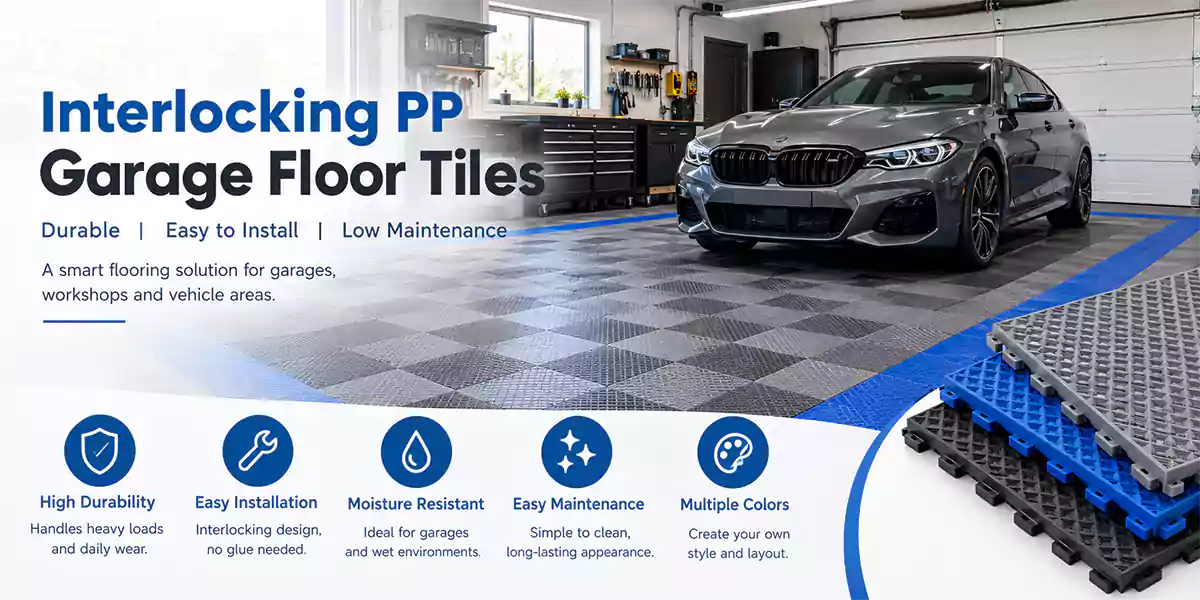

Interlocking Garage Floor Tiles: A Durable and Easy Flooring Solution
Choosing the right Interlocking garage floor tiles can improve the appearance, safety, and functionality of your garage. For residential garages, workshops, showrooms, and commercial spaces, the floor needs to handle vehicle traffic, dirt, moisture, and daily wear.
Interlocking garage floor tiles offer a practical solution for these demanding environments. Made from polypropylene (PP), these modular tiles provide a durable surface while also making installation and maintenance easier.
What Are Interlocking Garage Floor Tiles?
Interlocking garage floor tiles are modular flooring products made from polypropylene plastic. Each tile features an interlocking connection system that allows multiple tiles to connect securely without traditional adhesives.
As a result, installation can be faster and more convenient than installing many conventional flooring systems.
The modular structure also makes the flooring flexible. If one tile becomes damaged or heavily worn, you can replace the individual tile instead of removing the entire floor.
Why Choose Garage Floor Tiles?
PP is widely used in flooring because it combines strength, durability, and practical performance. Therefore, PP garage flooring can be suitable for areas exposed to vehicles, equipment, and frequent foot traffic.
1. Excellent Durability
Garage floors can experience heavy loads from cars, motorcycles, tools, and equipment. PP tiles are designed to provide a strong surface that can withstand regular use.
In addition, the interlocking structure helps create a stable flooring system when the tiles are installed correctly on a suitable base.
2. Easy Installation
One of the biggest advantages of modular garage flooring is its simple installation process.
The tiles connect through interlocking edges, so you can assemble the floor section by section. In many applications, this reduces the need for complicated installation equipment or permanent adhesives.
Moreover, the modular design makes it easier to customize the floor according to the size and layout of your garage.
3. Easy Maintenance
Garages often collect dust, mud, oil residue, and other contaminants. Fortunately, PP flooring is relatively easy to clean.
Regular sweeping and mopping can help keep the surface looking clean. For heavier dirt, you can use appropriate cleaning solutions according to the flooring manufacturer’s recommendations.
Because the tiles are modular, damaged sections can also be removed and replaced individually.
4. Moisture and Water Resistance
Moisture is another important consideration for garage flooring. Water can enter garages from vehicles, rain, cleaning activities, or outdoor environments.
PP is a moisture-resistant material, making PP garage flooring a practical choice for areas where occasional water exposure is expected.
Additionally, some interlocking tile designs include drainage structures that can help water move away from the surface.
5. Improved Garage Appearance
A garage does not have to look like a purely functional space. Modern modular flooring can give the area a cleaner and more organized appearance.
You can also combine different tile colors to create borders, patterns, parking areas, or branded designs. This makes interlocking flooring suitable for both private garages and commercial facilities.
Where Can Interlocking PP Garage Flooring Be Used?
Interlocking garage floor tiles can be used in a variety of applications.
Common examples include:
- Residential garages
- Vehicle parking areas
- Workshops
- Auto repair spaces
- Car detailing areas
- Showrooms
- Storage areas
- Commercial garages
- Utility rooms
- Recreational spaces
For residential users, the flooring can help transform a basic garage into a cleaner and more functional space. Meanwhile, commercial users can benefit from a modular flooring system that is easier to repair and maintain.
Interlocking PP Tiles vs. Traditional Garage Flooring
Traditional garage flooring options include concrete, epoxy coatings, rubber flooring, and other tile systems. Each option has its own advantages.
However, interlocking PP tiles provide several benefits for users who want fast installation and modular maintenance.
Unlike a permanent coating, PP tiles can be installed without creating a permanently bonded surface. Furthermore, individual tiles can be removed when repairs or replacements are required.
For this reason, modular PP flooring can be especially useful for garage owners who want a flexible flooring solution.
How to Install Interlocking Garage Floor Tiles
Installing modular garage tiles is generally straightforward when the base is properly prepared.
Step 1: Prepare the Floor
First, clean the garage floor and remove dust, dirt, oil, and loose debris. The base should be reasonably flat, stable, and clean before installation.
Step 2: Plan the Layout
Next, measure the garage and plan the tile arrangement. Consider walls, doors, columns, drains, and other fixed structures.
Planning the layout in advance can reduce unnecessary cutting and material waste.
Step 3: Connect the Tiles
Start from one corner and connect the tiles together using their interlocking edges. Continue row by row until the main floor area is covered.
Step 4: Cut Edge Tiles When Necessary
If the tiles do not fit perfectly against walls or other obstacles, measure and cut the edge tiles as required.
Always use appropriate tools and follow the manufacturer’s installation instructions.
Step 5: Check the Finished Floor
Finally, inspect the entire surface. Make sure the tiles are properly connected and the floor feels stable under normal use.
How to Maintain PP Garage Floor Tiles
Although PP garage flooring is designed for durability, regular maintenance can help keep it in good condition.
Sweep the floor regularly to remove dust and gravel. Clean spills as soon as possible, especially in areas where vehicles are serviced or maintained.
For deeper cleaning, use water and a suitable cleaning solution. Avoid cleaning products that may damage the material, and always follow the manufacturer’s recommendations.
If a tile becomes damaged, remove the affected section and install a replacement tile.
How to Choose the Right PP Garage Flooring
When selecting garage floor tiles, consider several factors.
Load requirements: Choose tiles designed for the expected vehicle and equipment loads.
Surface design: A textured or anti-slip surface can provide better traction in suitable applications.
Drainage: For garages exposed to water, consider tile designs that support effective drainage.
Installation system: Check the interlocking structure to ensure the tiles connect securely.
Color and appearance: Select colors that match the garage environment or combine multiple colors for custom patterns.
Maintenance: Consider how easily the flooring can be cleaned, repaired, and replaced.
Why Interlocking Garage Floor Tiles Are a Practical Choice
Garage flooring needs to balance durability, installation convenience, appearance, and maintenance. Interlocking garage floor tiles provide a modular approach that addresses many of these requirements.
They are durable, easy to install, moisture resistant, and relatively simple to maintain. In addition, their modular structure allows individual tiles to be replaced when necessary.
Therefore, PP interlocking flooring can be a practical choice for residential garages, workshops, commercial vehicle areas, and other demanding spaces.
Conclusion
Interlocking garage floor tiles provide a flexible and durable flooring solution for modern garages. Their interlocking design simplifies installation, while the polypropylene material offers reliable performance for everyday use.
Whether you are upgrading a home garage, creating a professional workshop, or installing flooring for a commercial vehicle area, PP modular tiles can provide a balance of durability, appearance, and convenience.
For buyers looking for PP garage floor tiles, selecting a reliable manufacturer and choosing the right tile structure, surface design, load capacity, and installation system are important steps toward achieving a long-lasting garage floor.