

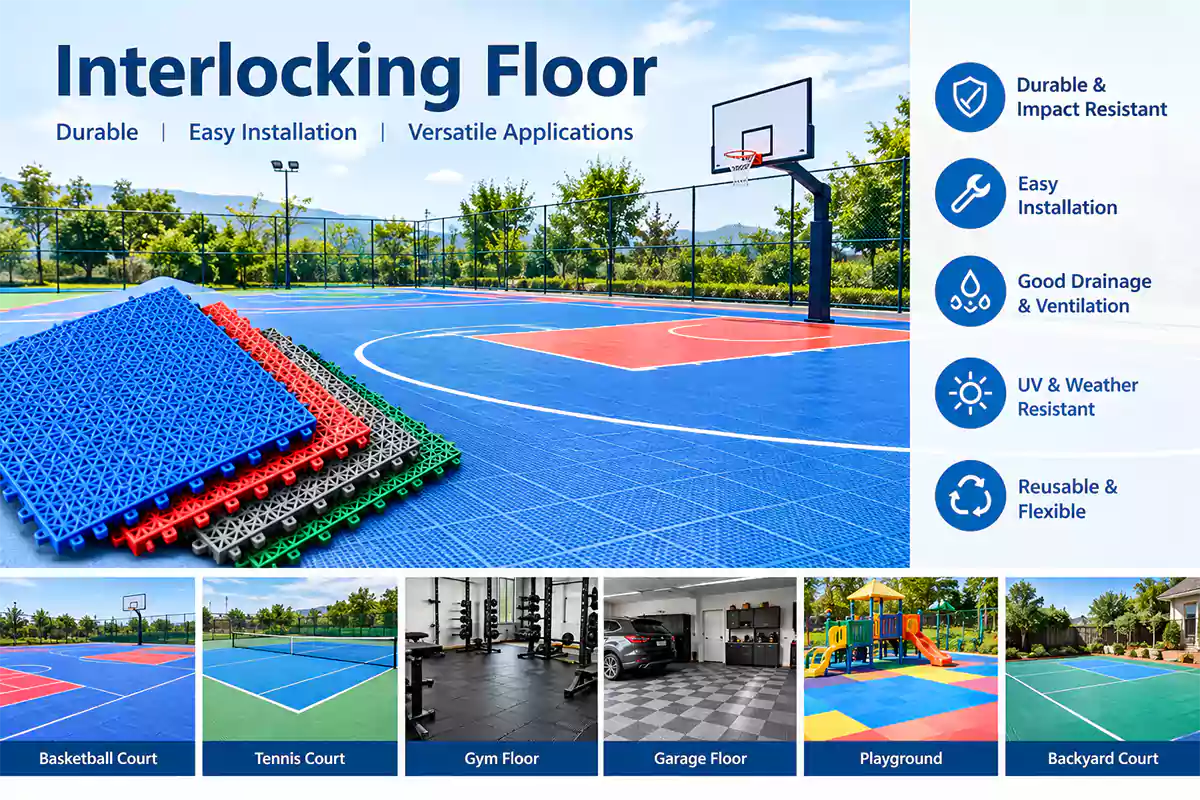

Interlocking Floor: Benefits, Applications, and Installation Guide
Choosing the right flooring can make a major difference in durability, installation time, maintenance, and overall project cost. Interlocking floor systems offer a practical solution because individual tiles connect together without traditional adhesives or complicated installation methods.
Today, interlocking flooring is used in sports courts, garages, gyms, workshops, playgrounds, commercial spaces, and outdoor recreational areas. Among the available materials, polypropylene (PP) is widely used for modular flooring because it combines durability, lightweight construction, and easy installation.
What Is an Interlocking Floor?
An interlocking floor is a modular flooring system made from individual tiles that connect through specially designed edges or locking tabs. Instead of using glue, nails, or permanent fasteners, the tiles fit together mechanically.
As a result, the flooring can usually be installed, removed, replaced, and reconfigured more easily than many traditional flooring systems.
PP interlocking flooring is particularly suitable for applications where fast installation and long-term durability are important. Depending on the design, PP tiles can also provide drainage, ventilation, traction, and impact resistance.
Key Benefits of Interlocking Floor Systems
1. Fast and Easy Installation
One of the main advantages of interlocking flooring is its simple installation process.
First, prepare the existing surface. Then, align the tiles and connect them row by row. In most applications, there is no need for adhesive or a long curing period.
Therefore, installation can be faster than many traditional flooring methods. This can also reduce labor requirements and help facilities return to normal use sooner.
2. Easy to Replace
Because an interlocking floor consists of individual tiles, damaged sections can usually be replaced separately.
For example, if one tile becomes damaged after heavy use, you do not necessarily need to remove the entire floor. Instead, the affected section can be removed and replaced with a new tile.
This modular design can simplify maintenance and reduce unnecessary replacement costs.
3. Durable for High-Traffic Areas
A quality interlocking floor should be designed to withstand the demands of its intended application.
PP flooring offers good impact and wear resistance, making it suitable for areas exposed to frequent foot traffic and sports activities. However, the actual load capacity and performance depend on the tile structure, material formulation, thickness, and installation conditions.
For this reason, buyers should always select a flooring model according to the expected traffic and load requirements.
4. Suitable for Indoor and Outdoor Areas
Interlocking flooring can be used in many different environments.
For outdoor applications, PP modular flooring can be designed with features such as UV resistance, drainage, and weather resistance. For indoor areas, solid or textured surfaces can provide a stable and easy-to-clean floor.
Consequently, the same basic modular concept can support different flooring requirements.
5. Flexible and Reusable
Another important advantage is flexibility.
Unlike many permanent flooring systems, some interlocking tiles can be disassembled and reused. This is especially useful for temporary courts, event areas, exhibitions, rental properties, and spaces that may need to be redesigned later.
The modular structure also makes it easier to expand a flooring area when additional space becomes available.
Where Can Interlocking Flooring Be Used?
The versatility of interlocking flooring makes it suitable for a wide range of applications.
Sports Courts
PP interlocking flooring is commonly used for modular sports surfaces, including:
- Basketball courts
- Pickleball courts
- Tennis courts
- Volleyball courts
- Badminton areas
- Futsal and multi-sport courts
The tiles can also be produced in different colors, allowing designers to create court borders, playing zones, and customized layouts.
Gyms and Fitness Areas
Interlocking flooring can also be used in gyms and fitness facilities.
Depending on the product design, the floor can provide traction, impact resistance, and easier maintenance. However, flooring for heavy weightlifting should be selected specifically for dropped-weight protection and impact requirements rather than relying on a general-purpose sports tile.
Garages and Workshops
Garage and workshop floors often need to handle vehicles, tools, dirt, oil, and frequent traffic.
Interlocking tiles can create a cleaner and more organized surface while allowing individual sections to be removed when maintenance is required. PP interlocking tiles are also available in designs intended for heavy-duty garage and workshop applications.
Playgrounds and Recreational Areas
Colorful modular flooring can be used in playgrounds, recreational spaces, community facilities, and backyard activity areas.
Different colors can help divide spaces and create attractive floor patterns while maintaining a practical modular structure.
Commercial and Event Spaces
Interlocking flooring is also useful for exhibitions, temporary events, retail displays, and other spaces that require quick installation and removal.
Because the tiles can be assembled without permanent bonding in many systems, the underlying floor can remain accessible.
How to Install an Interlocking Floor
Although installation methods vary by product, the general process is straightforward.
Step 1: Prepare the Surface
Start with a clean and relatively level subfloor.
Remove dust, loose debris, oil, and other materials that could interfere with installation. Check the manufacturer’s requirements before installing over an existing surface.
Step 2: Plan the Layout
Measure the installation area before connecting the tiles.
Mark important areas such as walls, corners, entrances, court boundaries, and equipment zones. For sports courts, planning the color pattern in advance can make installation more efficient.
Step 3: Connect the Tiles
Place the first tile in the selected starting position.
Next, align the locking edges of the second tile with the first. Press the pieces together until the connection is secure. Continue working across the area row by row.
Some products may require a rubber mallet or other suitable installation tool. Always follow the manufacturer’s instructions.
Step 4: Cut the Edge Tiles
When the floor reaches a wall, column, corner, or other obstacle, measure the remaining space carefully.
Then, cut the edge tiles using a suitable cutting tool. Leave the clearance recommended by the manufacturer, especially where temperature changes may cause material expansion or contraction.
Step 5: Check the Finished Floor
Finally, inspect the entire surface.
Make sure the connections are secure and that there are no significant gaps, loose tiles, or raised edges. For sports applications, check that the finished surface provides the required traction and playing characteristics.
How to Maintain Interlocking Flooring
One advantage of modular flooring is its relatively simple maintenance.
Regular cleaning can usually include:
- Sweeping or vacuuming dust and debris
- Mopping with suitable cleaning products
- Removing spills promptly
- Inspecting tile connections periodically
- Replacing damaged tiles when necessary
For outdoor PP flooring, drainage openings should also remain clear of leaves, dirt, and other debris.
Proper maintenance helps preserve the appearance and performance of the flooring over time.
Interlocking Floor vs. Traditional Flooring
Traditional flooring systems may require adhesives, professional installation, longer preparation times, or more complicated repairs.
In contrast, interlocking flooring focuses on modular installation and maintenance. Individual tiles can often be removed without disturbing the entire floor.
However, interlocking flooring is not automatically the best solution for every application. The right choice depends on factors such as load requirements, impact level, environment, drainage, surface performance, budget, and installation conditions.
Therefore, buyers should evaluate the complete flooring system rather than choosing a product based only on installation convenience.
How to Choose the Right Interlocking Floor
Before purchasing an interlocking floor, consider the following factors.
Material
PP, rubber, PVC, vinyl, and other materials offer different performance characteristics. For outdoor sports courts, PP is commonly selected for its modular design, durability, and weather-oriented product options.
Surface Design
A textured surface may provide better traction, while a smooth surface may be easier to clean.
Choose the surface according to the intended application.
Drainage
For outdoor courts and wet environments, drainage can be particularly important.
Perforated or raised designs can help water move away from the playing surface, depending on the product structure.
Load Capacity
Garage, industrial, and sports applications may have very different load requirements.
Always check the manufacturer’s technical specifications before selecting a tile for vehicles, heavy equipment, or other concentrated loads.
Installation System
A reliable locking mechanism helps create a stable modular floor.
Consider the connection design, installation method, replacement process, and compatibility between different tile sections.
Outdoor Performance
For outdoor projects, consider UV resistance, temperature changes, moisture exposure, and weather conditions.
A flooring system designed specifically for outdoor use can provide more appropriate long-term performance than an indoor-only product.
Why Choose PP Interlocking Flooring?
PP interlocking flooring combines a modular construction with the performance characteristics of polypropylene.
For sports courts and recreational areas, its main advantages can include:
- Easy modular installation
- Adhesive-free connection
- Good impact resistance
- Wear resistance
- Easy maintenance
- Individual tile replacement
- Flexible color options
- Indoor and outdoor applications
- Potential for drainage and ventilation
- Reusable modular design
These characteristics make PP flooring a practical option for sports facilities, schools, community courts, backyards, garages, and other recreational spaces.
Conclusion
An interlocking floor provides a flexible alternative to many traditional flooring systems. Its modular structure makes installation, replacement, maintenance, and future changes more convenient.
For sports courts and outdoor recreational areas, PP interlocking flooring can provide a useful combination of durability, modularity, easy installation, and practical maintenance.
Before making a purchase, however, consider the application, surface conditions, load requirements, drainage needs, weather exposure, and expected level of use. Choosing the right tile design and material can help create a flooring system that performs reliably for years.