


Interlocking Floor Tiles: A Practical Guide for Sports, Garages, and Outdoor Spaces
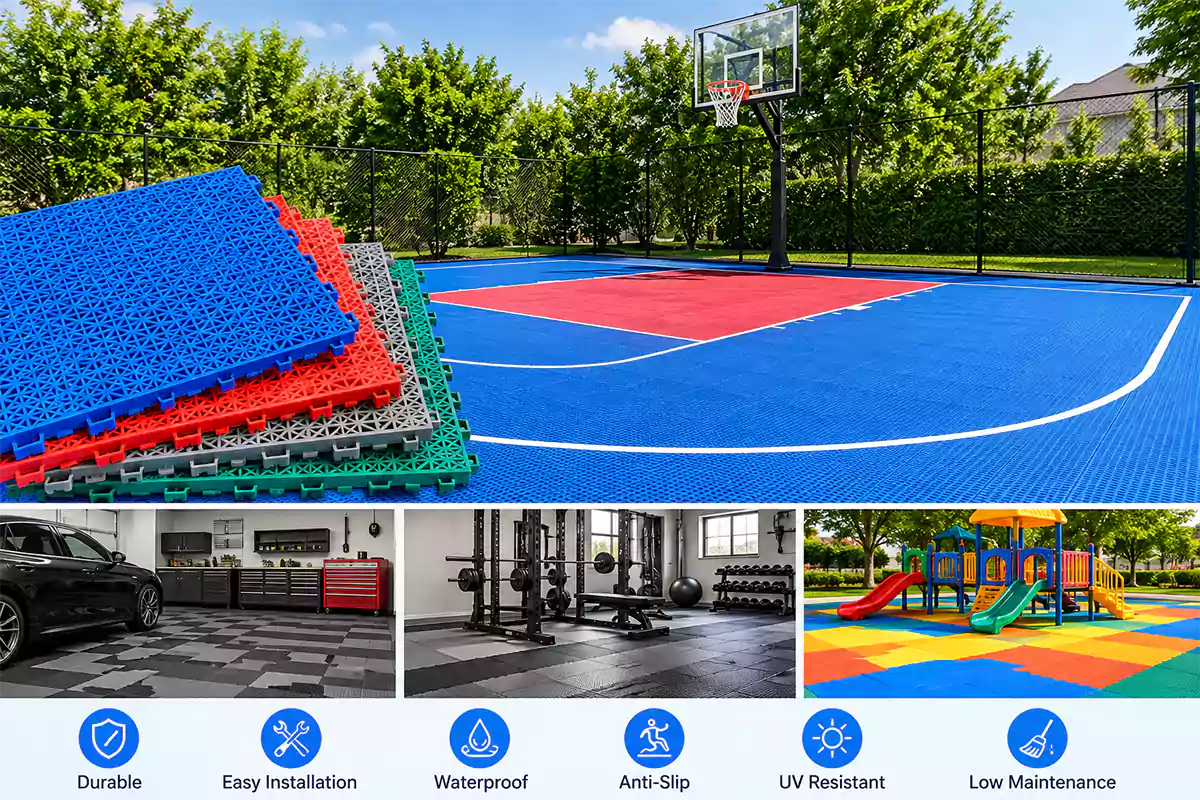
Interlocking floor tiles are a practical flooring solution for sports courts, garages, gyms, playgrounds, and outdoor areas. Unlike traditional flooring systems, these tiles connect directly with each other. As a result, installation is faster and usually requires less preparation.
For commercial projects and home applications, interlock floor tiles offer a useful combination of durability, easy installation, and flexible maintenance. Among the available options, PP interlocking floor tiles are especially popular for sports and outdoor applications.
What Are Interlocking Floor Tiles?
Interlocking floor tiles are modular flooring products designed to connect without permanent adhesives. Each tile uses an interlocking system that allows adjacent pieces to fit together securely.
Because of this modular structure, you can install the flooring section by section. You can also remove individual tiles when necessary.
PP interlock floor tiles are made from polypropylene. The material provides good impact resistance and durability. In addition, PP flooring can perform well in outdoor environments when the product includes suitable UV protection.
Key Benefits of Interlocking Floor Tiles
1. Easy Installation
One major advantage is simple installation. Most interlocking tiles connect by pressing or snapping the edges together.
Therefore, professional installers can complete many projects quickly. The installation process also produces less mess than traditional flooring methods because adhesives are usually unnecessary.
2. Durable Construction
Interlocking floor tiles need to handle regular foot traffic, sports activities, equipment, and impact. PP tiles provide a strong and durable surface for these demanding applications.
For sports courts, the flooring can support frequent movement and repeated use. For garages, it can also handle vehicles and everyday mechanical work when the tile is designed for heavy-duty applications.
3. Easy Maintenance
Another benefit is convenient maintenance. You can clean the surface with water and suitable cleaning products.
If one tile becomes damaged, you do not always need to replace the entire floor. Instead, you can remove the damaged piece and install a replacement tile.
4. Flexible Design
Interlocking floor tiles are available in different colors, patterns, and surface textures. This flexibility allows you to create customized flooring designs.
For example, sports facilities can use different colors to define court boundaries. Gyms can also combine colors to create training zones.
5. Suitable for Temporary and Permanent Projects
Because these tiles can be installed and removed, they work well for both permanent and temporary flooring.
For example, you can use them for exhibition spaces, temporary sports facilities, event areas, and seasonal outdoor courts. At the same time, they can provide a long-term flooring solution for garages, gyms, and sports facilities.
Why Choose PP Interlocking Floor Tiles?
PP is one of the common materials used for modular flooring. It offers a good balance between strength, weight, and cost.
PP interlocking flooring provides several advantages:
- Good impact resistance
- Durable structure
- Low water absorption
- Easy installation
- Easy replacement
- Low maintenance requirements
- Suitable for indoor and outdoor applications
- Multiple colors and surface designs
Moreover, PP tiles can be designed with drainage structures underneath the surface. This feature helps water move away from the playing surface and can improve outdoor court performance.
Applications of Interlocking Floor Tiles
Sports Courts
Interlocking floor tiles are widely used for basketball, pickleball, tennis, volleyball, badminton, and multi-sport courts.
For outdoor sports facilities, PP flooring can provide a practical alternative to conventional court surfaces. The modular design also makes future repairs easier.
Garage Flooring
Heavy-duty interlocking floor tiles are suitable for garages, workshops, and automotive spaces.
They can create a cleaner and more organized working area. Some designs also provide ventilation or drainage beneath the tiles.
Gym Flooring
Gyms require flooring that can withstand repeated movement and equipment use. Interlocking tiles can provide a durable surface while allowing individual sections to be replaced when needed.
Playgrounds and Recreation Areas
Interlocking flooring can also be used in playgrounds, recreational spaces, and community facilities. Different colors can help create attractive and functional layouts.
Outdoor Areas
For patios, balconies, walkways, and other outdoor spaces, interlocking tiles provide a convenient installation option. In addition, modular construction makes it easier to remove the flooring for cleaning or maintenance.
How to Install Interlocking Floor Tiles
The installation process is generally straightforward.
Step 1: Prepare the Base
First, make sure the installation surface is clean, stable, and reasonably level. Remove dirt, debris, and loose materials.
Step 2: Plan the Layout
Next, determine the tile layout. For sports courts, carefully measure the playing area and mark important boundaries.
Step 3: Connect the Tiles
Start from one corner and connect the tiles row by row. Press the interlocking edges together until the connections are secure.
Step 4: Cut Edge Tiles if Necessary
When the floor reaches walls or other fixed structures, measure the remaining space. Then cut the edge tiles to the required size using suitable equipment.
Step 5: Check the Finished Floor
Finally, inspect the connections and surface. Make sure the tiles sit correctly and that there are no loose sections.
Interlocking Floor Tiles vs. Traditional Flooring
Traditional flooring systems often require more preparation, adhesives, specialized installation, or longer curing times.
In contrast, interlocking floor tiles use a modular installation method. This makes them easier to install, remove, repair, and replace.
For projects that require flexible maintenance, modular flooring can therefore offer significant advantages.
| Feature | Interlocking Floor Tiles | Traditional Flooring |
|---|---|---|
| Installation | Fast and simple | Often more complex |
| Adhesive | Usually unnecessary | Often required |
| Replacement | Individual tiles | Larger sections may need replacement |
| Maintenance | Easy | Can be more demanding |
| Design | Flexible | Depends on flooring type |
| Relocation | Possible | Usually difficult |
| Outdoor use | Many suitable options | Depends on material |
How to Choose the Right Interlocking Floor Tiles
Before purchasing, consider the intended application.
First, check the material. PP is a strong option for many sports and outdoor applications. TPE can be considered when greater elasticity and comfort are priorities.
Next, check the load capacity. Garage flooring needs a different performance level from residential or recreational flooring.
You should also consider surface texture and slip resistance, especially for sports courts and outdoor areas.
Finally, evaluate the drainage design, UV resistance, tile thickness, connection system, and available colors. These factors can affect the flooring’s long-term performance.
Conclusion
Interlocking floor tiles provide a flexible and practical flooring solution for sports courts, garages, gyms, playgrounds, and outdoor spaces. Their modular design makes installation and maintenance easier. In addition, individual tiles can be replaced without removing the entire floor.
For demanding sports and outdoor applications, PP interlocking floor tiles offer a strong combination of durability, easy installation, and cost-effective performance. By selecting the right material, surface design, and tile structure, you can create a flooring system that meets the needs of your specific project.