

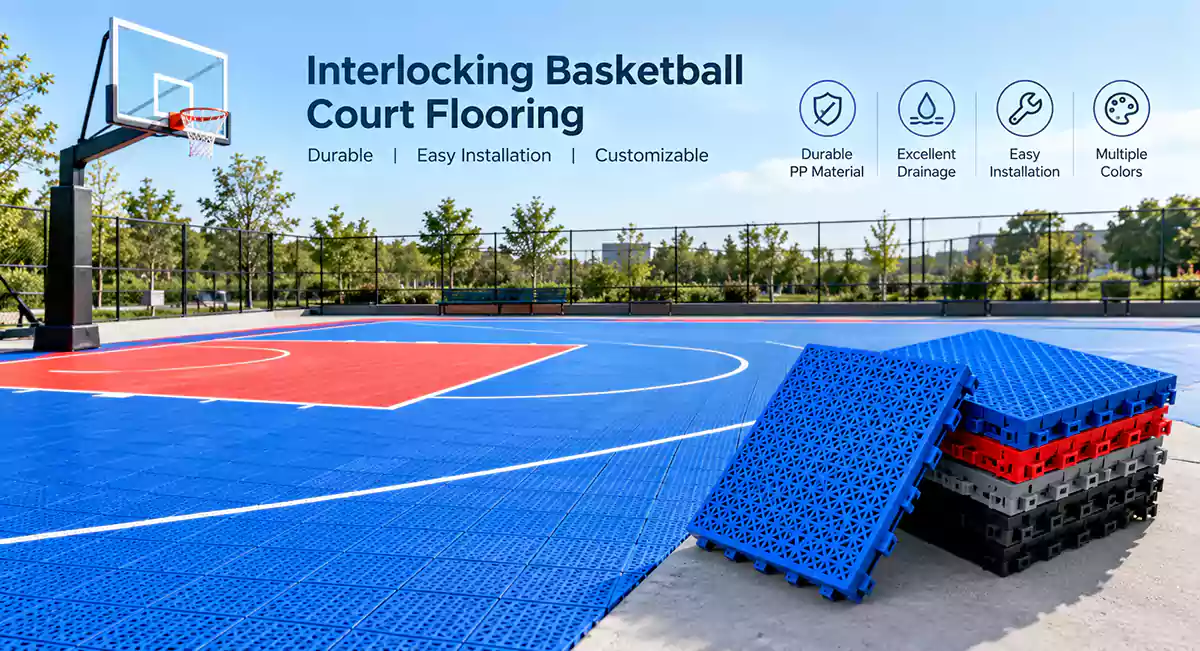

Interlock Tile Flooring: A Complete Guide to PP Interlocking Floor Tiles
Interlock tile flooring is a practical flooring solution for sports facilities, garages, commercial spaces, outdoor areas, and temporary event venues. The interlocking connection system allows users to assemble these tiles into a stable floor surface without the complicated installation required by many traditional flooring materials.
Among the available options, PP interlocking floor tiles offer a lightweight structure, modular design, and versatile applications. For wholesalers, distributors, contractors, and project buyers, understanding the features and benefits of interlock tile flooring can help identify the right solution for specific flooring requirements.
In this guide, we will explore what interlock tile flooring is, its key advantages, common applications, and the factors to consider when choosing a reliable PP interlocking tile manufacturer.
What Is Interlock Tile Flooring?
Interlock tile flooring consists of individual tiles designed to connect securely through integrated locking edges. Each tile fits into the adjacent tile, creating a continuous flooring surface that can be expanded, rearranged, or disassembled when necessary.
PP interlocking floor tiles are manufactured from polypropylene, a thermoplastic material commonly used in modular flooring systems. Depending on the product design, these tiles can feature open-grid structures, drainage holes, textured surfaces, or reinforced support ribs.
Unlike permanently installed flooring, interlocking tiles offer flexibility in floor layout and installation. They are suitable for both temporary and long-term flooring projects, depending on the product specifications and installation environment.
Key Benefits of PP Interlocking Floor Tiles
1. Easy Installation Without Complicated Construction
One of the main advantages of interlock tile flooring is its modular installation system. The tiles connect through interlocking edges, allowing installers to assemble the floor without extensive wet construction or permanent adhesive in many applications.
This design can help reduce installation time and simplify maintenance. Users can easily remove and replace individual tiles for cleaning or repairs without dismantling the entire floor.
2. Lightweight and Easy to Handle
Polypropylene is a lightweight thermoplastic material, making PP interlocking tiles relatively easy to transport, handle, and install.
For distributors and project contractors, lightweight flooring products can simplify on-site handling and storage. Actual shipping efficiency depends on tile dimensions, packing methods, and container loading arrangements.
3. Modular Design for Flexible Spaces
Users can arrange interlock tile flooring to fit different floor sizes and layouts. They can add more tiles as projects expand or dismantle and relocate temporary flooring whenever needed.
This flexibility makes PP interlocking floor tiles a practical option for sports facilities, exhibition areas, garages, and multipurpose spaces.
4. Drainage and Ventilation Options
Certain PP interlocking tiles feature perforated or open-grid designs that allow water to drain through the surface. These designs can be useful in outdoor sports areas, poolside surroundings, and other locations where moisture management is important.
The drainage performance depends on the tile structure, installation base, and site drainage conditions. For outdoor projects, proper subfloor preparation remains essential.
5. Durable Construction for Different Applications
Manufacturers design PP interlocking tiles with reinforced ribs, supporting columns, and interlocking structures to distribute loads across the floor.
Performance varies by tile design, material formulation, installation conditions, and applied loads. Buyers should review the manufacturer’s load-bearing data and testing information before selecting tiles for demanding commercial or industrial environments.
6. Convenient Maintenance and Replacement
Modular construction makes many interlocking flooring systems easier to maintain. Routine cleaning methods depend on the surface texture and application environment.
Users can replace a damaged tile with a compatible one instead of replacing the entire floor.For commercial projects, purchasing additional tiles from the same production batch or specification can help simplify future maintenance.
Common Applications of Interlock Tile Flooring
PP interlocking floor tiles can serve a wide range of applications when the tile design matches the performance requirements of the site.
Sports Courts and Recreational Facilities
Interlocking sports tiles are used for basketball courts, volleyball courts, badminton areas, and multipurpose recreational facilities. Sports-specific designs may provide surface texture, drainage, and structural support suited to athletic activities.
For sports projects, buyers should evaluate ball response, traction, surface consistency, and compatibility with the intended sport.
Garages and Workshops
Garage interlocking tiles offer a modular way to organize and upgrade suitable floor areas. Depending on their specifications, PP tiles can be considered for home garages, display areas, and selected light-duty workshop environments.
Before installation, check the manufacturer’s recommendations for vehicle loads, tire contact, rolling loads, and exposure to automotive fluids. Not every PP interlocking tile is suitable for heavy vehicles or industrial use.
Outdoor Patios and Recreational Areas
Outdoor interlocking floor tiles can be used in patios, balconies, recreational areas, and selected temporary event spaces. Drainage-oriented designs may be particularly useful in locations exposed to rain or routine washing.
For outdoor installations, UV resistance, temperature variation, slip resistance, and the condition of the supporting surface should all be considered.
Commercial and Exhibition Spaces
Temporary exhibition stands, event platforms, and multipurpose commercial areas can benefit from the modular nature of interlocking floor systems.
The ability to assemble and disassemble tiles can help businesses adapt spaces for different activities. Product selection should account for foot traffic, appearance requirements, installation frequency, and relevant fire or building regulations.
How to Choose the Right PP Interlocking Tile Flooring
Selecting the right interlocking flooring system requires more than comparing the price per tile. Buyers should evaluate the complete product specification and its suitability for the intended application.
Material Quality
Ask about the polypropylene material used in production, including whether the formulation uses virgin PP, recycled PP, or a specified blend. Material selection can affect product consistency, appearance, mechanical performance, and cost.
Reliable manufacturers should be able to explain their material specifications and quality-control procedures.
Tile Structure and Load Capacity
The interlocking mechanism, supporting ribs, tile thickness, and overall geometry all influence flooring performance.
Request technical data for load capacity and relevant testing methods. Where possible, evaluate samples under conditions representative of the intended application rather than relying on thickness alone.
Surface Design and Drainage
Choose a surface structure that matches the environment. Sports courts may require a specialized traction and ball-response design, while wet outdoor areas may benefit from suitable drainage features.
No single tile structure is ideal for every application.
Color and Customization Options
For distributors and brand owners, color selection and product customization can be important purchasing considerations.
Depending on the manufacturer’s capabilities, available options may include standard colors, custom color matching, packaging customization, private labeling, and OEM or ODM services. Confirm minimum order quantities, tooling requirements, lead times, and color consistency before placing an order.
Manufacturer Experience and Quality Control
A reliable PP interlocking tile manufacturer should provide clear product specifications, consistent production quality, and responsive communication.
When evaluating suppliers, consider sample availability, production capacity, inspection procedures, packaging standards, export experience, and the ability to support repeat orders.
PP Interlocking Floor Tiles vs. Traditional Flooring
Interlocking tiles and traditional flooring materials serve different purposes. The most suitable option depends on installation conditions, budget, expected service life, and performance requirements.
- Installation: Interlocking tiles are designed for modular assembly, while many traditional flooring systems require adhesive, grout, specialized tools, or professional installation.
- Maintenance: Individual interlocking tiles may be replaceable, whereas damage to continuous flooring can require patching or larger-area repairs.
- Flexibility: Modular tiles can be expanded or rearranged more easily in suitable applications.
- Surface continuity: Traditional poured, bonded, or seamless flooring may be preferable where a continuous surface is essential.
- Application suitability: Specialized flooring systems should always be selected according to load requirements, environmental exposure, safety standards, and intended use.
PP interlocking floor tiles are not a universal replacement for every flooring material. They are particularly useful when modular construction, installation flexibility, and localized replacement are important priorities.
Why Work with a Professional PP Interlocking Tile Manufacturer?
For importers, wholesalers, distributors, and project contractors, choosing the right manufacturer can influence both product quality and long-term business performance.
A professional supplier should be able to offer:
- Consistent product specifications: Defined dimensions, material requirements, colors, and manufacturing tolerances.
- OEM and ODM support: Custom product development or branding options where available.
- Bulk order capability: Production planning and packaging solutions for wholesale and project requirements.
- Technical assistance: Product recommendations based on installation environments and intended applications.
- Export-oriented service: Support with samples, product documentation, packing details, and shipment coordination.
Before confirming an order, buyers should request product samples, technical specifications, applicable test reports, and a quotation based on their required quantity and destination.
Frequently Asked Questions About Interlock Tile Flooring
Are PP interlocking floor tiles easy to install?
Many PP interlocking tiles are designed for straightforward assembly using integrated locking edges. Installation requirements depend on the product design, floor dimensions, and condition of the supporting surface.
Can interlock tile flooring be used outdoors?
Yes, selected PP interlocking tiles are suitable for outdoor applications. Buyers should confirm UV resistance, temperature performance, drainage design, and the manufacturer’s recommended installation conditions.
Are PP interlocking tiles waterproof?
Polypropylene itself has low water absorption, but the complete flooring system is not necessarily waterproof. Water may pass through joints or drainage openings, and moisture can remain beneath the tiles. A separate waterproofing system may be necessary where the substrate must be protected.
Can individual interlocking tiles be replaced?
In many modular flooring systems, damaged tiles can be removed and replaced individually. Replacement compatibility depends on the tile design, locking system, dimensions, and product version.
What information should I provide when requesting a wholesale quotation?
For an accurate quotation, provide the intended application, required tile specifications, estimated order quantity, color requirements, packaging preferences, delivery destination, and any OEM or private-label requirements.
Conclusion: Find the Right Interlock Tile Flooring Solution
Interlock tile flooring offers a flexible approach to flooring projects that benefit from modular installation, convenient maintenance, and adaptable layouts. With different designs available for sports courts, garages, outdoor spaces, and commercial applications, PP interlocking floor tiles can meet a variety of requirements when the correct specifications are selected.
For wholesalers, distributors, contractors, and project buyers, working directly with an experienced PP interlocking tile manufacturer can simplify product evaluation, customization, and bulk purchasing.
Looking for a reliable PP interlocking floor tile supplier? Contact our team to discuss your application, request product samples, and receive a quotation tailored to your project or wholesale requirements.