

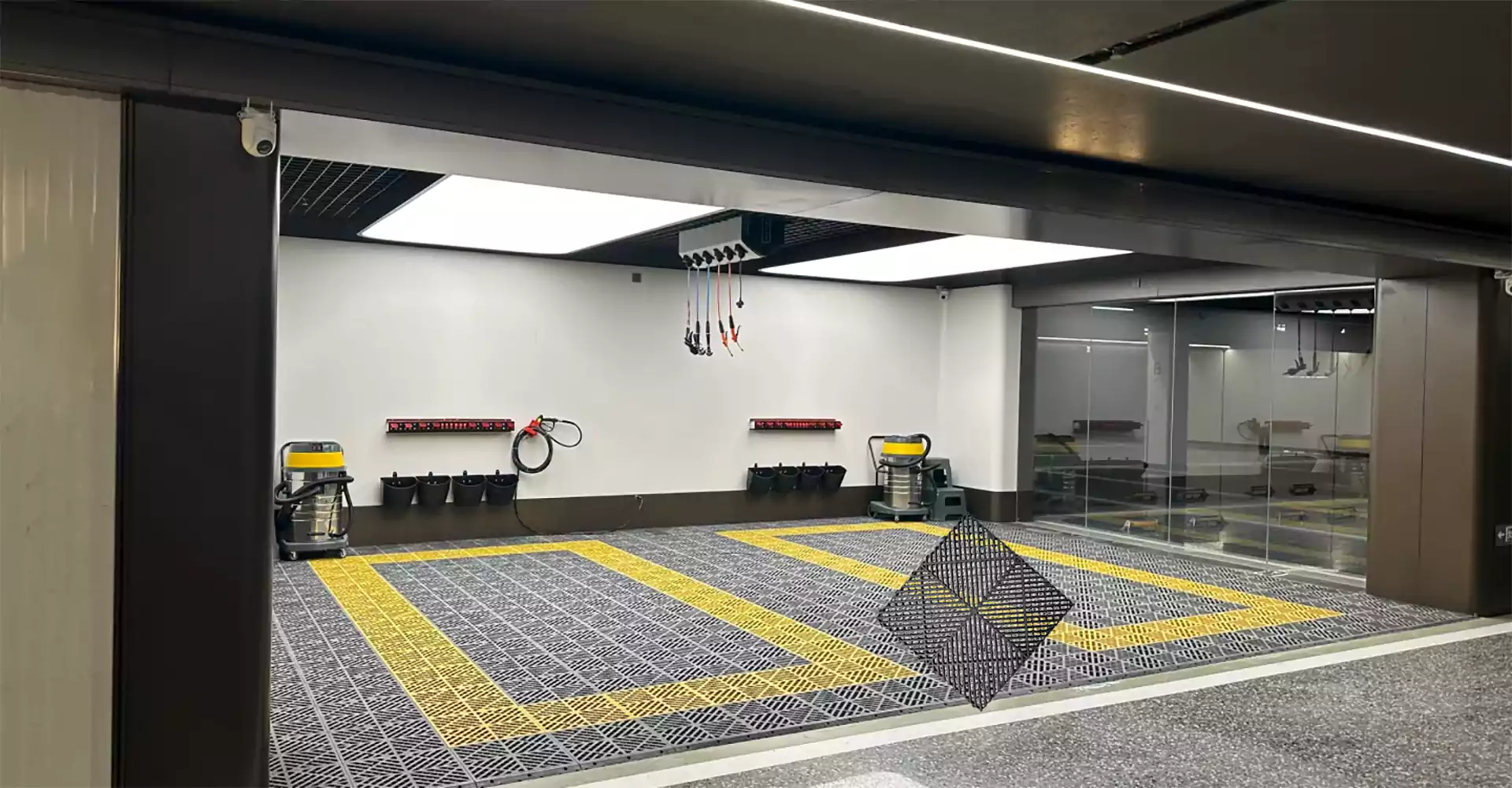

Heavy Duty Garage Interlocking Floor Tiles: A Durable Flooring Solution
Heavy duty garage interlocking floor tiles are a practical choice for garages, workshops, automotive service areas, and other demanding spaces. They provide a strong and attractive surface while protecting the original concrete floor from vehicle traffic, oil, dirt, and daily wear.
Among the available options, PP interlocking floor tiles are widely used because polypropylene provides a combination of strength, chemical resistance, low maintenance, and easy installation.
What Are Heavy Duty Garage Interlocking Floor Tiles?
Heavy duty garage interlocking floor tiles are modular flooring panels designed to connect with a locking system. Unlike traditional flooring that may require glue, mortar, or complicated installation, interlocking tiles can be assembled directly on a suitable garage floor.
PP garage tiles are usually manufactured through injection molding. Their rigid structure and interlocking connections help create a stable floating floor system.
This design also makes the flooring easier to repair. If one tile becomes damaged, the individual section can often be removed and replaced without replacing the entire floor.
Why Choose PP for Heavy Duty Garage Flooring?
Polypropylene is a popular material for garage flooring because it offers several useful properties.
1. Strong and Durable
A garage floor must handle vehicle traffic, toolboxes, equipment, and frequent movement. Heavy duty PP tiles are designed to distribute loads through the tile structure and locking system.
Independent testing of polypropylene garage tiles has shown that quality products can withstand vehicle traffic and workshop use. However, actual performance depends on tile thickness, underside structure, locking design, substrate condition, and the manufacturer’s load rating.
2. Resistant to Oil and Chemicals
Garages often have to deal with motor oil, grease, cleaning products, and other fluids. PP is a non-porous material that offers good resistance to many common garage contaminants.
As a result, spills can usually be cleaned without permanently damaging the flooring. However, spills should still be removed promptly to maintain a clean and safe surface.
3. Easy to Install
One of the biggest advantages of interlocking garage floor tiles is simple installation.
Most systems use a click-lock or snap-together design. Therefore, installation can usually be completed without adhesives or extensive construction work.
The basic process is:
- Clean and inspect the garage floor.
- Plan the tile layout.
- Start from a straight edge or corner.
- Connect the tiles together.
- Cut edge tiles where necessary.
- Install transition or edge pieces if required.
This makes interlocking flooring suitable for both professional projects and DIY garage renovations.
Heavy Duty Garage Tiles vs. Traditional Concrete
Concrete is strong, but an unfinished concrete garage floor can become stained, dusty, cracked, or difficult to maintain.
Heavy duty interlocking tiles can provide an additional protective surface over the concrete. They can also improve the appearance of the garage and create a more comfortable working area.
Unlike permanently bonded flooring, modular tiles can be removed when access to the original concrete is required. Some floating systems also allow airflow beneath the tiles, helping water and moisture move away from the walking surface.
Key Features to Look For
When choosing heavy duty garage interlocking floor tiles, consider more than just appearance.
High Load Capacity
Look for a product with a clearly specified load rating. Vehicle weight is usually distributed across multiple tiles, while concentrated loads from jack stands, narrow wheels, lifts, or equipment can create much higher point pressure.
Therefore, rolling load capacity and static point-load performance are both important.
Strong Interlocking System
A reliable locking system helps keep tiles connected when vehicles drive across the floor.
A well-designed connection should resist separation while still allowing individual tiles to be removed when maintenance is required.
Non-Slip Surface
Garage floors can become wet or oily. A textured surface can improve traction and reduce the risk of slipping.
For workshops and automotive areas, selecting a tile with an appropriate anti-slip surface is especially important.
UV and Weather Resistance
Garages with open doors can receive direct sunlight. For semi-outdoor applications, UV stabilization can help reduce discoloration and material degradation over time.
Easy Maintenance
Garage flooring should be easy to clean. PP tiles generally have a smooth or textured surface that can be cleaned with a broom, mop, vacuum, or suitable cleaning solution.
Vented designs can also allow water and dirt to pass through the surface, although the space underneath may require periodic cleaning.
Where Can Heavy Duty Garage Interlocking Tiles Be Used?
Heavy duty interlocking tiles are not limited to residential garages.
They can be used in:
- Home garages
- Automotive workshops
- Car detailing areas
- Repair shops
- Showrooms
- Warehouses
- Storage areas
- Equipment rooms
- Commercial garages
- Motorcycle garages
- Utility rooms
- Exhibition spaces
Their modular design makes them particularly useful for areas that need durable flooring but may require future repairs or layout changes.
How to Maintain PP Garage Floor Tiles
Proper maintenance can help extend the service life of garage flooring.
First, remove dirt and dust regularly. Next, clean oil and chemical spills as soon as possible. For heavier dirt, use a suitable detergent and water.
Avoid using cleaning chemicals that are not recommended by the tile manufacturer.
If a tile becomes severely damaged, remove the affected section and replace it with a new tile. This is one of the main benefits of modular flooring.
Are Heavy Duty Interlocking Tiles Suitable for Vehicles?
Yes, properly designed heavy duty garage tiles can be suitable for cars, SUVs, trucks, and other vehicles.
However, the product specifications should always be checked before installation. Vehicle weight is only one factor. Tire size, load distribution, tile construction, substrate condition, and point loads can also affect performance.
For applications involving vehicle lifts, jack stands, extremely heavy equipment, or concentrated loads, confirm the manufacturer’s specific load requirements before installation.
Heavy Duty Garage Flooring for Professional Applications
For commercial garages and workshops, flooring often needs to withstand more intensive use than a standard residential garage.
A high-quality PP interlocking floor can provide a combination of:
- High impact resistance
- Good load performance
- Chemical resistance
- Easy installation
- Simple maintenance
- Modular replacement
- Customizable colors
- Professional appearance
These characteristics make PP interlocking flooring a practical option for automotive and industrial environments.
How Long Do Interlocking Garage Floor Tiles Last?
The service life depends on the material quality, tile design, installation conditions, traffic level, climate, and maintenance.
High-quality rigid polypropylene garage tiles can have a long service life under normal residential use. Some industry sources estimate approximately 10–25 years or longer for quality PP interlocking tiles, although actual lifespan varies by product and application.
For commercial or heavy-duty applications, selecting a product specifically engineered and tested for the expected load is more important than relying on a general lifespan estimate.
Why Buy Heavy Duty Garage Interlocking Floor Tiles from a Manufacturer?
Buying directly from a flooring manufacturer can provide several advantages.
A professional manufacturer can offer different tile designs, colors, thicknesses, locking systems, surface textures, and packaging options.
For distributors, contractors, garage renovation companies, and flooring wholesalers, manufacturers may also provide OEM and private-label services.
A factory-direct supplier can therefore help customers choose a flooring system based on the actual application rather than using a one-size-fits-all product.
Conclusion
Heavy duty garage interlocking floor tiles provide a durable, modular, and easy-to-install alternative to traditional garage flooring.
PP interlocking tiles are especially suitable for garages and workshops because they can offer strong load performance, resistance to common garage contaminants, easy maintenance, and simple installation. Quality products can also be removed and replaced section by section, making long-term maintenance more convenient.
When choosing garage flooring, focus on material quality, load capacity, locking strength, surface traction, chemical resistance, UV performance, and installation requirements. With the right specifications, heavy duty PP interlocking floor tiles can create a clean, durable, and professional garage environment.