

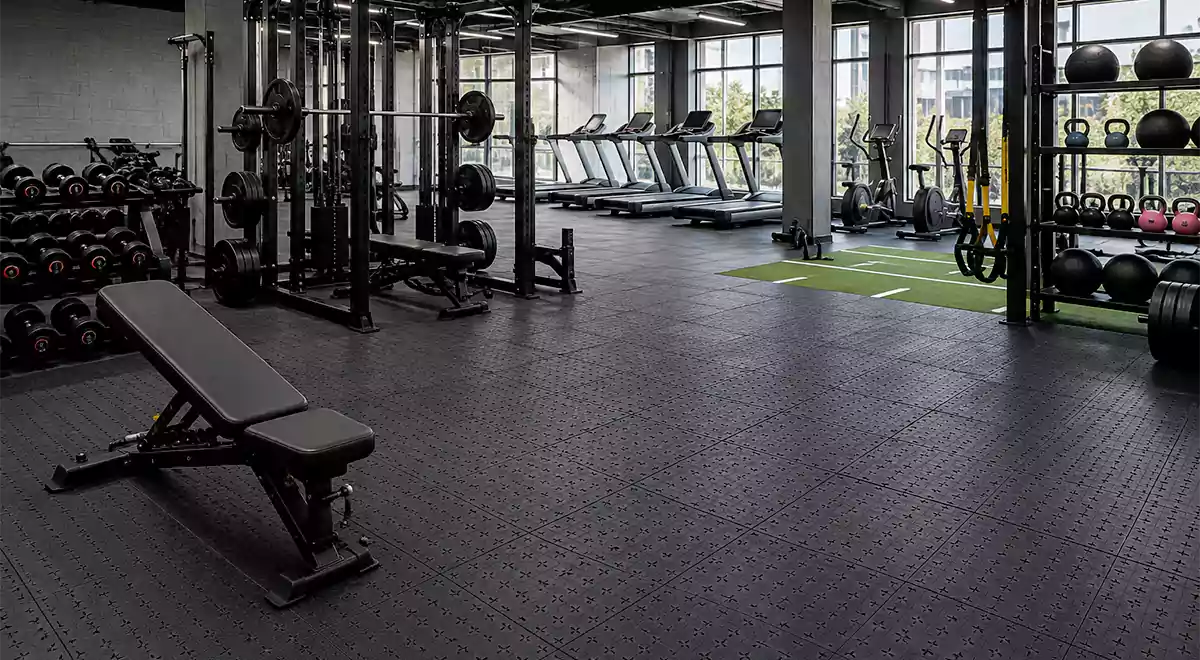

Gym Mat Floor: A Complete Guide to Choosing the Right Gym Flooring
Choosing the right gym mat floor is important for creating a safe, comfortable, and durable workout space. Whether you are building a home gym, commercial fitness center, training studio, or multipurpose sports facility, the flooring needs to handle repeated impact and heavy use.
A good gym floor should provide enough protection for athletes and equipment. At the same time, it should be easy to install, clean, and maintain.
Among different flooring options, interlocking gym flooring has become a practical choice for many fitness and sports applications. Its modular design allows fast installation and easy replacement when needed.
What Is a Gym Mat Floor?
A gym mat floor is a protective flooring system designed for exercise and fitness areas. It helps reduce the impact of equipment, protects the subfloor, and provides a more comfortable surface for workouts.
Gym flooring can come in several forms, including:
- Rubber gym mats
- EVA foam mats
- PVC gym flooring
- TPE flooring
- PP interlocking flooring
- Modular sports flooring
Each material offers different performance characteristics. Therefore, the best option depends on the type of exercise, installation environment, and expected traffic.
Why Is Gym Flooring Important?
Regular concrete or tile floors can be hard and uncomfortable during exercise. They may also become slippery or damaged when exposed to heavy equipment.
A properly designed gym mat floor provides several important benefits.
1. Impact Protection
Exercise equipment can create repeated impact on the floor. Weight training, jumping, and functional training can place additional stress on the surface.
A suitable gym floor helps distribute impact and protects the underlying surface.
2. Better Workout Comfort
Good flooring provides a more comfortable surface for exercises such as stretching, bodyweight training, and functional workouts.
In addition, appropriate surface texture can provide better traction during movement.
3. Protection for the Subfloor
Heavy fitness equipment can scratch, dent, or damage conventional flooring.
Gym mats create a protective layer between equipment and the original floor. As a result, they can help extend the service life of the subfloor.
4. Easy Maintenance
Gyms require regular cleaning because of sweat, dust, and frequent foot traffic.
A durable gym floor with a smooth and easy-to-clean surface can reduce daily maintenance work.
Types of Gym Mat Floors
Different workout environments require different flooring solutions. Here are some common options.
Rubber Gym Mats
Rubber mats are widely used in weight rooms and strength-training areas. They provide good impact resistance and can handle heavy equipment.
However, rubber flooring can be relatively heavy. It may also be more difficult to move or replace compared with modular flooring.
EVA Foam Mats
EVA foam mats are lightweight and soft. They are often used in home gyms, yoga areas, and children’s exercise spaces.
However, softer foam may not be suitable for heavy equipment or high-impact commercial applications.
PVC Gym Flooring
PVC flooring provides good wear resistance and is available in various designs. It can work well in commercial fitness centers and multipurpose spaces.
However, installation methods vary depending on the product, and some systems require more preparation.
TPE Gym Flooring
TPE provides a softer and more elastic surface than many rigid flooring materials. Therefore, it can be suitable for fitness spaces where comfort and shock absorption are important.
PP Interlocking Gym Flooring
PP interlocking flooring uses a modular tile design. Each tile connects to the next through an interlocking system.
This design offers several practical advantages:
- Fast installation
- Easy replacement
- Good durability
- Good impact resistance
- UV resistance for suitable outdoor products
- Easy transportation
- Flexible layout options
For gyms that need durable and modular flooring, PP interlocking tiles can be an attractive option.
Why Choose Interlocking Gym Flooring?
One of the biggest advantages of interlocking flooring is its installation method.
Unlike permanently bonded flooring, interlocking tiles can be assembled directly on a prepared subfloor. In many applications, this reduces installation time and labor requirements.
Quick Installation
The tiles connect together without complicated installation procedures. A suitable area can therefore be covered relatively quickly.
Easy Replacement
If one tile becomes damaged, you do not necessarily need to replace the entire floor. Instead, you can remove the damaged tile and install a replacement.
This feature is particularly useful in commercial gyms with heavy daily traffic.
Flexible Design
Interlocking tiles can be arranged in different colors and patterns. This allows gyms to create zones for different activities.
For example, a facility can use different colors to separate:
- Cardio areas
- Weight-training areas
- Functional training zones
- Stretching areas
- Equipment areas
PP Gym Flooring vs. Traditional Gym Flooring
Traditional flooring systems often require more complicated installation. Some may also be difficult to repair when individual sections become damaged.
By comparison, modular PP gym flooring offers a more flexible approach.
| Feature | PP Interlocking Gym Flooring | Traditional Flooring |
|---|---|---|
| Installation | Fast modular installation | May require professional installation |
| Replacement | Individual tiles can be replaced | Larger sections may need replacement |
| Maintenance | Easy to clean | Depends on material |
| Layout | Flexible | Usually fixed |
| Transportation | Convenient | Can be more difficult |
| Reusability | Can be removed and reused in suitable applications | Usually limited |
Therefore, interlocking flooring can be particularly useful for gyms that require flexibility and easy maintenance.
Where Can Gym Mat Floors Be Used?
A quality gym floor can support many different applications.
Home Gyms
For home workouts, modular gym flooring can protect existing floors while creating a dedicated exercise area.
Commercial Fitness Centers
High-traffic gyms need flooring that can withstand frequent use. Durable modular flooring can help simplify maintenance and repair.
Training Centers
Sports training facilities often combine strength training, agility exercises, and conditioning. Modular flooring can provide a flexible surface for these activities.
Multipurpose Sports Facilities
Some facilities need flooring that can support more than one activity. Interlocking sports flooring can make it easier to create adaptable spaces.
Outdoor Fitness Areas
Suitable PP interlocking flooring can also be used for selected outdoor applications. Its weather-resistant properties can make it a practical option for outdoor fitness and recreational areas.
How to Choose the Best Gym Mat Floor
Before selecting gym flooring, consider several important factors.
Consider the Type of Exercise
Heavy weight training requires different flooring performance from yoga or stretching.
For example, weight rooms usually need strong impact and load resistance. Meanwhile, fitness studios may place greater importance on comfort and traction.
Consider the Installation Area
Measure the floor area before purchasing the tiles. Also, check whether the existing subfloor is flat, clean, and stable.
A properly prepared subfloor helps the flooring perform better.
Consider Maintenance
Choose a surface that can be cleaned easily. Gyms require frequent maintenance, so easy-care flooring can save time.
Consider Durability
High-traffic facilities need flooring that can withstand repeated use. Look for materials with good wear resistance and impact strength.
Consider Installation
If you want a flooring system that can be installed quickly, an interlocking design can be a good solution.
How to Maintain a Gym Mat Floor
Proper maintenance can extend the service life of gym flooring.
First, remove dust and dirt regularly. A broom, vacuum cleaner, or suitable floor-cleaning equipment can be used depending on the flooring material.
Next, clean the surface with an appropriate mild cleaning solution. Avoid chemicals that may damage the flooring material.
Also, inspect the floor regularly. Check for loose tiles, damaged surfaces, or areas that may require replacement.
For interlocking flooring, individual damaged tiles can often be removed and replaced without taking up the entire floor.
Final Thoughts
The right gym mat floor can improve safety, comfort, durability, and maintenance efficiency. However, the best flooring depends on the application and performance requirements.
For gyms and fitness facilities that need a modular solution, PP interlocking gym flooring offers several practical advantages. Its interlocking design supports fast installation, flexible layouts, and convenient tile replacement.
Whether you are developing a home gym, commercial fitness center, training facility, or multipurpose sports space, choosing the right flooring is an important part of creating a reliable workout environment.