

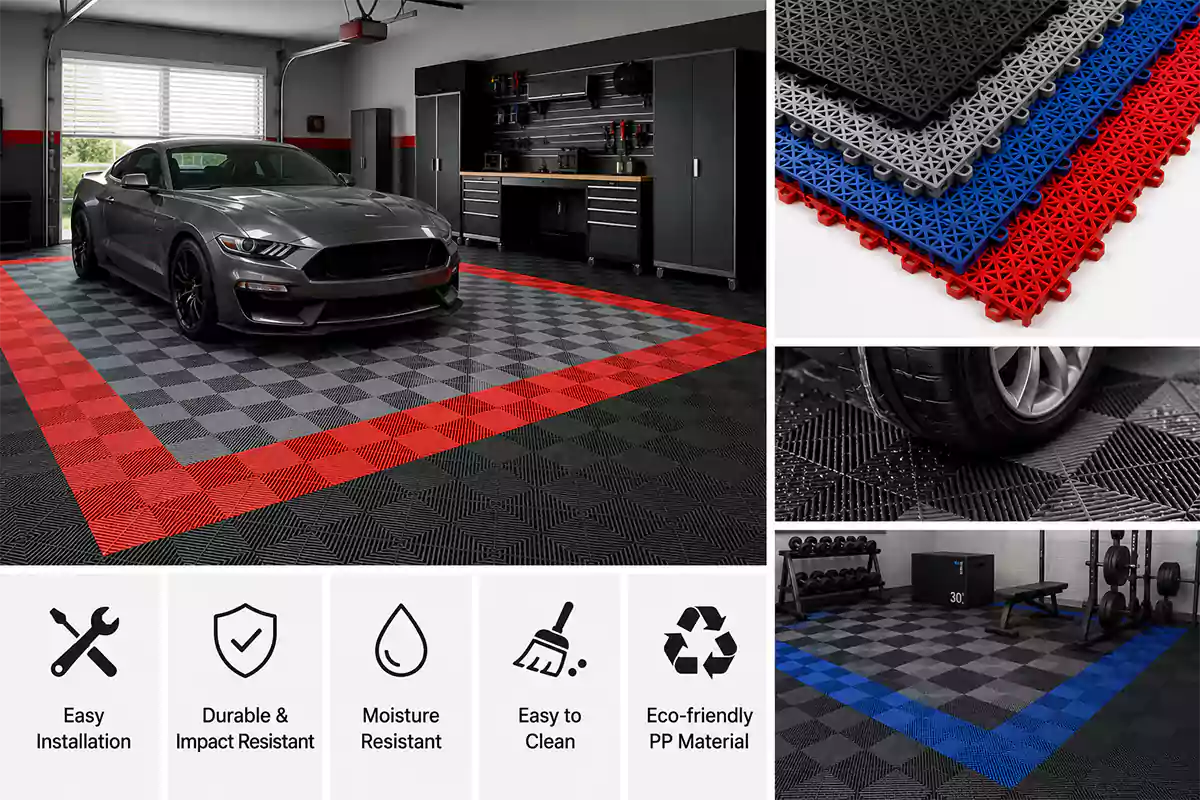

Garage Floor Tiles Interlocking: A Durable and Easy-to-Install Flooring Solution
When choosing a garage floor, durability, installation speed, and easy maintenance are important factors. Traditional concrete floors can be strong, but they may crack, stain, or become difficult to repair. Fortunately, garage floor tiles interlocking systems provide a practical alternative.
Interlocking garage floor tiles connect together without permanent adhesives. As a result, they are easy to install, replace, and maintain. Among the available materials, PP interlocking floor tiles are a popular choice for garages, workshops, home gyms, and other utility spaces.
What Are Garage Floor Tiles Interlocking?
Garage floor tiles interlocking are modular flooring tiles designed with connecting edges. Each tile locks into the next tile to create a stable surface.
Unlike traditional flooring systems, these tiles usually do not require complicated installation equipment. You can install them directly over a suitable hard and level surface.
The modular structure also makes repairs easier. If one tile becomes damaged, you can remove and replace that tile instead of replacing the entire floor.
Why Choose PP Interlocking Garage Floor Tiles?
PP, or polypropylene, is a durable plastic material widely used for modular flooring. PP interlocking floor tiles offer several advantages for garage applications.
1. Easy Installation
One of the biggest advantages of interlocking garage floor tiles is simple installation.
The tiles connect through a male-and-female locking system. Therefore, most installations can be completed without professional flooring equipment.
You can also cut tiles around walls, columns, or other obstacles when necessary. This makes PP interlocking flooring suitable for garages with different layouts.
2. Durable Surface
Garages often experience heavy daily use. Vehicles, tools, storage equipment, and foot traffic can all place stress on the floor.
PP flooring provides good impact resistance and structural strength. With proper product selection and installation, it can handle demanding garage environments.
In addition, the modular design distributes loads across multiple tiles. This helps create a stable flooring system for everyday use.
3. Moisture Resistant
Garage floors may come into contact with water, mud, snow, and other moisture sources.
PP is a plastic material that does not absorb water like many wood-based flooring materials. Therefore, PP interlocking tiles are well suited to areas where moisture resistance is important.
However, the existing garage surface should still have suitable drainage to prevent standing water.
4. Easy to Clean
Garage floors can quickly become dirty because of dust, mud, oil, and vehicle traffic.
Interlocking PP tiles have a practical surface that can be cleaned with common methods such as sweeping, vacuuming, or mopping.
For heavier dirt, you can use water and a suitable cleaning solution according to the flooring manufacturer’s recommendations.
5. Individual Tile Replacement
Another important benefit is easy repair.
Traditional flooring can require extensive work when a damaged area needs replacement. In contrast, interlocking garage floor tiles allow you to remove individual sections.
Therefore, if one tile becomes damaged, you can replace that section without removing the entire garage floor.
Garage Floor Tiles Interlocking vs. Traditional Concrete
Concrete remains a common garage flooring option. However, interlocking tiles provide several practical benefits.
| Feature | Interlocking Garage Tiles | Traditional Concrete |
|---|---|---|
| Installation | Fast and modular | More complicated |
| Adhesive | Usually not required | Not applicable |
| Repair | Individual tiles can be replaced | Repairs may require patching |
| Maintenance | Easy to clean | Can stain or crack |
| Moisture resistance | Excellent with PP material | Depends on surface condition |
| Design options | Multiple colors and patterns | Limited |
| Removal | Easy to remove | Permanent |
For homeowners who want a garage floor that can be installed quickly and modified later, interlocking tiles can be a convenient solution.
Where Can You Use Interlocking Garage Floor Tiles?
Although garage floors are the main application, PP interlocking flooring can be used in many other areas.
Home Garages
For residential garages, interlocking tiles can improve the appearance of the floor while providing a durable walking and parking surface.
Workshops
Workshops need flooring that can withstand tools, equipment, and frequent movement. Modular PP tiles offer a practical flooring solution for these environments.
Home Gyms
Garage gyms are becoming increasingly popular. Interlocking flooring can create a cleaner and more comfortable surface for exercise equipment and daily workouts.
Commercial Garages
Commercial garages and service areas may require flooring that is easy to maintain and repair. Modular tiles make localized replacement more convenient.
Utility Rooms and Storage Areas
Interlocking flooring can also be used in storage rooms, utility areas, and other spaces where a durable and easy-to-clean surface is required.
How to Install Garage Floor Tiles Interlocking
Installing interlocking garage floor tiles is relatively straightforward.
Step 1: Prepare the Garage Floor
First, clean the existing floor thoroughly. Remove dust, dirt, grease, and loose debris.
The surface should be hard, stable, and reasonably level before installation.
Step 2: Plan the Layout
Measure the garage and determine the best starting point.
Planning the layout before installation can reduce unnecessary cutting and material waste.
Step 3: Connect the Tiles
Start connecting the tiles according to the locking direction.
Apply even pressure to make sure the connections are properly engaged. Continue installing the tiles row by row until the main floor area is covered.
Step 4: Cut Around Obstacles
For walls, corners, columns, or other obstacles, measure the required size and cut the tiles carefully.
Leave appropriate expansion space around the perimeter when required by the product specifications.
Step 5: Inspect the Finished Floor
Finally, check the entire surface.
Make sure the tiles are properly connected and that there are no loose sections or significant height differences between adjacent tiles.
How to Maintain Interlocking Garage Floor Tiles
One of the advantages of PP interlocking flooring is its simple maintenance.
Regular sweeping can remove dust and loose dirt. For deeper cleaning, use water and a mild cleaning solution.
If oil or other substances are spilled, clean them as soon as possible. Prompt cleaning helps maintain the appearance and performance of the floor.
Also, periodically inspect the interlocking connections. If a tile becomes damaged, remove it and install a replacement.
How to Choose the Right Garage Interlocking Floor Tiles
Before purchasing garage floor tiles, consider several important factors.
Material
PP is a strong and practical option for many garage applications. It offers good durability, moisture resistance, and dimensional stability.
Load Requirements
Consider how the garage will be used. A floor designed for pedestrian traffic may have different requirements from a floor that supports vehicles or heavy equipment.
Surface Design
Different surface textures provide different levels of traction and appearance. Choose a design that matches your intended application.
Tile Size and Thickness
Tile dimensions and thickness affect installation efficiency, strength, and overall floor performance. Select the specifications based on your garage conditions.
Drainage
If moisture is a concern, consider an interlocking design that allows suitable water drainage or ventilation underneath the flooring.
Color and Appearance
Modern garage flooring is available in different colors and patterns. You can combine colors to create borders, parking zones, or attractive floor designs.
Are PP Interlocking Floor Tiles Good for Garages?
Yes. PP interlocking floor tiles can be an excellent option for garages when the product specifications match the application.
They provide a combination of durability, easy installation, moisture resistance, low maintenance, and simple replacement.
More importantly, the modular design gives garage owners greater flexibility. You can install the floor without permanently bonding it to the substrate and replace individual sections when necessary.
Conclusion
Garage floor tiles interlocking offer a practical alternative to traditional garage flooring. Their modular design makes installation and replacement easier, while PP material provides durability and moisture resistance for demanding environments.
For homeowners, workshops, commercial garages, and home gyms, PP interlocking garage floor tiles can provide a clean, durable, and flexible flooring solution.
If you are looking for a garage floor that is easy to install, simple to maintain, and designed for long-term use, PP interlocking flooring is worth considering.