

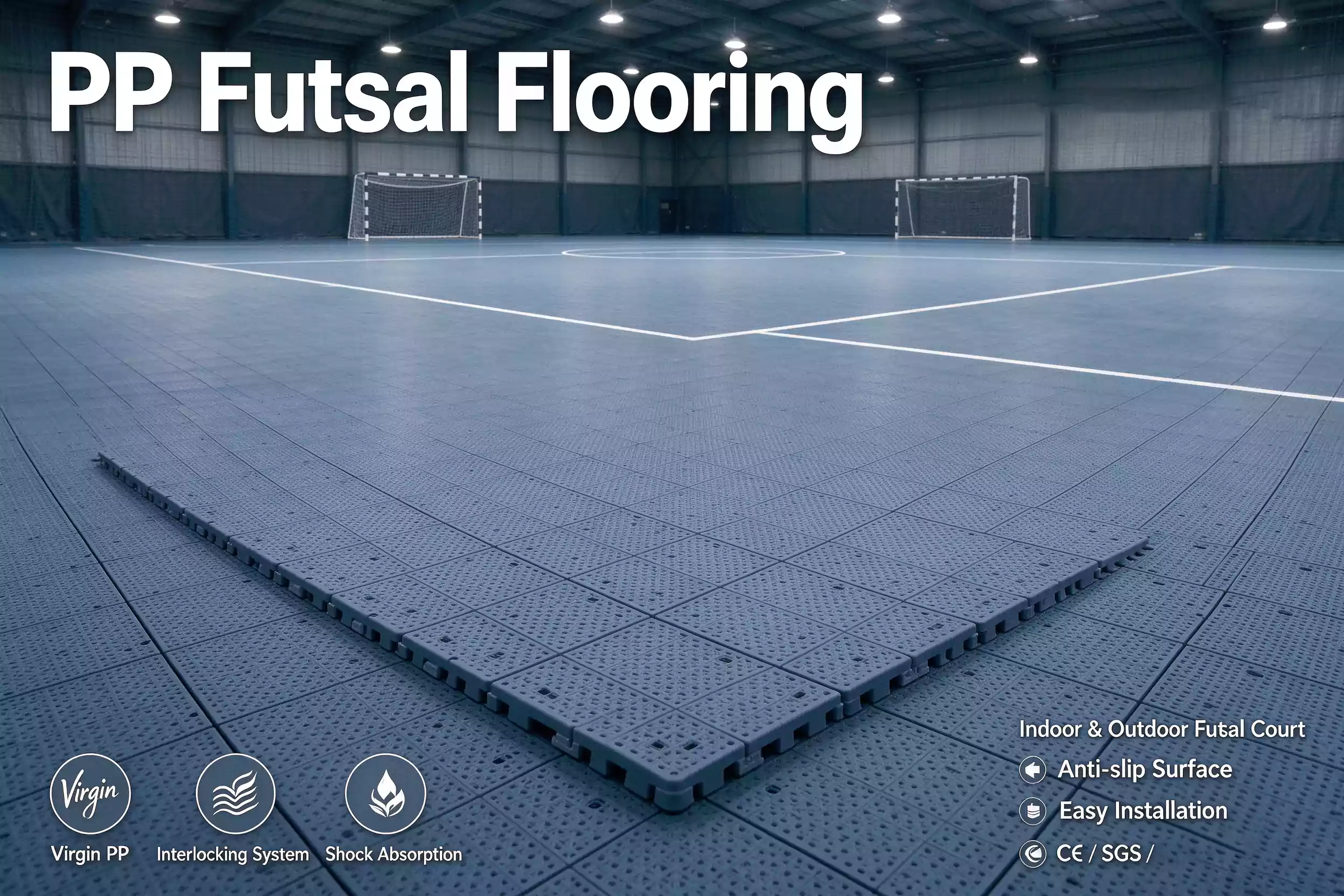

Futsal Flooring: A Practical Solution for Indoor and Outdoor Futsal Courts
Futsal requires a reliable sports surface that supports quick movement, rapid direction changes, and continuous ball control. Therefore, choosing the right futsal flooring can directly affect player comfort, court maintenance, and overall playing performance.
PP interlocking flooring provides a practical option for futsal courts. Its modular structure allows fast installation, while its durable polypropylene construction can withstand repeated sports activity. In addition, the interlocking design makes the flooring easy to maintain and replace.
This article explains the main benefits of PP futsal flooring and why it can be suitable for futsal courts, training facilities, schools, community sports areas, and multi-purpose sports venues.
What Is PP Futsal Flooring?
PP futsal flooring is a modular sports flooring system made from polypropylene (PP). The flooring consists of individual tiles that connect through an interlocking system to create a continuous playing surface.
Unlike permanently bonded flooring systems, PP interlocking tiles do not require complicated adhesive installation in many applications. Installers can connect the tiles directly over a suitable prepared subfloor.
Depending on the product design, PP sports flooring can also include a raised structure underneath the tile. This structure can improve ventilation and allow water to move beneath the surface.
As a result, PP flooring can provide a flexible solution for both indoor and outdoor sports facilities.
Why Choose PP Flooring for Futsal?
Futsal courts need a surface that can handle frequent movement and regular sports activity. PP flooring offers several practical advantages for these applications.
1. Durable PP Construction
Polypropylene provides a strong and wear-resistant material for sports flooring. Players repeatedly run, stop, turn, and change direction during futsal games.
A properly designed PP tile can withstand regular foot traffic and sports use while maintaining its structural performance.
Therefore, PP flooring can work well for busy futsal training centers, schools, recreation facilities, and multi-purpose courts.
2. Interlocking Installation
One of the main advantages of PP futsal flooring is its modular installation system.
The tiles connect with each other through interlocking edges. As a result, installers can assemble the court section by section without using complicated wet construction processes.
This installation method can offer several benefits:
- Fast installation
- Simple assembly
- Easy partial replacement
- Less installation downtime
- Flexible court design
- Convenient transportation and handling
For facilities that need to complete a sports court quickly, interlocking PP flooring can provide an efficient option.
3. Good Traction for Futsal
Futsal players constantly accelerate, stop, and change direction. Therefore, the flooring needs to provide controlled traction.
PP sports tiles can use specially designed surface textures to improve grip during movement. A suitable surface can help players maintain control while reducing unwanted slipping during normal play.
However, the exact traction performance depends on the tile design, surface texture, footwear, and installation conditions.
4. Shock Absorption and Player Comfort
Players spend significant amounts of time running and turning on the court. A sports flooring system should therefore provide a comfortable playing surface.
Some PP sports flooring systems use a flexible tile structure and raised support design to provide a degree of cushioning underfoot.
This structure can create a more comfortable surface compared with conventional hard concrete.
For futsal training facilities and recreational courts, player comfort can become an important part of the overall flooring selection.
PP Futsal Flooring With Drainage and Ventilation
One important feature of some PP interlocking sports floors is the space beneath the tiles.
The raised structure can create channels for air and water to move beneath the flooring. This feature can be particularly useful for outdoor or semi-outdoor futsal courts.
Water Drainage
Outdoor courts can experience rain, cleaning water, and surface moisture. A properly designed PP tile can allow water to move through drainage openings and underneath the flooring.
As a result, the playing surface can dry more efficiently after wet conditions.
Air Circulation
The space beneath the tiles can also improve air circulation between the subfloor and the flooring system.
Better ventilation can help reduce moisture accumulation beneath the tiles and support easier maintenance.
Therefore, drainage and ventilation features make certain PP flooring systems suitable for applications where moisture management matters.
PP Futsal Flooring for Indoor Courts
PP interlocking flooring can also be used for indoor futsal facilities.
Indoor applications can include:
- Futsal training centers
- School sports halls
- Community recreation centers
- Private sports clubs
- Multi-purpose gyms
- Indoor recreational facilities
For indoor projects, installers should ensure that the existing subfloor is stable, clean, and sufficiently level before installing the PP tiles.
A properly prepared base helps the interlocking system maintain a consistent surface.
PP Futsal Flooring for Outdoor Courts
PP flooring can also provide a practical solution for outdoor futsal courts.
Outdoor sports areas need to deal with sunlight, temperature changes, rain, dust, and regular foot traffic. PP sports tiles can provide a durable modular surface for these environments when the product specification matches the application.
In addition, the interlocking structure allows damaged sections to be replaced individually instead of removing the entire court.
This feature can simplify long-term maintenance.
Easy Maintenance and Replacement
Futsal courts receive frequent use, so simple maintenance can help reduce long-term operating costs.
Regular maintenance typically involves:
- Removing dust and loose debris.
- Cleaning the surface with a suitable cleaning method.
- Removing spills promptly.
- Inspecting the tiles and connections regularly.
- Replacing damaged tiles when necessary.
One advantage of modular PP flooring is its replaceable structure. If a small section becomes damaged, maintenance personnel can remove the affected tiles and install new ones.
Therefore, the facility does not necessarily need to replace the entire floor because of localized damage.
Custom Colors and Court Design
PP interlocking flooring can be produced in different colors, allowing facility owners to create customized futsal court designs.
For example, manufacturers can combine different tile colors to define:
- Playing areas
- Court boundaries
- Safety zones
- Training areas
- Spectator areas
- Multi-sport zones
Custom color combinations can also help create a consistent visual identity for sports clubs, schools, and commercial facilities.
PP Futsal Flooring for Multi-Sport Courts
A futsal court does not always need to serve only one sport.
Many schools, sports centers, and community facilities use the same space for multiple activities. PP modular flooring can support a flexible sports environment when the product specifications are suitable for the intended sports.
A multi-purpose PP sports floor can be designed for activities such as:
- Futsal
- Basketball
- Volleyball
- Badminton
- Recreational sports
- Physical education
- Community activities
This flexibility can help facility owners make better use of available space.
How to Install PP Futsal Flooring
PP interlocking futsal flooring usually follows a straightforward installation process.
Step 1: Prepare the Subfloor
Clean the installation area and remove dust, debris, and loose materials. Make sure the base provides adequate stability and levelness.
Step 2: Plan the Court Layout
Measure the court area and determine the starting point, tile direction, boundaries, and color layout.
Step 3: Connect the Tiles
Start from the selected installation point and connect the PP tiles through their interlocking edges.
Step 4: Create the Court Design
Continue installing the tiles according to the planned color pattern and court layout.
Step 5: Inspect the Finished Surface
After installation, check the connections and overall surface. Make sure the tiles sit correctly and the court provides a consistent playing area.
For large professional projects, follow the manufacturer’s installation instructions and recommended subfloor requirements.
How to Choose the Right PP Futsal Flooring
When selecting PP futsal flooring, consider several factors.
Material: Check the PP material quality and product specifications.
Surface texture: Choose a surface that provides suitable traction for futsal activity.
Tile structure: Consider the tile thickness, support structure, and interlocking design.
Drainage: For outdoor courts, evaluate the flooring’s drainage and ventilation design.
Durability: Consider expected traffic levels and frequency of use.
Maintenance: Look for a modular system that allows convenient cleaning and tile replacement.
Customization: Consider available colors, patterns, dimensions, and court designs.
Conclusion
PP futsal flooring provides a modular and practical solution for futsal courts. Its interlocking structure supports efficient installation, while the durable PP construction can handle regular sports activity.
Furthermore, certain PP flooring designs provide drainage and ventilation beneath the tiles, making them suitable for outdoor and semi-outdoor applications. Easy cleaning, individual tile replacement, and customizable colors can also simplify long-term court management.
For futsal courts, training facilities, schools, community sports centers, and multi-purpose sports areas, PP interlocking sports flooring can provide a flexible flooring solution that combines durability, convenient installation, and practical maintenance.