


Waterproof Flooring: A Complete Guide to Waterproof Interlocking Flooring
Water can quickly damage traditional flooring when it penetrates the surface or remains trapped underneath. For outdoor courts, garages, pool areas, playgrounds, and other moisture-prone spaces, choosing the right waterproof flooring can make a major difference.
Waterproof flooring is designed to resist water exposure and provide a durable surface in wet or changing weather conditions. Among modern flooring options, PP interlocking flooring offers a practical combination of water resistance, modular installation, durability, and easy maintenance.
What Is Waterproof Flooring?
Waterproof flooring refers to flooring materials that resist water penetration and maintain their basic performance when exposed to moisture.
Unlike some traditional flooring materials that can absorb water, polypropylene (PP) is a plastic material with very low water absorption. This makes PP suitable for many indoor and outdoor applications where moisture resistance is important.
Interlocking PP flooring also uses a modular connection system. The individual tiles connect together without traditional adhesives, creating a continuous flooring surface that can be installed, removed, and replaced efficiently.
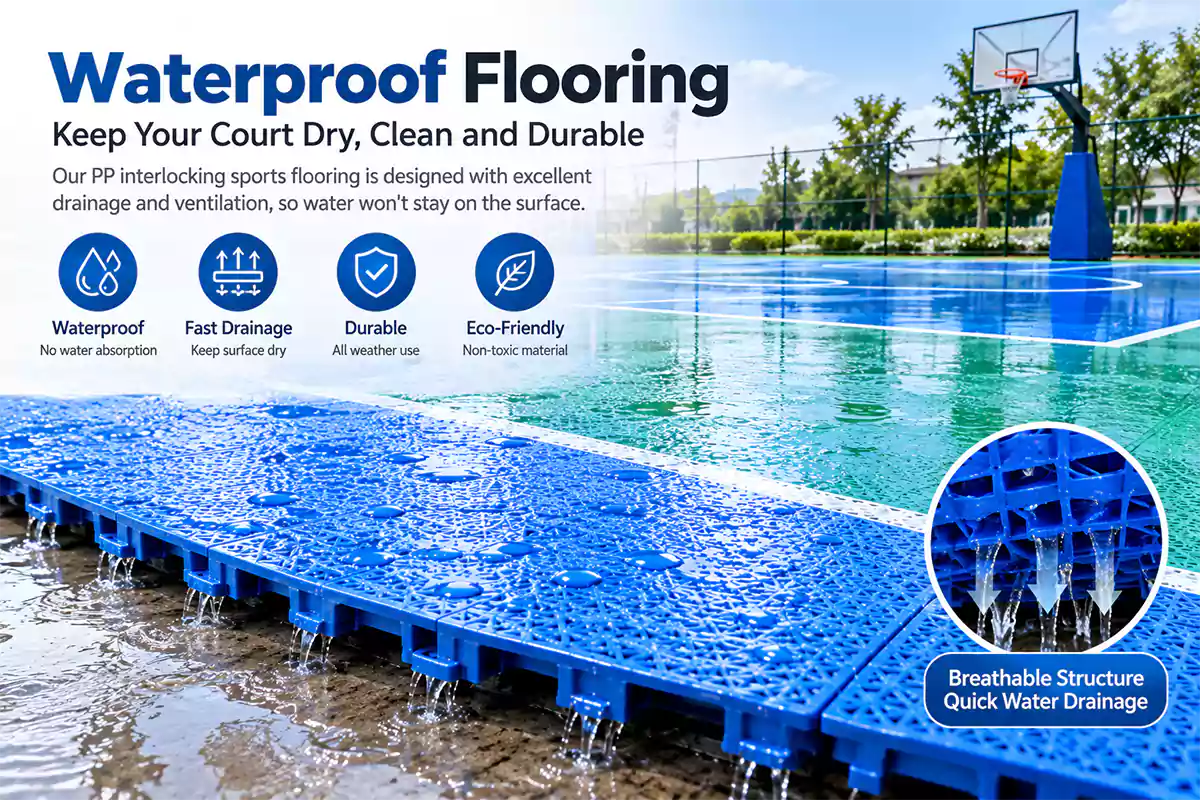
For outdoor sports applications, some PP flooring systems also incorporate drainage structures beneath the tiles. These structures allow water to move away from the surface instead of remaining on top of the court.
Why Choose Waterproof PP Flooring?
1. Excellent Water Resistance
One of the main advantages of PP flooring is its resistance to water. The material does not absorb water like many porous flooring materials.
This makes PP interlocking flooring suitable for areas that may experience rain, splashes, humidity, or regular cleaning.
For outdoor sports courts, waterproof construction can help the flooring maintain a stable appearance and performance in changing weather conditions.
2. Suitable for Outdoor Applications
Outdoor flooring must deal with more than normal foot traffic. Rain, sunlight, temperature changes, and humidity can all affect flooring performance.
Waterproof PP flooring is commonly used for:
- Outdoor basketball courts
- Pickleball courts
- Tennis courts
- Volleyball courts
- Badminton courts
- Futsal and multi-sport courts
- Swimming pool areas
- Playgrounds
- Parks
- Recreational areas
- Garages
- Patios and terraces
PP modular flooring is widely marketed for both indoor and outdoor sports applications, including basketball, tennis, badminton, volleyball, swimming pool areas, and garages.
3. Built-In Drainage Design
Waterproof flooring and good drainage should work together.
For outdoor sports courts, simply using a water-resistant material is not enough. Rainwater still needs a way to leave the playing surface.
Many suspended PP flooring systems use a raised or grid-style structure underneath the tiles. This creates space for air circulation and water drainage.
As a result, rainwater can move through the flooring system and drain toward the underlying surface.
This design is particularly useful for outdoor basketball courts, pickleball courts, tennis courts, and other sports areas exposed to rain.
4. Easy Interlocking Installation
Another important advantage is the modular installation system.
PP tiles are manufactured with interlocking connectors, allowing installers to connect individual pieces without applying adhesive. This can simplify installation and reduce installation time.
The basic process is generally:
- Prepare a clean and relatively level base.
- Place the first flooring tile.
- Connect the next tile through the interlocking system.
- Continue connecting the tiles across the installation area.
- Cut edge pieces where necessary.
- Install perimeter accessories or edge pieces.
- Add court lines or markings if required.
Because the flooring is modular, individual damaged tiles can also be removed and replaced instead of replacing the entire floor.
Waterproof Flooring vs. Traditional Flooring
Traditional flooring materials can work well in dry indoor environments, but moisture can create additional challenges.
Waterproof PP flooring provides several practical advantages for wet or outdoor environments:
| Feature | Waterproof PP Flooring | Traditional Flooring |
|---|---|---|
| Water resistance | Excellent | Depends on material |
| Outdoor use | Suitable | Depends on product |
| Modular installation | Yes | Usually limited |
| Adhesive required | Usually no | Often required |
| Tile replacement | Easy | Can be more difficult |
| Drainage options | Available with suspended designs | Depends on construction |
| Maintenance | Easy | Depends on material |
| Reusable | Many systems can be removed and reused | Usually limited |
The exact performance depends on the flooring construction, installation method, subfloor, and product specifications.
Where Can Waterproof Flooring Be Used?
Outdoor Sports Courts
Outdoor sports courts are one of the most common applications for waterproof modular flooring.
Basketball, pickleball, tennis, volleyball, and badminton courts can all benefit from a surface designed for outdoor moisture exposure.
A suspended PP flooring structure can also provide ventilation and drainage beneath the playing surface.
Swimming Pool Areas
Poolside environments are constantly exposed to water.
Water-resistant interlocking flooring can provide a practical surface around swimming pools, recreational facilities, and wet areas.
However, the surface texture and slip resistance should always be considered when selecting flooring for areas where people walk with wet feet.
Garages
Garages can experience water, oil, dirt, and vehicle traffic.
Interlocking PP garage flooring provides a modular alternative to traditional concrete surfaces. Individual tiles can be removed for cleaning or replacement when necessary.
Playgrounds and Recreational Areas
Waterproof modular flooring can also be used in outdoor playgrounds, parks, and recreational spaces.
Its modular construction allows different colors and patterns to be combined to create customized layouts.
How to Maintain Waterproof PP Flooring
One advantage of PP flooring is its relatively simple maintenance.
In general, regular cleaning can usually be completed with water and a suitable cleaning method. In addition, for outdoor courts, regularly removing leaves, dirt, and other debris can help maintain a clean and well-kept surface. As a result, routine maintenance can help keep the flooring looking good and ready for everyday use.
For deeper cleaning:
- Remove loose dirt and debris.
- Wash the flooring with clean water.
- Use a suitable mild cleaning solution when necessary.
- Use a soft brush to remove stubborn dirt.
- Rinse the surface thoroughly.
- Allow excess water to drain away.
Avoid using corrosive chemicals or cleaning products unless the flooring manufacturer recommends them.
Is Waterproof Flooring Suitable for Outdoor Sports?
Yes, waterproof PP flooring can be a suitable option for many outdoor sports applications.
However, waterproof performance is only one factor when selecting sports flooring. Buyers should also consider:
- Surface traction
- Ball response
- Shock absorption
- UV resistance
- Temperature resistance
- Drainage
- Load capacity
- Subfloor requirements
- Installation method
- Maintenance requirements
A suitable outdoor sports floor should be selected according to the specific sport and installation environment rather than waterproof performance alone.
How to Choose the Right Waterproof Flooring
Before purchasing waterproof flooring, consider the following questions.
1. Where Will the Flooring Be Installed?
Determine whether the floor will be used indoors, outdoors, around a swimming pool, in a garage, or on a sports court.
2. Will the Floor Be Exposed to Rain?
If the floor is outdoors, choose a system designed for outdoor conditions and consider the drainage structure.
3. Is UV Resistance Required?
Outdoor flooring receives direct sunlight. For long-term outdoor applications, ask the manufacturer about UV and weather resistance.
4. What Type of Traffic Will the Floor Receive?
Foot traffic, sports activity, vehicles, and heavy equipment place different demands on flooring.
5. Does the Flooring Need to Be Removable?
If the installation may be relocated or renovated later, modular interlocking flooring can provide additional flexibility.
Waterproof Flooring for Modern Outdoor Spaces
As outdoor sports and recreational spaces continue to expand, flooring needs to handle more demanding environments.
Waterproof PP interlocking flooring provides a modular solution for applications where water resistance, easy installation, drainage, and simple maintenance are important.
Moreover, for sports courts, backyard recreation areas, poolside spaces, garages, playgrounds, and other outdoor environments, PP flooring can provide a practical alternative to conventional flooring systems.
Conclusion
Choosing waterproof flooring is an important step when building an outdoor or moisture-prone space.
PP interlocking flooring combines water-resistant material with a modular installation system.
If you are looking for waterproof flooring for outdoor sports courts, garages, playgrounds, swimming pool areas, or other outdoor spaces, PP interlocking flooring is worth considering as a durable and flexible modular flooring solution.