


Interlocking Flooring: A Practical Guide to Modular Floor Tiles
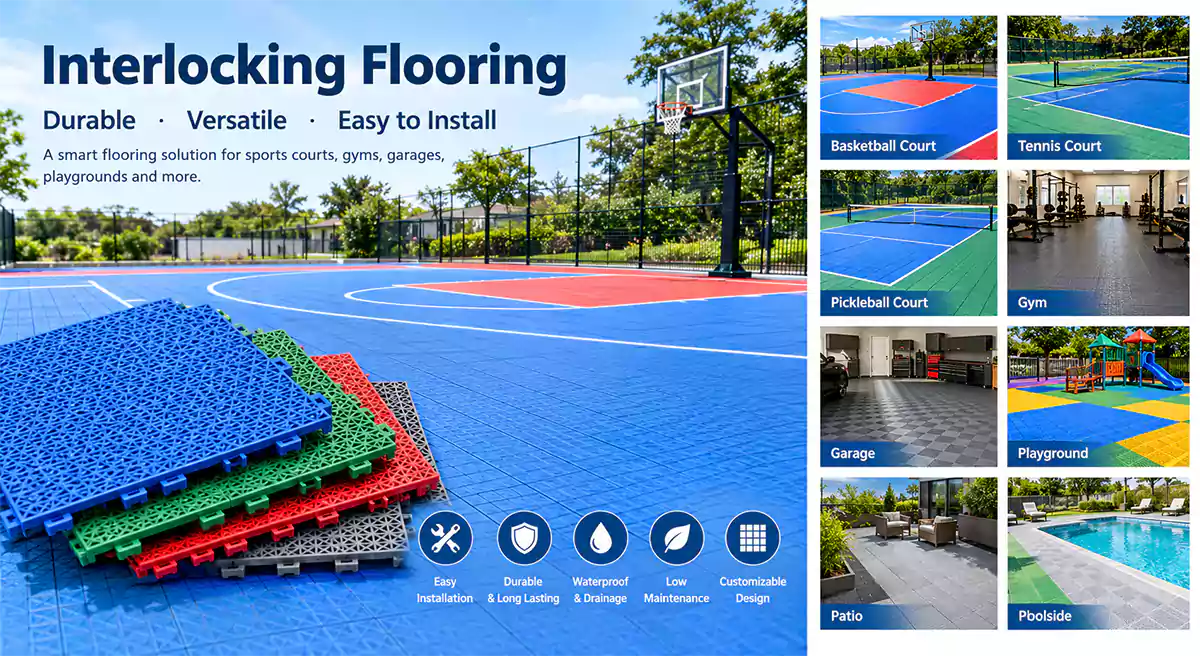
Interlocking flooring has become a practical flooring solution for sports courts, gyms, garages, playgrounds, patios, and other active spaces. Unlike traditional flooring systems that often require adhesives or complicated installation, interlocking floor tiles connect directly through a built-in locking system.
For businesses, sports facilities, and homeowners, this modular design can simplify installation, maintenance, replacement, and future expansion.
What Is Interlocking Flooring?
Interlocking flooring consists of individual floor tiles designed to connect with one another. Each tile usually has a locking edge that allows multiple pieces to form a stable flooring surface.
PP interlocking flooring is particularly suitable for outdoor and sports applications because polypropylene can provide good durability, water resistance, and dimensional stability.
Depending on the design, interlocking tiles can be installed over a suitable hard surface without permanent adhesives. This makes the flooring easier to install and remove when necessary.
Key Benefits of Interlocking Flooring
1. Easy Installation
One of the main advantages of interlocking flooring is its simple installation process. Users can connect individual tiles by aligning their locking edges and applying pressure.
This modular installation method can reduce installation time compared with some traditional flooring systems.
For large sports courts or recreational areas, installers can gradually assemble the floor section by section.
2. Durable Surface for Active Areas
Interlocking floor tiles can handle regular foot traffic and sports activities when manufacturers design them for the intended application.
PP flooring is commonly used for basketball courts, pickleball courts, tennis courts, badminton areas, gyms, playgrounds, and recreational spaces.
The tile structure can also provide a practical surface for areas that require frequent use.
3. Suitable for Indoor and Outdoor Applications
Many interlocking flooring systems work in both indoor and outdoor environments.
Outdoor applications can include:
- Basketball courts
- Pickleball courts
- Tennis courts
- Futsal areas
- Multi-sport courts
- Playgrounds
- Patios
- Poolside areas
- Outdoor fitness spaces
- Recreational plazas
For outdoor installations, drainage and ventilation become especially important. A properly designed PP sports floor can allow water to move away from the surface while creating airflow beneath the tiles.
4. Easy Maintenance
Interlocking flooring can make routine maintenance more convenient.
For normal cleaning, users can remove loose dirt, leaves, dust, and other debris before washing the surface with water and an appropriate cleaning solution.
If one tile becomes damaged, the modular structure can also allow installers to replace the affected section instead of removing the entire floor.
5. Flexible Floor Design
Modular tiles provide considerable flexibility in floor design.
Manufacturers can produce tiles in different colors, surface textures, patterns, and dimensions. By combining different colors, installers can create sports court markings, borders, logos, or decorative patterns.
This flexibility makes interlocking flooring suitable for both functional and visual applications.
Where Can Interlocking Flooring Be Used?
Interlocking flooring can serve many different environments.
Sports Courts
Sports flooring is one of the most common applications. Interlocking PP tiles can create surfaces for basketball, pickleball, tennis, badminton, volleyball, and other recreational sports.
The surface texture can help provide traction while the modular structure simplifies installation and maintenance.
Gyms and Fitness Areas
Interlocking tiles can also work well in gyms and training areas.
Depending on the product design, flooring can provide a stable surface for fitness equipment, exercise areas, and general training spaces.
For areas that require additional cushioning, TPE-based flooring can provide a softer and more elastic surface than rigid flooring materials.
Garages
Garage interlocking floor tiles provide a practical alternative to conventional garage flooring.
The modular tiles can create a clean, organized surface while allowing individual tiles to be replaced if necessary.
Some garage flooring systems also use drainage-oriented designs to help manage water and other liquids.
Playgrounds
Interlocking flooring can be used around playground equipment and recreational areas.
For playground applications, however, buyers should select flooring specifically designed and tested for playground safety rather than assuming that every interlocking tile provides suitable impact protection.
PP vs. Other Interlocking Flooring Materials
Different materials provide different performance characteristics.
PP (polypropylene) is widely used for modular sports flooring because it can offer durability, water resistance, and relatively low maintenance.
TPE provides greater elasticity and can offer a more comfortable feel underfoot. It can be suitable for applications where cushioning and shock absorption are important.
PVC is also widely used in sports and commercial flooring, particularly in applications that require flexible sheet or tile flooring.
The right material depends on the application, expected traffic, installation environment, surface requirements, and maintenance conditions.
How to Install Interlocking Floor Tiles
A typical installation process includes several basic steps.
Step 1: Prepare the Base
Start with a clean, stable, and reasonably level surface. Remove dust, dirt, loose materials, and debris.
Large cracks or significant uneven areas should be addressed before installation.
Step 2: Plan the Layout
Measure the installation area and determine the tile arrangement.
For sports courts, plan the court dimensions, color zones, borders, and line markings before connecting the tiles.
Step 3: Connect the Tiles
Place the first tile in the selected starting position. Align the locking edges of the next tile and connect them securely.
Continue installing the tiles row by row until the required area is covered.
Step 4: Cut Edge Tiles When Necessary
Some installations require partial tiles around walls, columns, corners, or other obstacles.
Use suitable cutting equipment and follow the manufacturer’s installation instructions when trimming tiles.
Step 5: Inspect the Finished Floor
After installation, inspect the entire surface. Make sure the tiles connect correctly and that no sections have excessive movement or gaps.
How to Choose the Right Interlocking Flooring
Before purchasing interlocking flooring, consider the following factors:
Application: Choose a product designed for your intended use, such as sports, garage, gym, playground, or outdoor recreation.
Material: PP, TPE, PVC, and other materials have different characteristics.
Surface texture: Select a texture that provides suitable traction for the activity.
Drainage: Outdoor flooring should have an appropriate drainage design.
Load capacity: Consider expected foot traffic, sports equipment, vehicles, or other loads.
Climate: Outdoor installations should account for temperature changes, moisture, sunlight, and weather exposure.
Maintenance: Check cleaning requirements and whether individual tiles can be replaced.
Why Choose Modular Interlocking Flooring?
The biggest advantage of interlocking flooring is its modular structure. Instead of treating the entire floor as one permanent system, installers can build the surface from individual connected tiles.
This approach provides several practical advantages:
- Faster installation
- No permanent adhesive for many systems
- Easy tile replacement
- Flexible designs
- Convenient maintenance
- Easy expansion or relocation
- Suitable for many applications
For sports and outdoor projects, these characteristics can make interlocking flooring a practical alternative to conventional flooring systems.
Conclusion
Interlocking flooring provides a flexible flooring solution for sports courts, gyms, garages, playgrounds, patios, and other active spaces. Its modular construction makes installation straightforward while allowing users to maintain, replace, or expand the floor more easily.
For outdoor sports applications, PP interlocking flooring offers a combination of durability, water resistance, modular installation, and low-maintenance operation. For applications that prioritize elasticity and comfort, TPE interlocking flooring can provide another option.
Before selecting a product, always match the flooring material, surface design, load capacity, drainage structure, and safety characteristics to the specific application.