

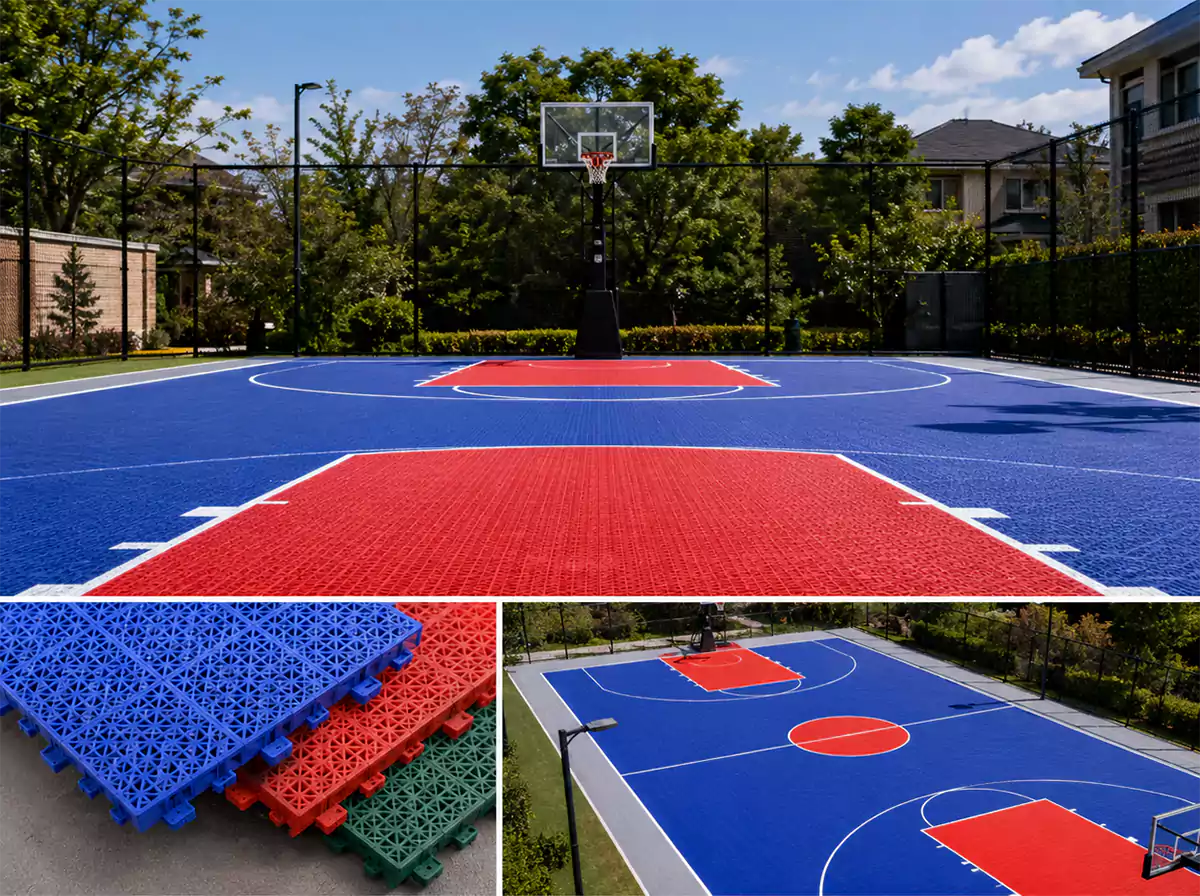

How to Choose the Best Flooring for Basketball Courts
Basketball floor is an important part of any basketball court. Therefore The right flooring can improve player comfort, traction, ball response, durability, and overall playing performance. Whether you are building an outdoor backyard court, a school gym, a sports club, or a professional training facility, choosing the right basketball flooring is essential.
Besides Today, basketball court flooring is available in several materials and designs. Among them, modular interlocking flooring has become a popular option because it offers easy installation, good shock absorption, excellent drainage, and convenient maintenance.
What Is Basketball Floor?
Basketball floor refers to the specialized flooring system used for basketball courts. It is designed to provide a stable and comfortable surface for running, jumping, stopping, and changing direction.
A good basketball floor should provide:
- Excellent traction
- Reliable shock absorption
- Consistent ball bounce
- Good wear resistance
- Comfortable foot support
- Easy installation and maintenance
- Long-term outdoor or indoor performance
The best flooring depends on the location, court usage, budget, and performance requirements.
Types of Basketball Court Flooring
1. Hardwood Basketball Flooring
Hardwood is widely used for professional and indoor basketball courts. It provides a traditional playing experience and excellent ball response.
However, hardwood requires professional installation and regular maintenance. It can also be affected by moisture, making it less suitable for outdoor basketball courts.
2. Rubber Basketball Flooring
Rubber flooring provides good shock absorption and durability. It is commonly used in gyms and training areas.
Therefore Its main advantages include comfort, impact resistance, and noise reduction. However, installation can be more complicated than modular flooring.
3. PP Interlocking Basketball Flooring
PP interlocking flooring is designed with modular tiles that connect together without complicated installation procedures. It is particularly suitable for outdoor basketball courts, backyard courts, schools, community courts, and recreational facilities.
Therefore The tiles can be installed over a suitable hard and level surface, while the interlocking structure helps create a stable basketball playing surface.
4. TPE Basketball Flooring
TPE basketball flooring offers flexibility, cushioning, and comfortable foot support. It can be used for basketball courts where player comfort and impact absorption are important.
For this reason TPE flooring can also be designed with modular structures for easier installation and replacement.
Why Choose Interlocking Basketball Floor?
Interlocking basketball flooring offers several practical benefits.
Easy Installation
Modular tiles can be connected directly through an interlocking system. In many applications, there is no need for complicated adhesives or permanent installation.
This makes installation faster and can reduce labor costs.
Excellent Traction
Basketball players frequently accelerate, stop, and change direction. Therefore, the court surface needs reliable grip.
A properly designed basketball floor provides suitable traction while allowing players to move naturally.
Shock Absorption
Jumping and landing place significant stress on players’ feet, ankles, knees, and legs. Basketball flooring with suitable cushioning can help improve playing comfort.
Weather Resistance
For outdoor courts, flooring needs to withstand sunlight, rain, temperature changes, and frequent use.
High-quality PP and TPE modular flooring can be designed for outdoor applications and long-term performance.
Easy Maintenance
Modular basketball floor tiles are relatively easy to clean. If a tile becomes damaged, the affected section can often be removed and replaced without replacing the entire court.
How to Choose the Best Basketball Floor
Before purchasing basketball flooring, consider the following factors.
Indoor or Outdoor Use
Indoor courts have different requirements from outdoor courts. Hardwood and rubber are common indoors, while modular PP or TPE flooring can be a practical choice for outdoor courts.
Playing Level
A school or recreational court may have different flooring requirements from a professional training facility.
Consider player frequency, impact levels, traction, and expected service life before choosing a product.
Surface Compatibility
Interlocking basketball tiles generally require a solid, stable, and reasonably level base. Before installation, check the existing concrete or asphalt surface and repair major cracks or uneven areas.
Drainage
Outdoor basketball courts need effective water drainage. A well-designed modular floor can help water pass through the tile structure and reduce standing water on the playing surface.
Maintenance Requirements
Choose flooring that is easy to clean and repair. Modular systems are especially convenient because individual tiles can be replaced when necessary.
PP Basketball Floor vs Traditional Flooring
PP interlocking basketball flooring has several advantages for outdoor applications.
| Feature | PP Interlocking Floor | Traditional Hardwood |
|---|---|---|
| Installation | Easy modular installation | Professional installation |
| Outdoor use | Suitable for outdoor applications | Limited |
| Maintenance | Easy | Higher |
| Tile replacement | Simple | More complicated |
| Drainage | Available with drainage design | Limited |
| Portability | Can be disassembled | Permanent |
| Customization | Multiple colors and patterns | More limited |
For outdoor backyard basketball courts, community courts, and multipurpose sports areas, modular flooring can provide a practical alternative to traditional flooring systems.
Where Can Basketball Floor Be Used?
Basketball flooring can be used in many different environments, including:
- Backyard basketball courts
- School basketball courts
- Community sports courts
- Training centers
- Sports clubs
- Recreation centers
- Indoor gyms
- Multi-purpose sports facilities
- Commercial basketball courts
For projects that require flexible installation, modular basketball flooring can be particularly useful.
Basketball Floor Installation
A typical modular basketball floor installation includes several steps:
- Prepare and clean the base surface.
- Make sure the surface is stable and level.
- Plan the court layout.
- Start connecting the interlocking tiles.
- Continue installation row by row.
- Install edge pieces where required.
- Add basketball court lines or markings.
- Inspect the complete surface before use.
Because the tiles connect mechanically, installation can generally be completed more quickly than many traditional flooring systems.
How to Maintain Basketball Flooring
Regular maintenance helps extend the service life of basketball flooring.
First Sweep or clean the surface regularly to remove dust, leaves, and other debris. For outdoor courts, inspect the drainage area after heavy rain.
Next Avoid using harsh chemicals that may damage the flooring material. Periodically check the tiles, connections, and court edges for damage.
Finally If individual tiles are damaged, replacing the affected tiles can help maintain the overall appearance and performance of the court.
Conclusion
Choosing the right basketball floor can make a significant difference in court performance, player comfort, maintenance, and service life.
For this reason For indoor professional courts, hardwood remains a traditional choice. For outdoor basketball courts, however, PP and TPE interlocking flooring can provide practical advantages such as easy installation, durability, drainage, low maintenance, and convenient tile replacement.
If you are planning a backyard basketball court, school court, community project, or commercial sports facility, modular basketball flooring is worth considering as a flexible and cost-effective flooring solution.