

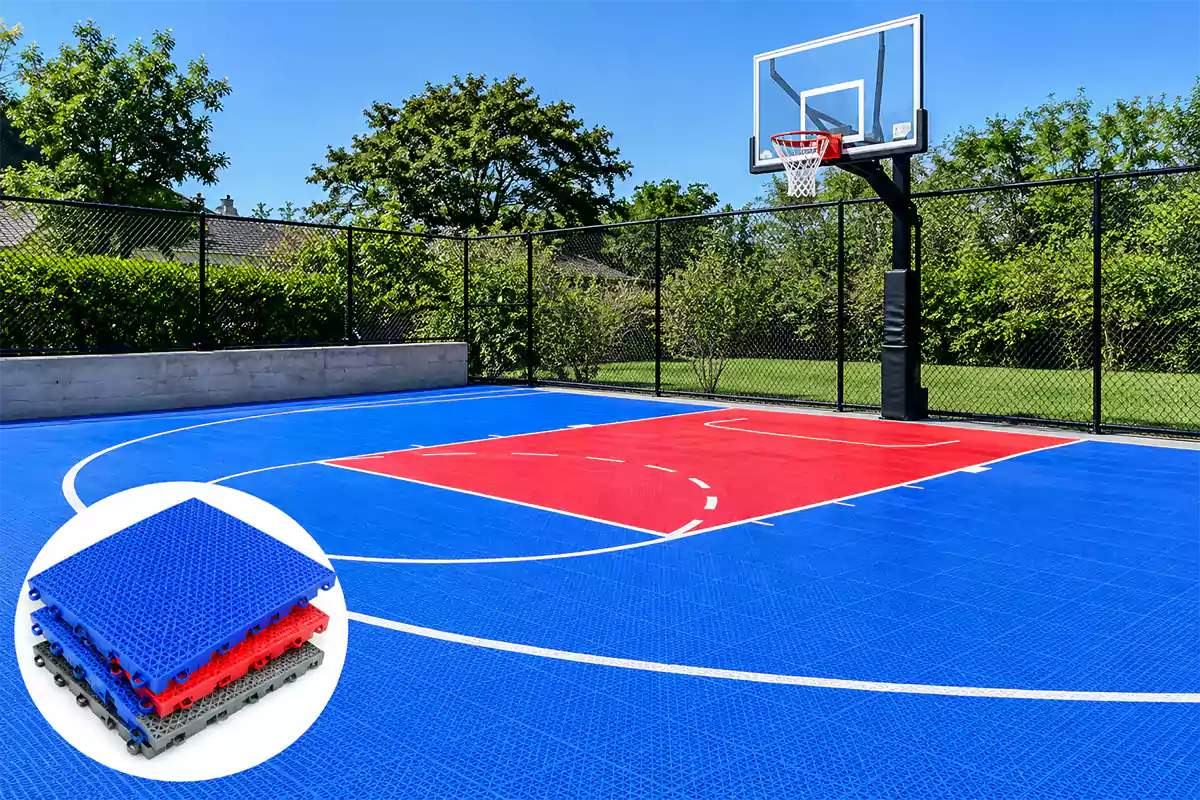

Basketball Court Flooring Outdoor: How to Choose the Best Surface
Choosing the right basketball court flooring outdoor is important for performance, safety, and long-term durability. Outdoor basketball courts face sunlight, rain, temperature changes, and heavy daily use. Therefore, the flooring needs to handle demanding outdoor conditions while providing a comfortable playing surface.
Today, modular sports flooring has become a popular choice for outdoor basketball courts. In particular, PP interlocking flooring offers a practical solution for homeowners, schools, sports clubs, and commercial facilities.
What Is Outdoor Basketball Court Flooring?
Outdoor basketball court flooring is designed specifically for basketball courts located outside. Unlike indoor flooring, outdoor surfaces must withstand changing weather conditions.
A good outdoor basketball floor should provide:
- Good impact resistance
- Reliable traction
- UV resistance
- Weather resistance
- Stable performance
- Easy maintenance
- Fast installation
In addition, the surface should provide enough grip for running, stopping, and changing direction. At the same time, it should help create a comfortable playing experience.
Why Choose PP Interlocking Flooring for Outdoor Basketball Courts?
PP interlocking flooring is made from polypropylene, a durable plastic material commonly used for outdoor sports surfaces. The modular design allows individual tiles to connect together without complicated installation.
As a result, PP flooring can be installed efficiently on suitable hard surfaces.
1. Excellent Outdoor Durability
Outdoor basketball courts experience constant foot traffic and repeated impacts. Therefore, the flooring needs to withstand frequent use.
PP interlocking tiles offer good impact resistance and structural stability. With proper installation and maintenance, they can provide long-term performance for outdoor recreational courts.
2. UV and Weather Resistance
Sunlight can gradually damage many outdoor materials. Rain and temperature changes can also affect flooring performance.
For this reason, outdoor basketball flooring should be designed for weather exposure. Quality PP sports flooring can include UV-resistant additives to help reduce damage caused by prolonged sunlight.
Furthermore, the modular structure can support outdoor applications where water drainage is important.
3. Easy Installation
Traditional basketball court construction can require significant preparation and labor. In comparison, interlocking flooring uses a modular installation system.
The tiles connect through built-in locking mechanisms. Therefore, installers can assemble the court without applying large amounts of adhesive.
This makes PP interlocking flooring a convenient option for backyard basketball courts and other recreational spaces.
4. Easy Repair and Replacement
Outdoor courts may eventually experience localized damage. However, you do not always need to replace the entire floor.
With an interlocking system, individual tiles can be removed and replaced when necessary. As a result, maintenance can be faster and more cost-effective.
5. Good Traction for Basketball
Basketball requires frequent acceleration, jumping, stopping, and direction changes. Therefore, traction is an important factor when choosing basketball court flooring outdoor.
A properly designed sports tile should provide consistent grip while allowing players to move naturally. The surface should also remain suitable for outdoor use under normal weather conditions.
PP Flooring vs. Traditional Outdoor Basketball Surfaces
There are several options for outdoor basketball courts. These include concrete, asphalt, acrylic-coated surfaces, and modular sports tiles.
Concrete and asphalt can provide a solid base. However, they may feel hard under repeated impact and can develop cracks over time.
Acrylic systems can provide attractive court finishes and good ball response. However, installation usually requires more site preparation and professional construction.
By comparison, PP interlocking flooring offers a modular solution.
| Feature | PP Interlocking Flooring | Concrete | Asphalt |
|---|---|---|---|
| Installation | Easy | More complex | More complex |
| Modular replacement | Yes | No | No |
| UV resistance | Available | Excellent | Moderate |
| Maintenance | Easy | Moderate | Moderate |
| Installation time | Shorter | Longer | Longer |
| Outdoor use | Excellent | Excellent | Good |
The best choice depends on the project, budget, climate, and performance requirements.
How to Install Outdoor Basketball Court Flooring
Installing PP basketball flooring can be relatively straightforward. However, proper preparation is still essential.
Step 1: Prepare the Base
Start with a clean, hard, and reasonably level surface. Concrete is commonly used as the base for modular outdoor sports flooring.
Remove dirt, dust, debris, and loose materials before installation.
Step 2: Check the Surface
Next, check the base for major cracks, uneven areas, and drainage problems. Repair serious surface defects before installing the tiles.
A stable base helps the flooring remain flat and secure.
Step 3: Plan the Court Layout
Before installation, measure the court area and plan the tile layout. Mark important lines and determine where the basketball hoop and playing zones will be located.
This step can reduce unnecessary cutting and material waste.
Step 4: Install the Interlocking Tiles
Begin from one corner and connect the tiles row by row. Press the locking edges together until the tiles are securely connected.
Continue across the entire playing area.
Step 5: Add Basketball Court Lines
After the flooring is installed, apply suitable court markings according to the intended basketball layout.
Clear lines make the court easier to use and improve the overall appearance.
How to Maintain Outdoor Basketball Court Flooring
Proper maintenance can help extend the service life of outdoor basketball flooring.
First, remove leaves, dirt, and other debris regularly. A soft broom or suitable cleaning equipment can usually handle routine cleaning.
Next, clean the surface with water and a mild cleaning solution when necessary. Avoid harsh chemicals that could damage the flooring surface.
Also, inspect the court periodically. Check for loose tiles, damaged connectors, or other visible problems.
Finally, replace damaged tiles as soon as possible. Because PP flooring is modular, localized repairs can usually be completed without removing the entire court.
Is PP Interlocking Flooring Good for a Backyard Basketball Court?
Yes. PP interlocking flooring can be a practical option for backyard basketball courts when the base is properly prepared.
It offers several advantages for residential applications:
- Fast installation
- Modular construction
- Outdoor durability
- Easy maintenance
- Individual tile replacement
- Multiple color options
- Professional court appearance
Moreover, homeowners can use modular flooring to create basketball courts without the complexity of a fully built traditional court system.
What Should You Consider Before Buying?
Before choosing outdoor basketball court flooring, consider several factors.
Climate
If the court receives strong sunlight or frequent rain, choose flooring designed for outdoor exposure. UV and weather resistance are especially important.
Base Condition
The flooring cannot compensate for a severely uneven or unstable base. Therefore, check the existing surface before ordering the tiles.
Court Size
Calculate the total court area before purchasing. It is also useful to order a small additional quantity for future replacement needs.
Sports Performance
Consider traction, impact response, comfort, and ball performance. The right combination depends on how the court will be used.
Maintenance Requirements
Choose a flooring system that is easy to clean and repair. Modular flooring can simplify long-term maintenance because individual tiles can be replaced.
Final Thoughts
The right basketball court flooring outdoor can improve playing comfort, court durability, and maintenance efficiency. While concrete, asphalt, and acrylic systems remain common choices, PP interlocking flooring provides a flexible alternative for many outdoor basketball projects.
Its modular design makes installation and replacement easier. In addition, its outdoor durability, UV resistance, and low-maintenance characteristics make it suitable for backyard courts, schools, sports clubs, and recreational facilities.
If you are planning a new outdoor basketball court, PP interlocking flooring is worth considering as a durable and practical sports flooring solution.